
The Egyptian Temple Court in the Neues Museum, Berlin — History & Facts
In the stillness of a painted moment, we confront the delicate interplay of history and emotion, revealing the fragility of human triumph and the weight of time. Focus on the sweeping architectural lines that draw your gaze upward, inviting you to explore the grand columns that stand like sentinels of an ancient culture. Look closely at the soft play of light as it filters through the open spaces, casting gentle shadows that caress the rough-hewn surfaces of the stone. Notice how the artist employs a muted palette, with earthy tones that evoke the warmth of the sun against the coolness of the temple’s stone, creating a sense of calm amid the echoes of a bustling past. Yet beneath the surface of this serene scene lies a contrast of permanence and vulnerability.
The majestic columns, though standing tall, seem to whisper of decay, reminding us of the inevitable passage of time. The people, small and transient against the colossal architecture, hint at the fragility of human existence, lost amid the grandeur of their surroundings. Each figure reflects a moment of contemplation, their presence an intimate connection to a history that looms large yet feels fleeting. In 1850, Eduard Gaertner painted this work while living in Berlin, a city undergoing profound transformation and industrialization.
The Neues Museum was a focal point of cultural revival, and Gaertner, a prominent painter of architectural subjects, sought to capture the beauty of heritage against the backdrop of change. His choice to depict an Egyptian temple court highlights not only a fascination with the past but also a longing for permanence in an ever-evolving world.
More Artworks by Eduard Gaertner
Browse all →
View of Berlin with the Ephraim Palais at Left
Eduard Gaertner
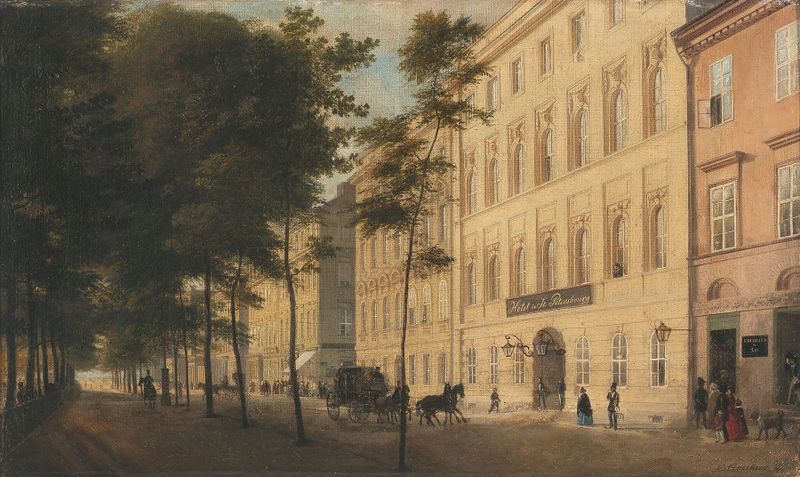
Blick in die Straße Unter den Linden, Ecke Charlottenstraße, mit dem Hôtel de St. Petersbourg
Eduard Gaertner

The Royal Opera, Unter den Linden, Berlin
Eduard Gaertner
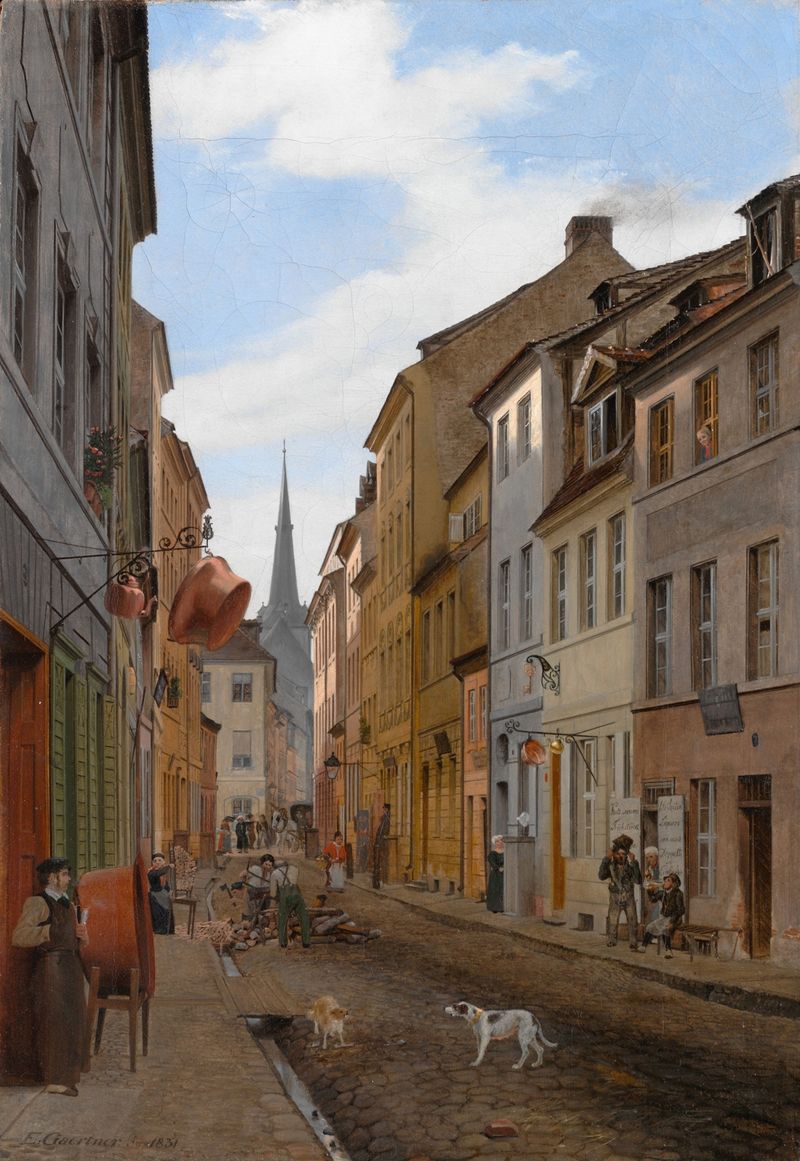
Parochialstrasse in Berlin
Eduard Gaertner
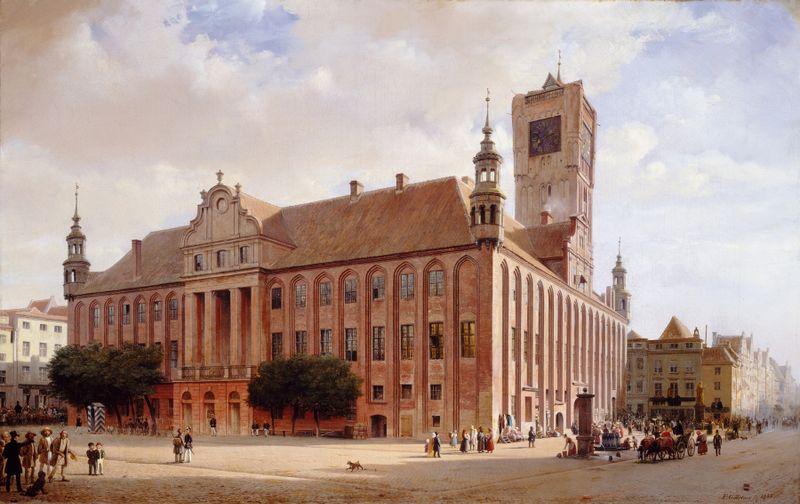
City Hall at Thorn
Eduard Gaertner
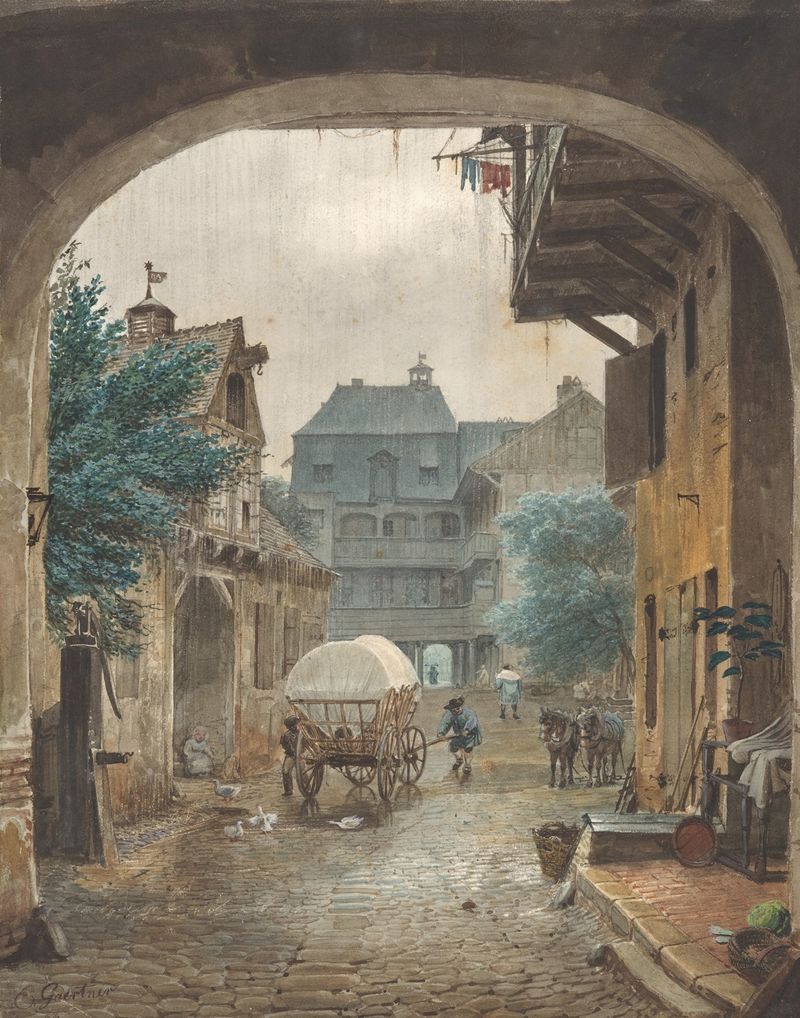
View into the Courtyard of an Inn at Colmar
Eduard Gaertner
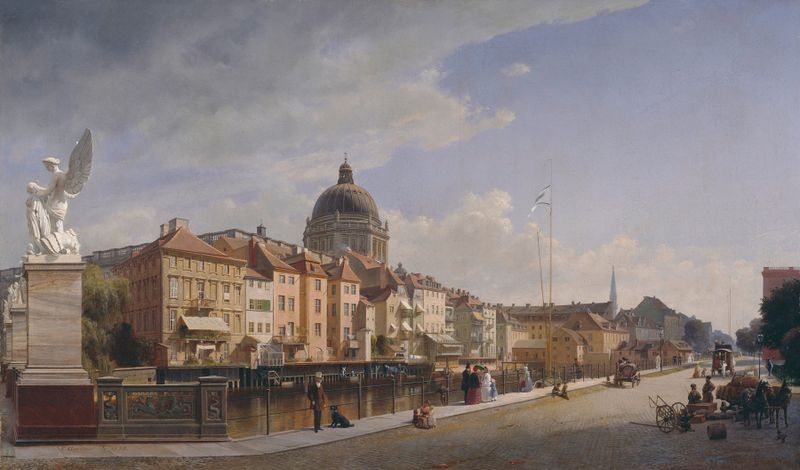
Rear view of the Houses at Schloßfreiheit
Eduard Gaertner
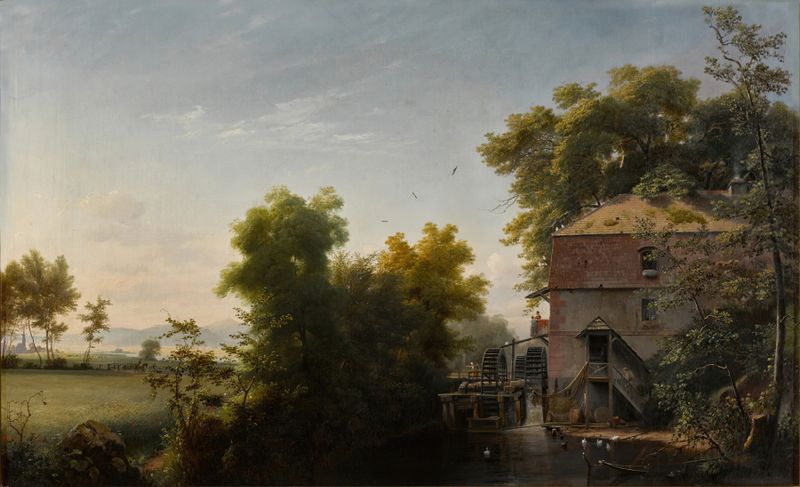
The Water Mill at Heilsberg
Eduard Gaertner
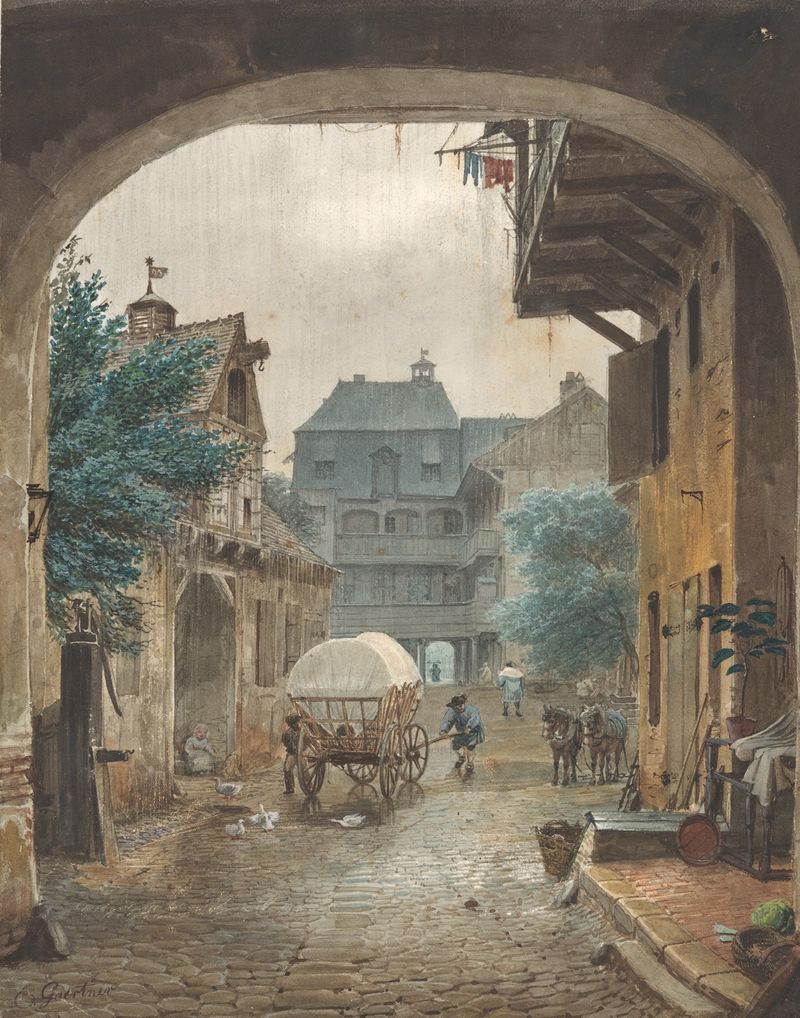
View into the Courtyard of an Inn at Colmar
Eduard Gaertner
More Architecture Art
Browse all →
The statue of Liberty
Frédéric Auguste Bartholdi

View of Houses in Delft, Known as ‘The Little Street’
Johannes Vermeer

View of Houses in Delft, Known as ‘The Little Street’
Johannes Vermeer

The Cathedral in Rouen. The portal, Grey Weather
Claude Monet

The yellow house
Vincent van Gogh

The Church in Auvers-sur-Oise, View from the Chevet
Vincent van Gogh