
Parochialstrasse in Berlin — History & Facts
Who listens when art speaks of silence? In this stillness, Parochialstrasse in Berlin beckons us to explore faith etched into the very fabric of urban life. Look to the center of the canvas, where the broad avenue stretches toward the horizon, inviting you to wander through its cobblestone embrace. The muted yet warm palette—ochres and browns—invokes a sense of nostalgia, while soft, diffused light bathes the scene, highlighting the quiet reverence of the surrounding architecture. Notice how the intricate details of the buildings, with their delicate frames and textured surfaces, stand resolute against the gentle backdrop of a cloud-streaked sky.
Each element in the composition speaks to a harmony where human presence and environment coexist. Yet, within this tranquil portrayal lies an undercurrent of introspection. The solitary figures, almost lost in the expanse of the street, reflect the tension between individuality and community, a poignant reminder of faith’s role in our lives. The absence of bustling crowds emphasizes a spiritual solitude, suggesting that in the heart of the city, one can find solace and connection to something greater.
The play of light and shadow further enhances this motif, creating a dialogue between the seen and the unseen. Eduard Gaertner painted this work in 1831, during a period of burgeoning Romanticism in Europe, when artists were increasingly exploring themes of emotion and individuality. Living in Berlin, Gaertner was immersed in an evolving cultural landscape marked by industrialization and urban growth. Parochialstrasse stands as a testament to this transformative moment, capturing the essence of faith within the urban experience, merging the sacred and the mundane with remarkable subtlety.
More Artworks by Eduard Gaertner
Browse all →
View of Berlin with the Ephraim Palais at Left
Eduard Gaertner
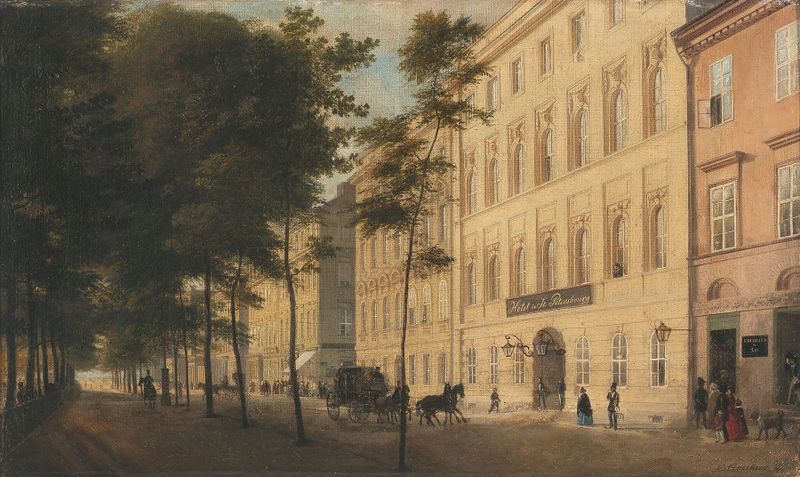
Blick in die Straße Unter den Linden, Ecke Charlottenstraße, mit dem Hôtel de St. Petersbourg
Eduard Gaertner

The Royal Opera, Unter den Linden, Berlin
Eduard Gaertner
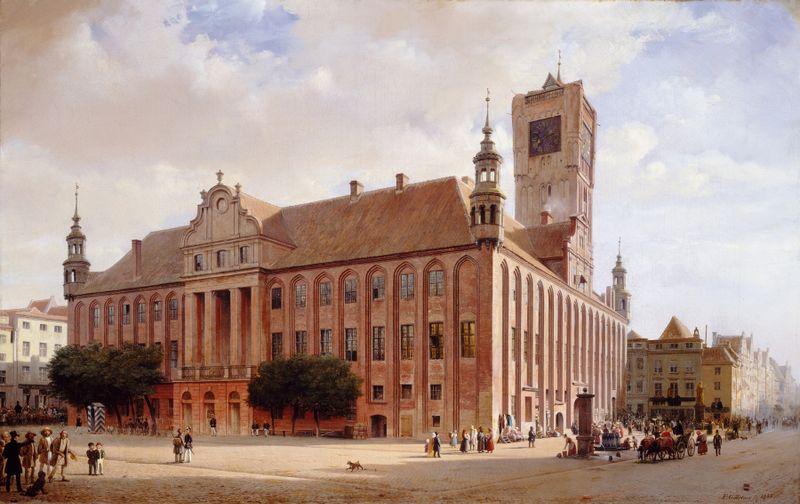
City Hall at Thorn
Eduard Gaertner
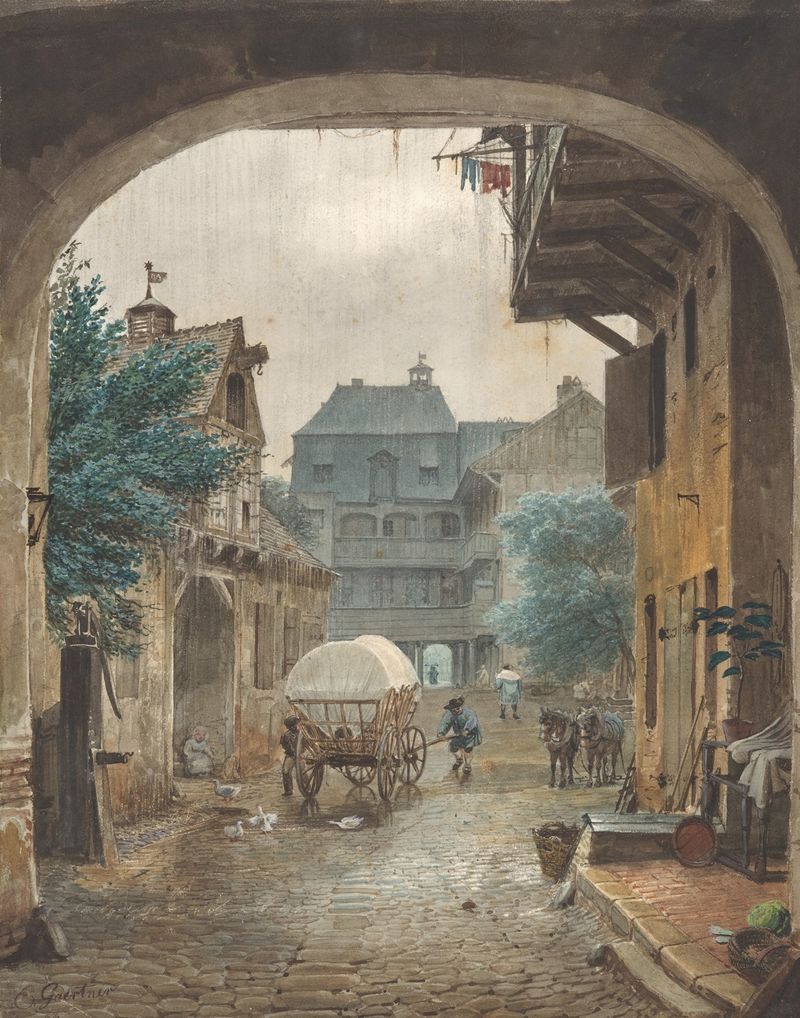
View into the Courtyard of an Inn at Colmar
Eduard Gaertner
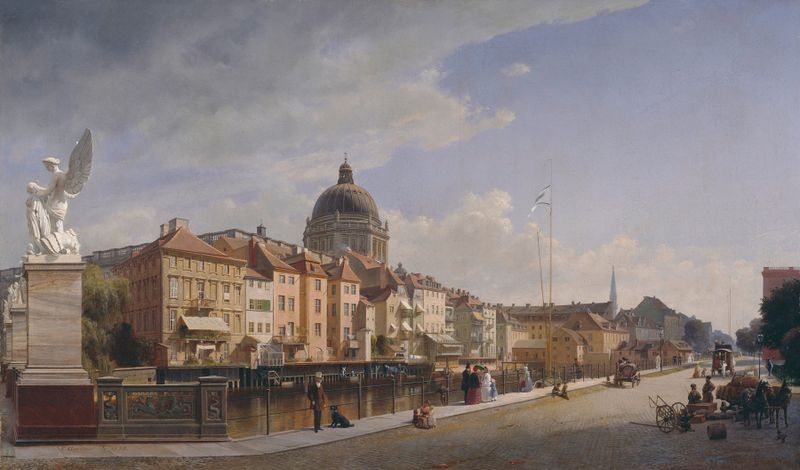
Rear view of the Houses at Schloßfreiheit
Eduard Gaertner
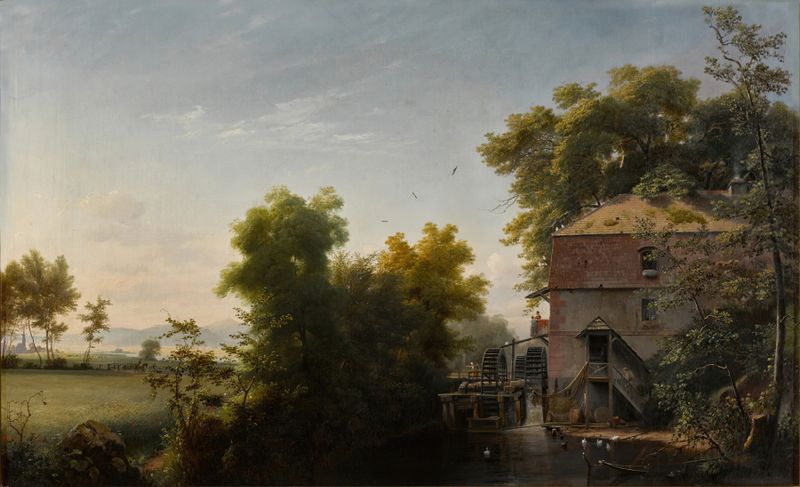
The Water Mill at Heilsberg
Eduard Gaertner

The Egyptian Temple Court in the Neues Museum, Berlin
Eduard Gaertner
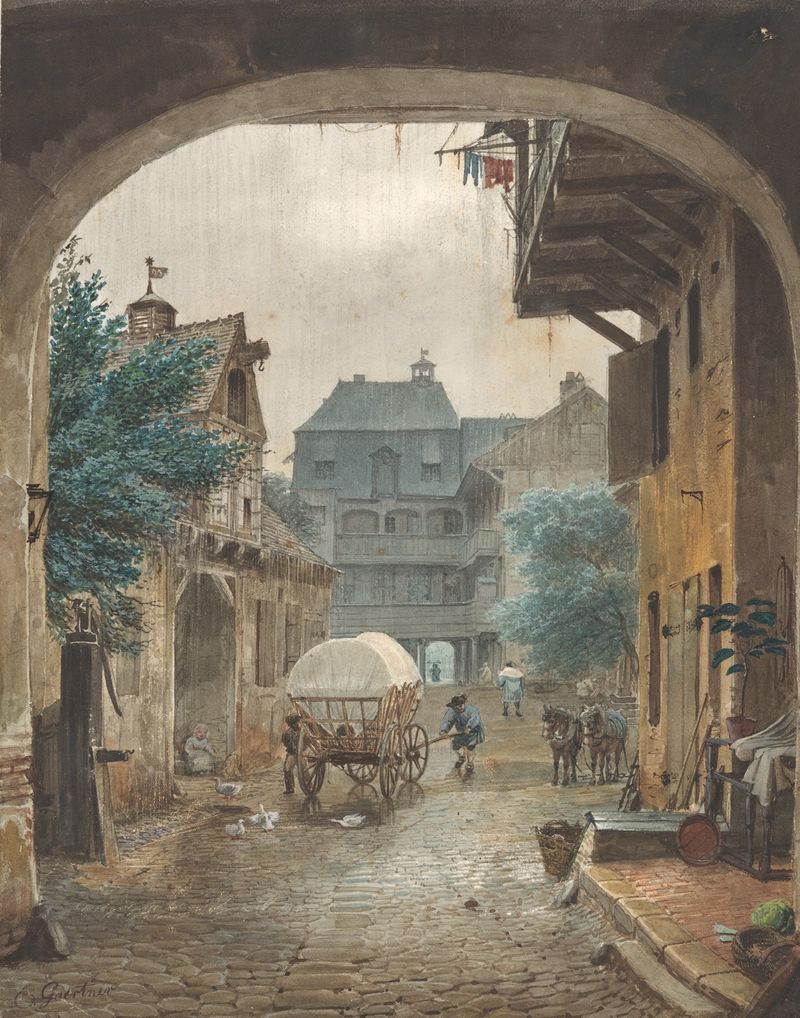
View into the Courtyard of an Inn at Colmar
Eduard Gaertner
More Architecture Art
Browse all →
The statue of Liberty
Frédéric Auguste Bartholdi

View of Houses in Delft, Known as ‘The Little Street’
Johannes Vermeer

View of Houses in Delft, Known as ‘The Little Street’
Johannes Vermeer

The Cathedral in Rouen. The portal, Grey Weather
Claude Monet

The yellow house
Vincent van Gogh

The Church in Auvers-sur-Oise, View from the Chevet
Vincent van Gogh