Classical landscape — History & Facts
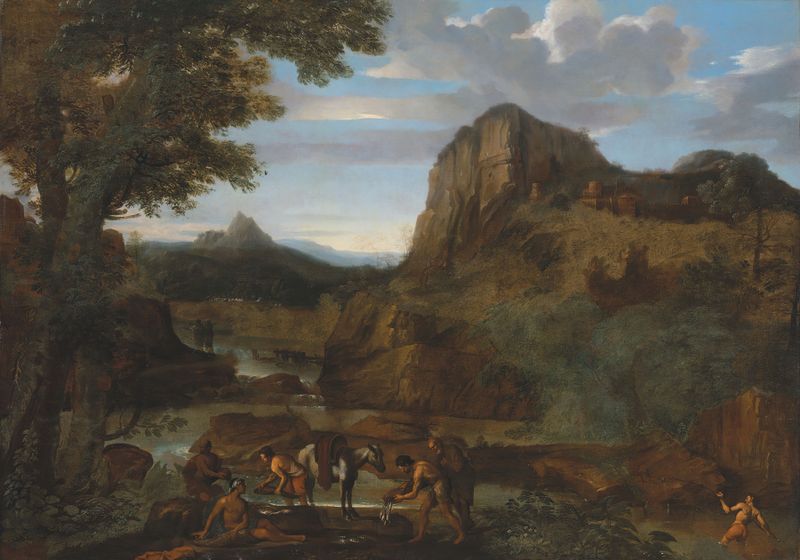
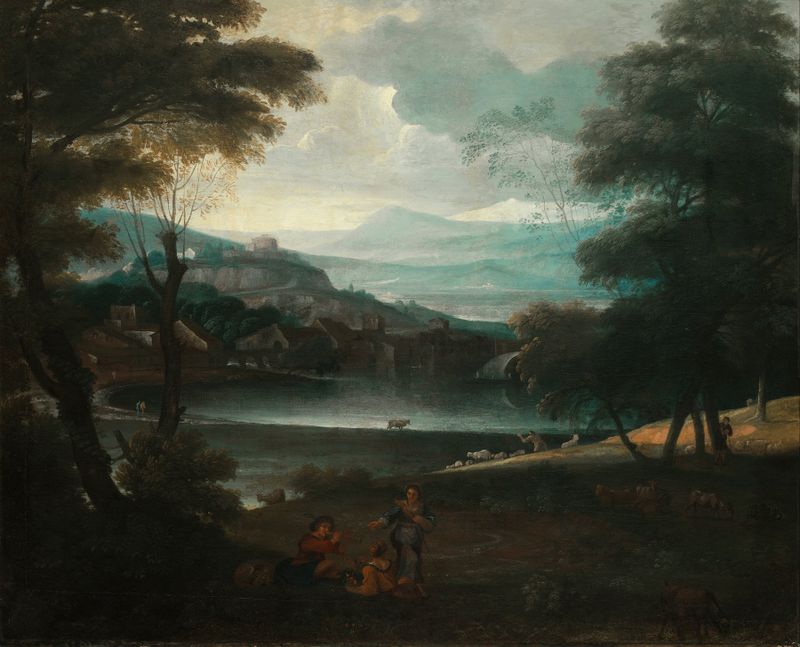
Where does light end, and longing begin? In the delicate brushstrokes of a landscape, memories intertwine with the air, evoking a sense of nostalgia that lingers long after the vision fades. Look to the horizon, where soft silhouettes of rolling hills beckon. The painter employs a masterful gradation of greens and browns, guiding your gaze through the pastoral expanse. Notice how the light bathes the scene, creating an ethereal glow that dances among the trees.
The composition is a harmonious blend of foreground and background, drawing you into a serene yet dynamic world, defined by the gentle curves of the land and the whispering skies. Within this tranquil vista, contrasts emerge: the stillness of nature against the fleeting moments of human existence. Tiny figures traverse the landscape, dwarfed yet integral to the scene, hinting at stories untold. The interplay of light and shadow suggests a deeper emotional resonance, a yearning that transcends the mere physicality of the landscape — an invitation to explore the history woven into every blade of grass. In 1650, Giovanni Francesco Grimaldi painted this work during Italy's Baroque period, a time ripe with artistic innovation and expression.
Based in Rome, he was influenced by the burgeoning trend of classicism in landscape painting, reflecting both the grandeur of nature and the intimate relationship between humans and their surroundings. Grimaldi's work encapsulates a transformative period in art, revealing an emerging appreciation for the beauty and complexity of the natural world.