Clearing with a Lumber Mill — History & Facts
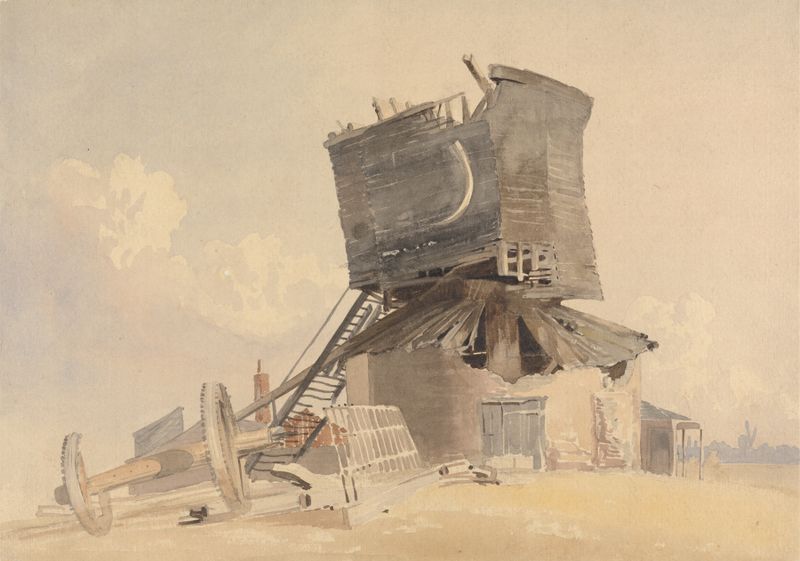
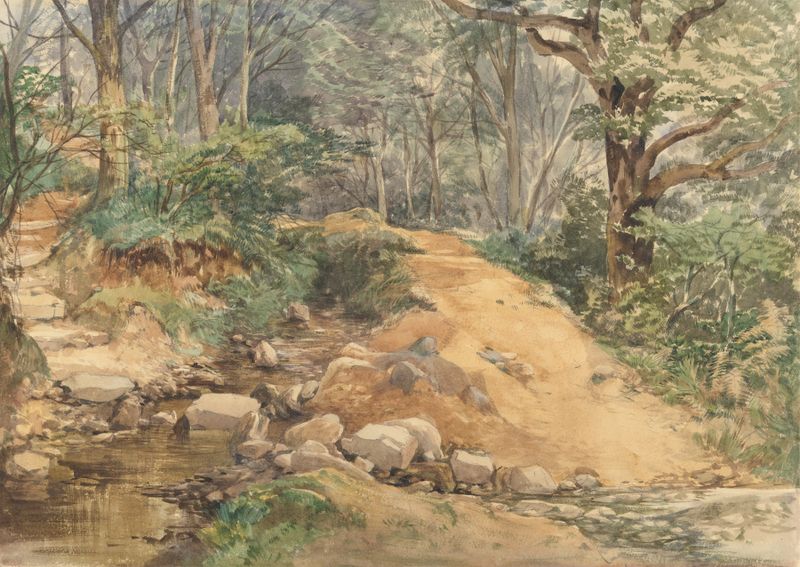
In the midst of labor, a moment of ecstasy unfolds, capturing the essence of human endeavor and resilience. Look to the left at the sturdy silhouettes of trees, their stark forms standing like sentinels amidst the chaos of the lumber mill. The artist employs a rich palette of earthy greens and warm browns, inviting you to absorb the raw beauty of nature that contrasts sharply with the industriousness of man. Notice how the light filters through the branches, casting dappled patterns on the hard ground below, emphasizing the laborers’ toil and the fleeting tranquility of the forest scene. A sense of tension dances through the piece, with the laborers’ rugged forms juxtaposed against the gentle sway of the trees.
The stark contrast between the harshness of the mill and the serene backdrop evokes a bittersweet sentiment — a reminder of nature being both a sanctuary and a resource exploited by humanity. Look closely at the expressions on the workers' faces; amidst their struggle, there lies an unexpected joy, a moment of connection with the land they are altering, hinting at both loss and celebration. Created in 1847, this work emerged during a period of rapid industrialization in America, where the clash between nature and industry was becoming increasingly pronounced. John Middleton, an artist of the Hudson River School, sought to capture these changing dynamics.
Through his brush, he not only documented the landscape but also the complex emotional relationship between man and the environment during a transformative era in art and society.