A Country Lane — History & Facts
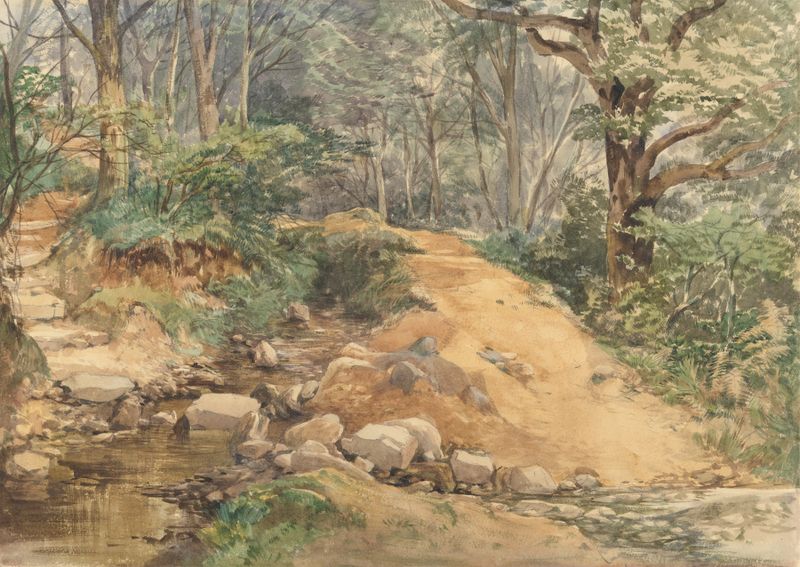
What if silence could speak through light? In the heart of nature's embrace, a quiet lane whispers tales of renewal and rebirth, inviting reflection on the beauty of change. Look to the left at the gentle curve of the country lane, framed by lush greenery that dances in the soft breeze. Notice how the warm golden light filters through the leaves, creating a patchwork of sun and shade that guides your eye. The palette is rich yet subtle, with earthy tones harmonizing to evoke a sense of calm and familiarity.
The careful brushstrokes form a tapestry of textures—from the coarse bark of trees to the delicate petals of wildflowers lining the path—drawing you deeper into this pastoral scene. In this tranquil composition, contrasts thrive. The vibrant greens symbolize life and growth, while the muted browns of the lane suggest a passage of time, a journey taken. There's a mingling of solitude and community in the air—the lane, though empty, promises the footsteps of those who have wandered before.
It encapsulates a moment suspended in time, where the stillness speaks loudly of potential and the gentle promise of new beginnings. John Middleton painted this work around 1850, during a time of great change in the landscape of both art and society. Emerging from the shadowy influences of Romanticism, he embraced the burgeoning movement toward realism. The post-industrial revolution was transforming the English countryside, prompting artists like him to find solace in rural beauty as a counterbalance to urban encroachment, capturing the essence of rebirth in nature’s enduring cycles.