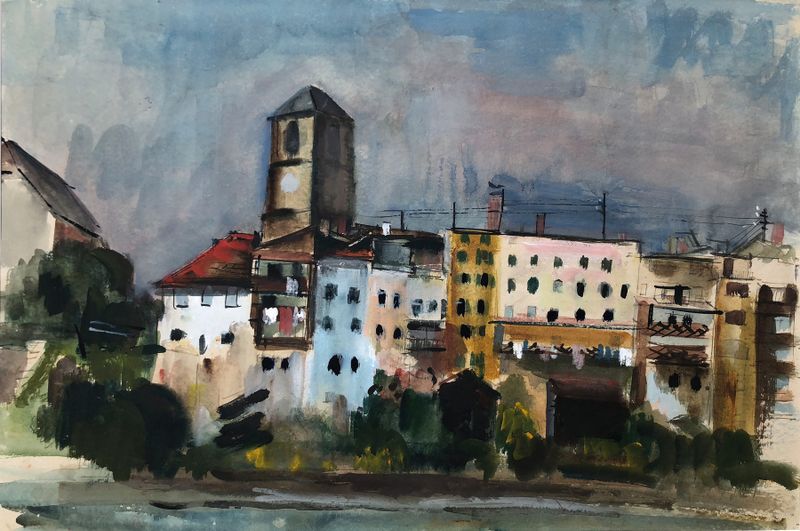
Clerf (Luxemburg) — History & Facts
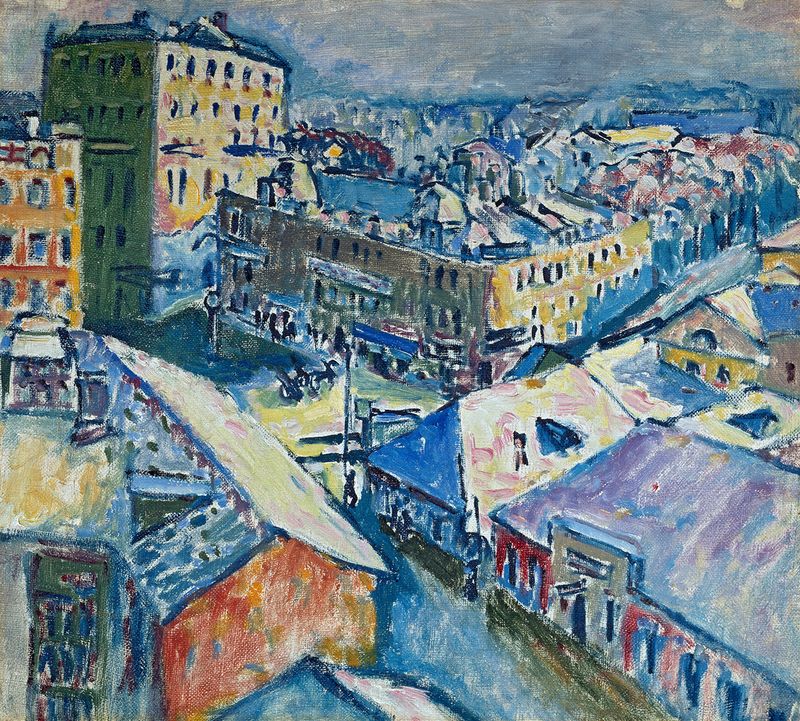
In the realm of art, illusions bloom, inviting us to explore layers of truth hidden beneath the surface. Focus first on the depth of the colors, where rich blues and greens intertwine like whispered secrets in the shadows. Notice how the painter uses light to create a shimmering illusion of movement, drawing your gaze toward the delicate interplay between foreground and background. The almost ethereal quality of the composition invites a lingering examination, revealing the subtle textures that breathe life into the canvas. As you delve deeper, the emotional tension emerges in the contrasts: the serenity of the landscape juxtaposed with the unsettling hints of chaos lurking beneath.
The blending of colors suggests a gentle harmony, yet the jagged lines in the foreground evoke a sense of unease, mirroring the tumultuous history of the world during its creation. Each brushstroke is intentional, crafting a narrative that speaks of resilience and fragility in equal measure. In 1943, Otto Geigenberger found himself in a world overshadowed by the atrocities of war. Painting Clerf (Luxemburg) during this tumultuous time in occupied Europe, he sought to capture a sense of place amidst uncertainty.
This period marked a significant evolution in his artistic journey, as he navigated personal and collective despair, transforming it into a visual language that resonates with emotion and illusion.
More Artworks by Otto Geigenberger
Browse all →
Hohe Munde bei Seefeld in Tirol
Otto Geigenberger
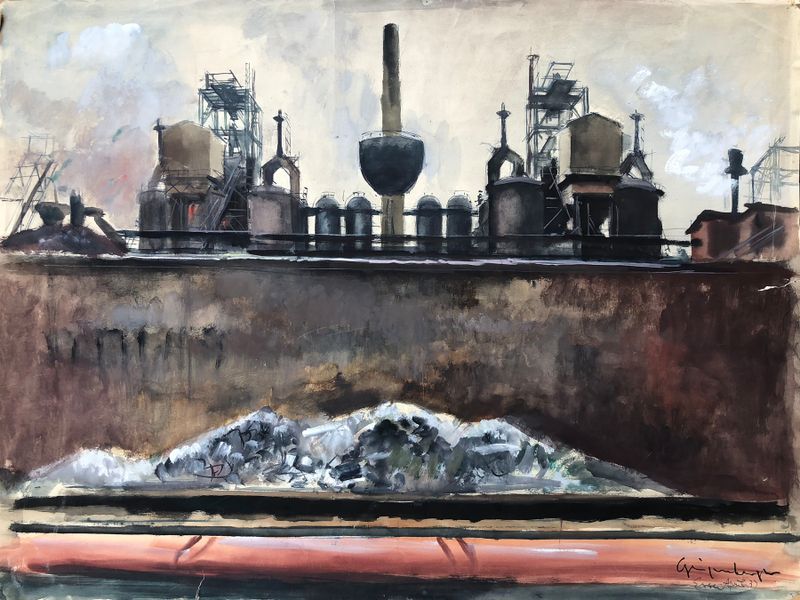
Stahlwerk Krupp in Essen
Otto Geigenberger

Landschaft mit Kirche
Otto Geigenberger

Passau am Inn 2
Otto Geigenberger
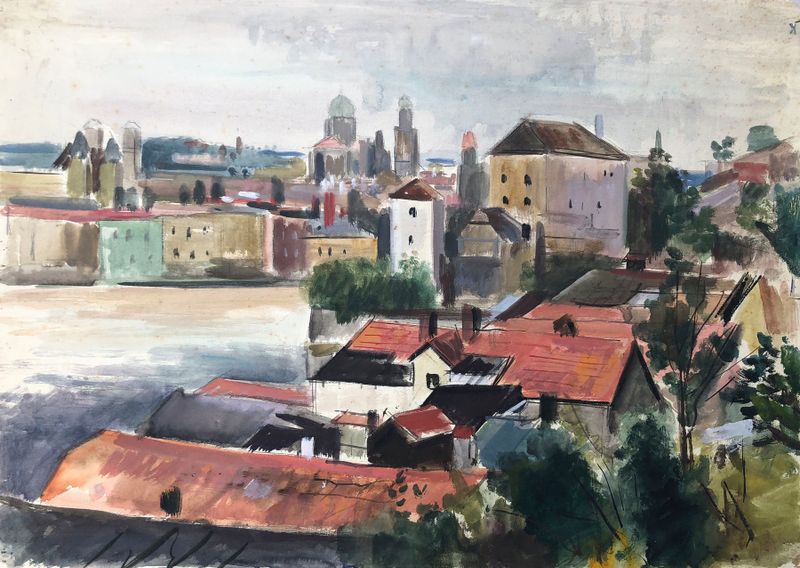
Passau am Inn
Otto Geigenberger
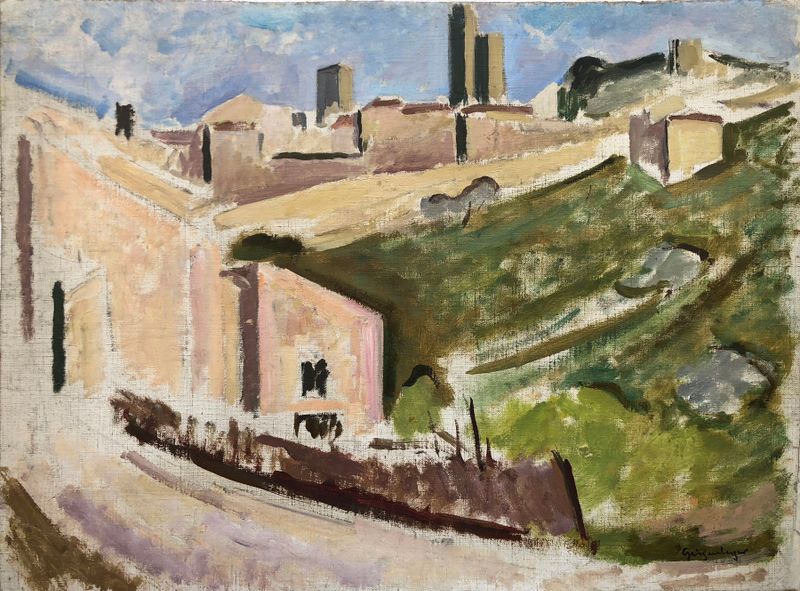
Südliche Stadt auf einem Hügel
Otto Geigenberger

Wasserburg am Inn – Häuserpartie am Inn
Otto Geigenberger

Wasserburg am Inn – Innfront
Otto Geigenberger
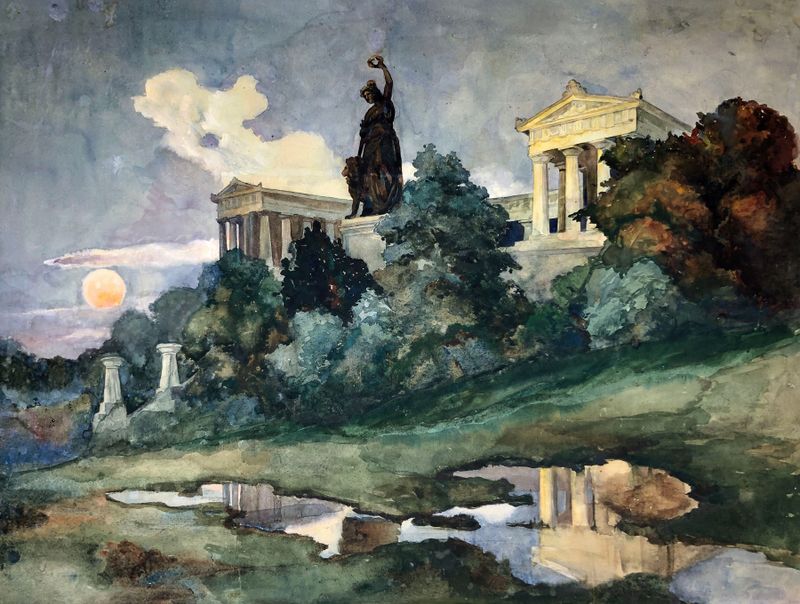
Sonnenuntergang an der Bavaria und Ruhmeshalle in München
Otto Geigenberger
Wasserburg am Inn – Innfront.
Otto Geigenberger