Close of the Day; Sunset on the Coast — History & Facts
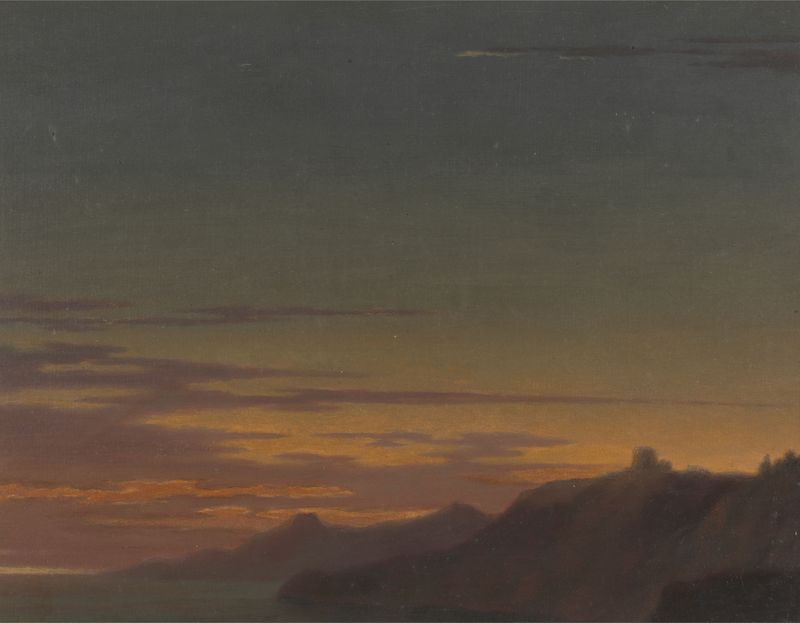
Who listens when art speaks of silence? In the stillness of twilight, the world holds its breath as day succumbs to night, and a violent beauty unfurls across the horizon. Look to the left at the soft gradient of pastel hues—pink, orange, and violet—blending into one another like whispers of a fading memory. The brushstrokes are delicate yet deliberate, capturing the moment with an elegance that belies the intensity of dusk. Notice how the silhouettes of jagged cliffs rise sharply against the luminescent sky, stark contrasts that evoke a sense of impending darkness.
Each wave crashes rhythmically below, its frothy edges illuminated by the last glimmers of sunlight, creating a paradox of serenity and turmoil. The emotional tension lies in this delicate balance between day and night, light and shadow. The radiant sky suggests hope and tranquility, while the tumultuous sea hints at the chaos lurking just beneath the surface. These contrasts create a dialogue between peace and violence, inviting the viewer to reflect on the complexities of existence.
The fleeting moment captured here could evoke a myriad of responses—yearning for the day to linger or embracing the inevitable calls of night. Alexander Cozens painted this work between 1768 and 1775, a period marked by personal upheaval and artistic exploration. As he developed his innovative style, Cozens sought to capture not just landscapes, but the emotional resonance of nature. This painting emerged during a time when Romanticism was beginning to take root, challenging existing conventions and inviting a deeper, introspective engagement with art and its capacity to convey the human experience.