Close of the Day: Sunset on the Coast — History & Facts
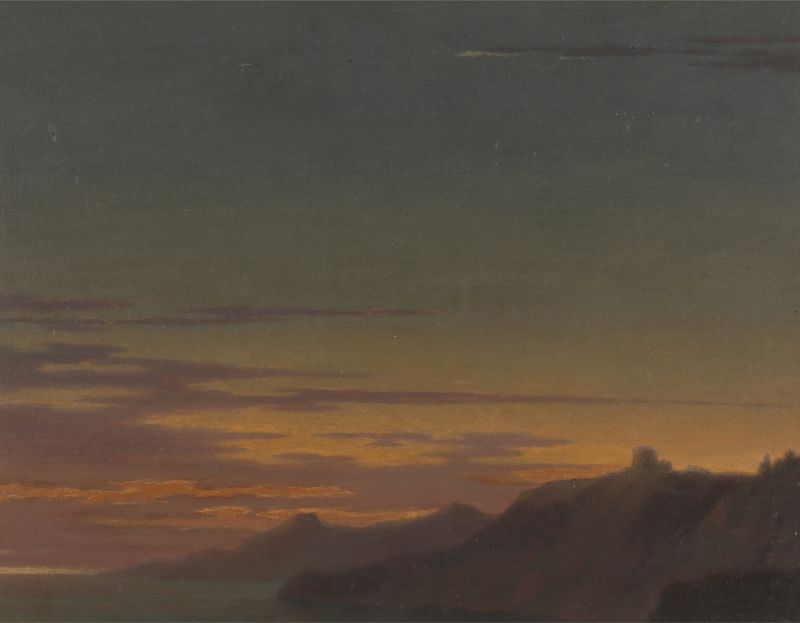
The setting sun drapes its golden cloak over the tumultuous sea, an echo of warmth that conceals the chill of despair lurking beneath. Here, beauty and betrayal intertwine, inviting the observer to delve into the duality of light and shadow. First, look to the horizon where the fiery sun sinks into the water, radiating vibrant oranges and deep purples. Notice how the colors blend, suggesting a fleeting moment of peace before night overcomes the day.
The gentle waves ripple with a soft sheen, captivating the viewer while also hinting at the turbulence hidden within. The delicate brushwork lends a sense of movement, creating a visual rhythm that pulls your gaze across the canvas. Delving deeper, the painting embodies a tension between serenity and underlying turmoil. The sky, seemingly a farewell to daylight, represents the end of innocence, while the tumultuous sea below speaks to the depths of betrayal—perhaps of one’s trust in nature or in a relationship.
The contrast between the tranquil surface and the hidden currents below serves as a poignant reminder that beauty can often mask deeper sorrows. In the mid-18th century, during a time marked by artistic experimentation and the rise of Romantic ideals, the artist found himself at a crossroads. Cozens created Close of the Day: Sunset on the Coast between 1768 and 1775, navigating the shifting landscapes of both his personal life and the broader artistic movement. He was influenced by the sublime qualities of nature, seeking to evoke profound emotions through his landscapes, while also grappling with his own experiences of loss and disillusionment.