Coastal Scene with Wooded Cliff — History & Facts
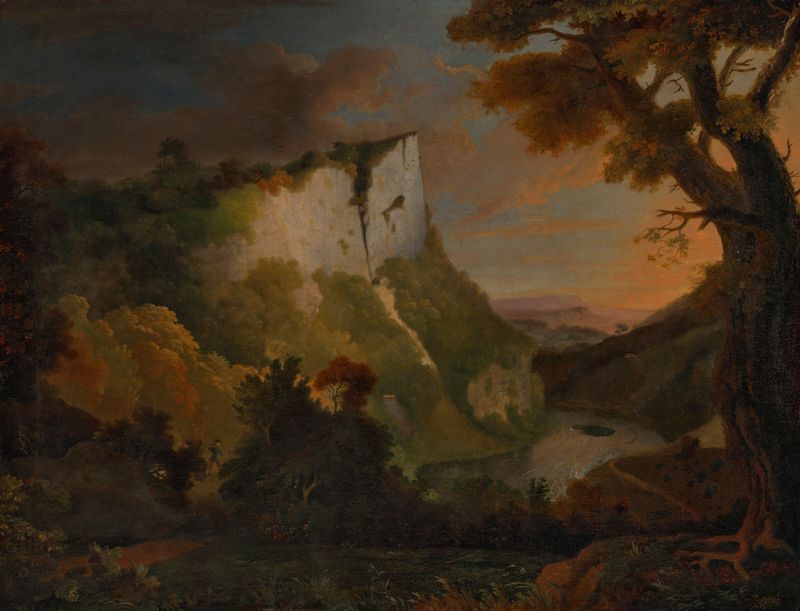
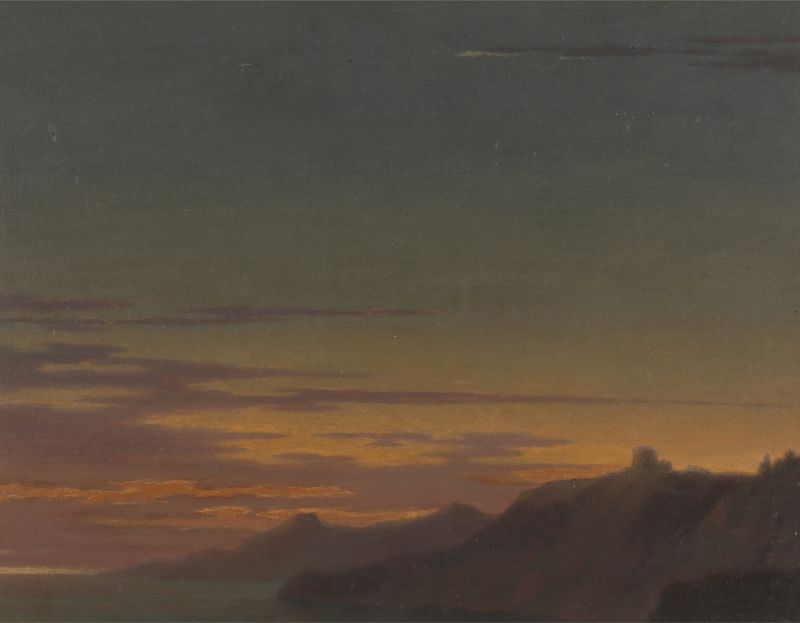
Can paint confess what words never could? In Coastal Scene with Wooded Cliff, silence pervades the canvas, inviting the viewer to linger in the stillness of nature’s embrace. Focus your gaze on the imposing cliff to the right, where verdant trees cling precariously to the edge, their leafy silhouettes contrasting with the soft, muted blues of the sea below. The gentle waves ripple with a calming grace, and a subtle play of light bathes the scene, guiding your eyes to the horizon where sky meets water. Cozens employs a delicate palette, blending earth tones with cool hues, evoking an atmosphere of tranquility that seems to hold its breath. Yet, beneath this serene surface, emotions churn like the waves depicted.
The towering cliff symbolizes stability, while the sea embodies the unknown, suggesting a tension between permanence and change. Notice how the lone figure in the distance seems dwarfed by nature’s grandeur, eliciting feelings of isolation amidst beauty. This contrast between the intricate details of the foreground and the expansive background amplifies a sense of quiet reflection, beckoning the viewer to consider their place within the vastness of the world. In 1770, Cozens painted this work during a time when the Romantic movement was emerging, emphasizing the sublime in nature.
As he navigated his own artistic journey in England, the landscapes he crafted served as personal expressions of emotional depth, resonating with the era's growing fascination with the interplay of light and atmosphere. His innovative techniques laid groundwork for subsequent generations, capturing the essence of nature while echoing the silent dialogue between man and the environment.