Coast of Capri — History & Facts
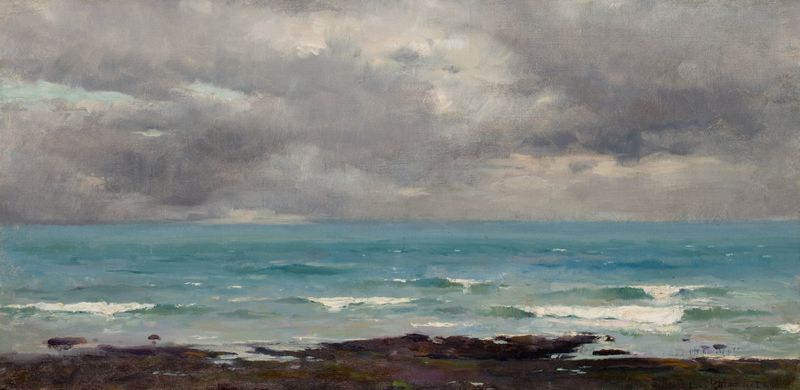
Time stands still in the moment captured by this remarkable piece, where the very essence of the coast breathes life into the canvas. Look to the horizon, where the azure sea meets the sky in a delicate embrace. The vibrant blues and greens blend seamlessly, inviting the viewer to lose themselves in the tranquility of the scene. Notice the textured brushwork that brings the rugged cliffs to life, each stroke a testament to the artist’s skill in rendering the play of light on water and rock.
The glowing warmth of the sun bathes the landscape, casting soft shadows that dance across the terrain, creating a harmonious balance between light and dark. As you delve deeper, consider the interplay of serenity and chaos; the stillness of the water contrasts with the jagged cliffs, symbolizing the tension between nature's beauty and its formidable power. The scattered boats, mere silhouettes against the shimmering surface, suggest fleeting moments of human presence, evoking a sense of nostalgia for a simpler time. Each detail, from the wisps of clouds to the gentle ripples, holds a story of fleeting moments, reminding us of the passage of time and the ephemeral nature of life. Louis Ritter painted this work in 1889 while he was in Capri, Italy, embracing the vibrant art scene of the late 19th century.
This period was marked by a growing appreciation for plein air painting, as artists sought to capture the essence of their surroundings in natural light. Ritter was influenced by his contemporaries, who had recognized the beauty of capturing fleeting moments and the emotive power of color, thus solidifying his place in the evolution of landscape painting.