
Coastal scene by moonlight — History & Facts
Can beauty exist without sorrow? In Coastal Scene by Moonlight, the delicate interplay of light and shadow suggests a world teetering on the brink of chaos, where serenity and tumult dance in a quiet embrace. Look to the horizon, where the moon casts a silvery glow upon the gently rippling waves. Notice how the deep blues and greens of the sea contrast with the luminous white of the moonlight, creating a breathtaking depth that pulls the viewer in. The rugged coastline, rendered with both grace and strength, captures the tumultuous spirit of nature, inviting exploration of every brushstroke.
The artist’s deft handling of light gives life to the scene, highlighting the tranquil beauty while whispering of the underlying chaos of the wild sea. Beneath the surface of this seemingly serene landscape lies a profound tension. The stillness of the moonlit night masks the turbulent waters beneath, symbolizing the duality of existence—peace and turmoil intertwined. The distant clouds gather ominously, suggesting an impending storm, while the calmness of the beach seems to lull the viewer into a false sense of security.
This juxtaposition evokes contemplation on the fragility of beauty, reminding us that chaos often lurks close to tranquility. In 1839, while living in Paris, the artist captured this moment of coastal beauty amid a world filled with artistic revolution and social change. The Romantic movement was flourishing, emphasizing nature's grandeur and emotional depth, which influenced Gudin's work during this period. The painting reflects not only his personal exploration of maritime themes but also the broader context of a society grappling with the sublime amidst the chaos of changing times.
More Artworks by Théodore Gudin
Browse all →
Sormy Seas by a Chalk Coast
Théodore Gudin

The Gulf of Naples with View of Mount Vesuvius
Théodore Gudin
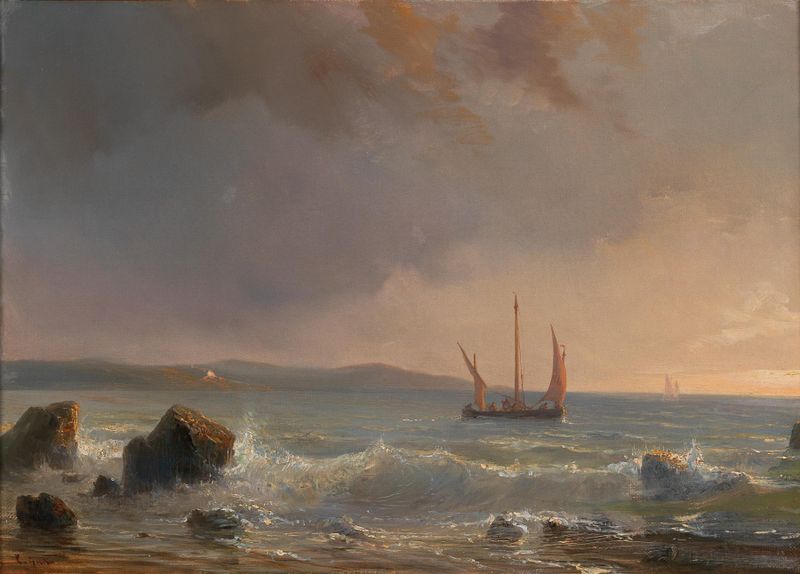
Abendstimmung über einer Meereslandschaft mit Segelbooten
Théodore Gudin
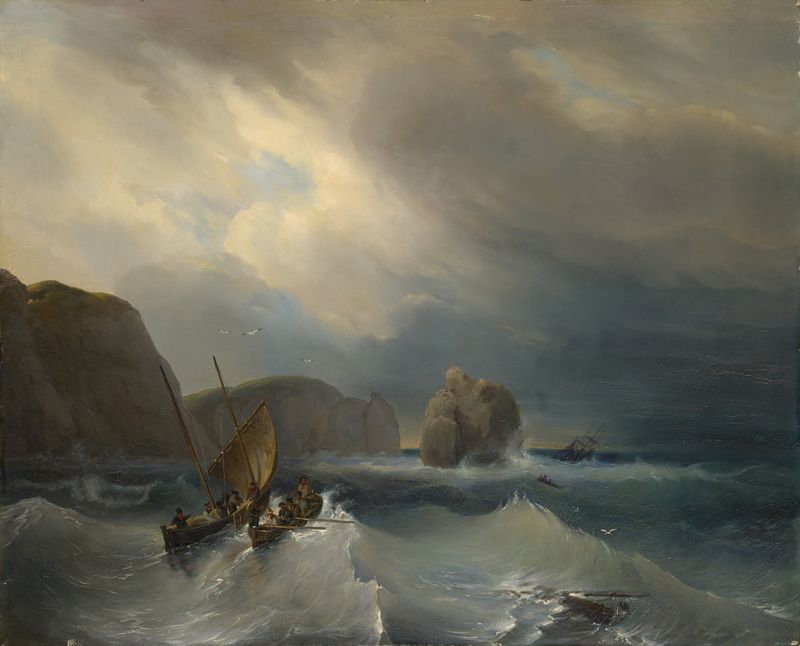
Rough Sea with Ships
Théodore Gudin

Fishermen at the harbour wall, low tide
Théodore Gudin
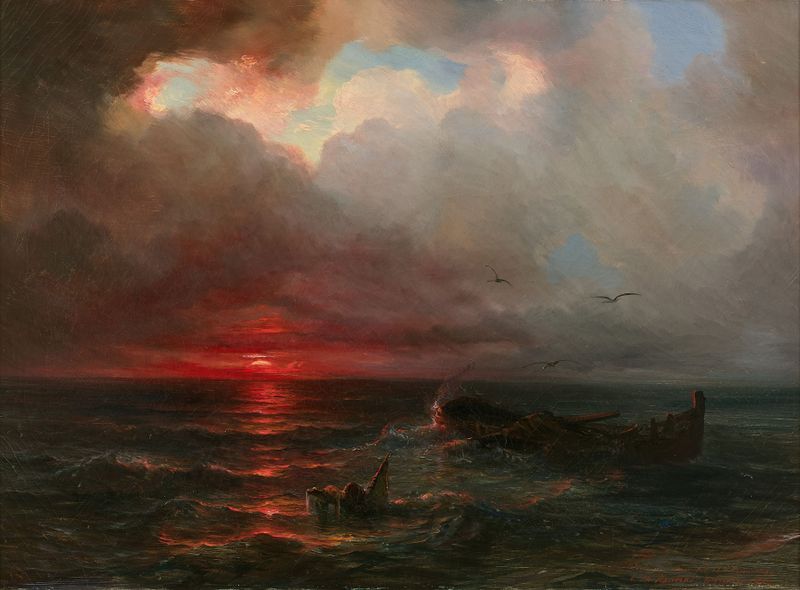
Coucher de soleil sur un littoral
Théodore Gudin
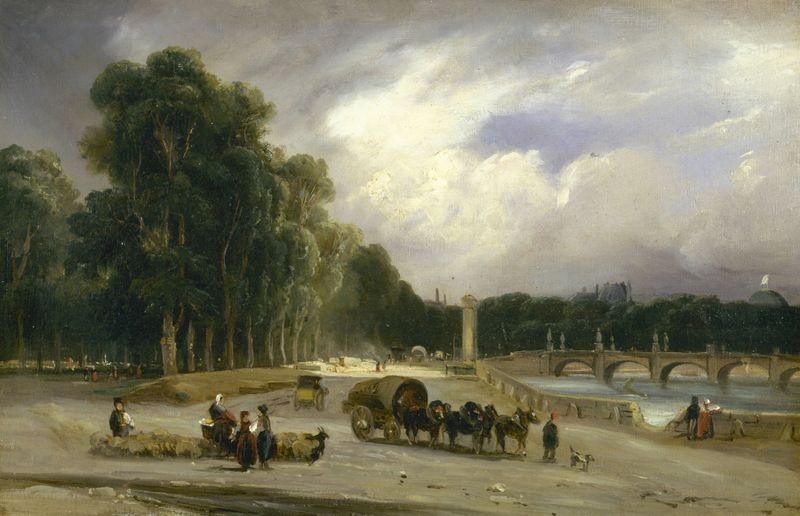
Le Cours-la-Reine
Théodore Gudin
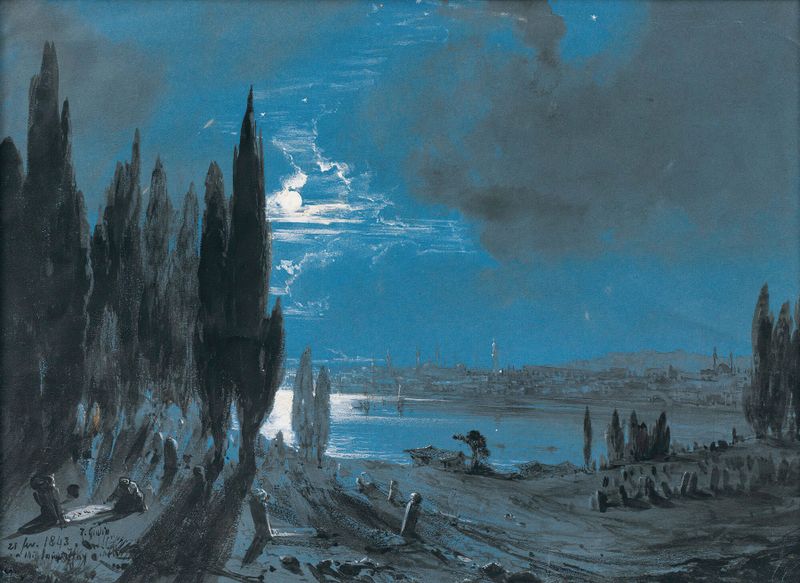
View Of Constantinople
Théodore Gudin

Shipwreck at Castello sul Mare in Rapallo
Théodore Gudin
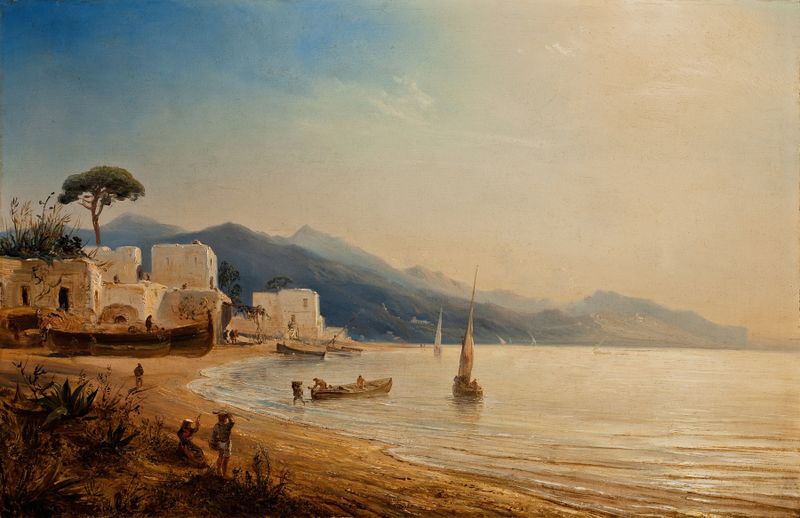
The Coast Near Naples
Théodore Gudin





