
Sormy Seas by a Chalk Coast — History & Facts
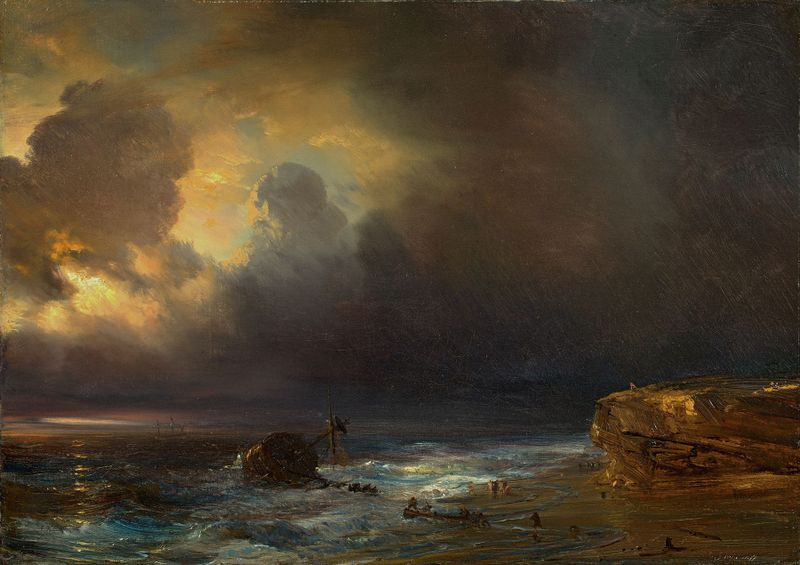
In the vast expanse of the ocean, grief swells like a tide, beckoning us to confront the tempests we bury within. Look to the left at the tumultuous waves, crashing violently against the chalky cliffs, their crests frothing with an urgency that mirrors the turmoil of the human heart. The soft, muted colors of the cliffs stand in stark contrast to the tumult of the sea, where deep greens and blues swirl with a haunting intensity. Notice how the light plays along the water's surface, illuminating fragments of chaos amidst the shadows, guiding your eye to the horizon where the sky seems to weep. The emotional tension of this piece lies in its juxtaposition: the serene yet imposing cliffs against the fierce, raging sea.
Each crashing wave seems to lament lost moments, echoing the profound sorrow that often accompanies change. The artist's brushwork captures not just motion, but the essence of grief, transforming the landscape into a reflection of internal struggle and resilience, forcing us to confront what lurks beneath the surface. In 1865, Théodore Gudin painted this evocative scene during a period when Romanticism was giving way to Realism in the art world. He was inspired by the dramatic landscapes of his native France, working to capture the raw emotion inherent in nature.
This was a time of personal and societal upheaval, and Gudin's work sought to explore both the beauty and tumult of the world around him, encapsulating the duality of existence through nature’s fury.
More Artworks by Théodore Gudin
Browse all →
The Gulf of Naples with View of Mount Vesuvius
Théodore Gudin
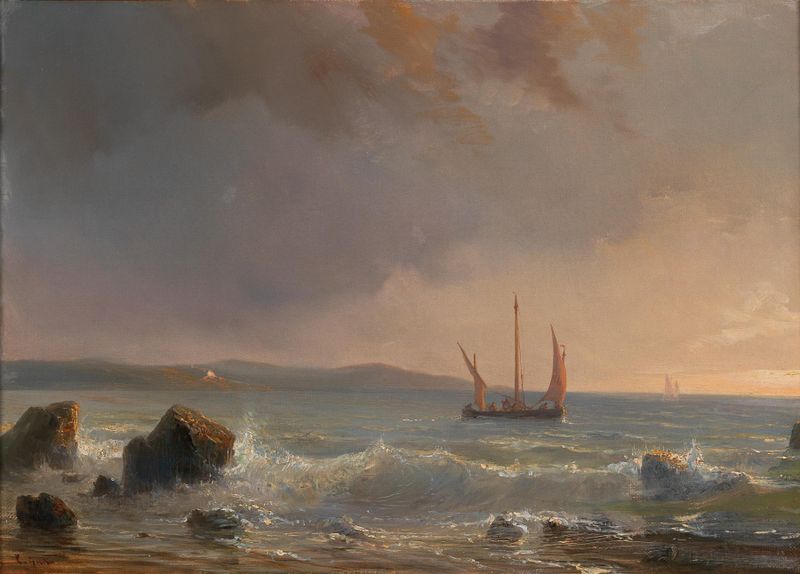
Abendstimmung über einer Meereslandschaft mit Segelbooten
Théodore Gudin
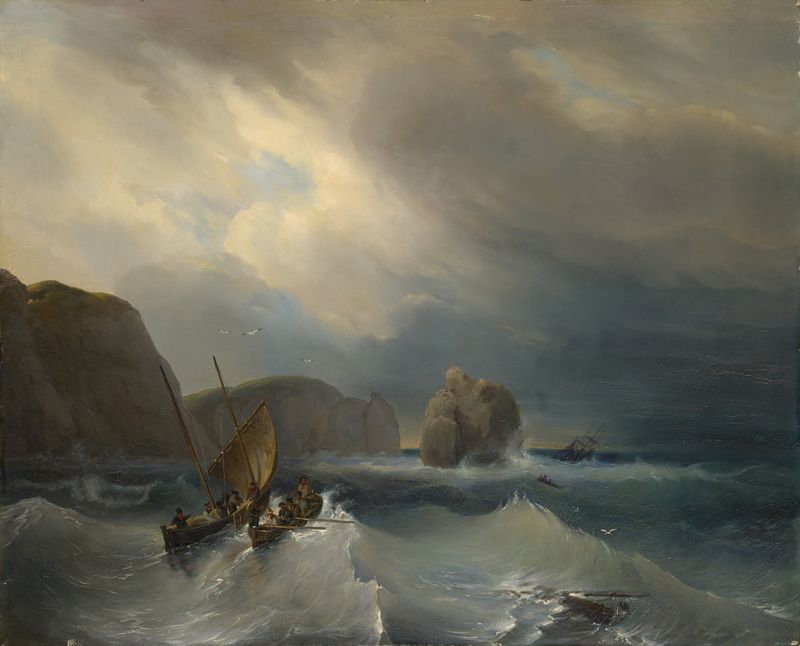
Rough Sea with Ships
Théodore Gudin

Fishermen at the harbour wall, low tide
Théodore Gudin
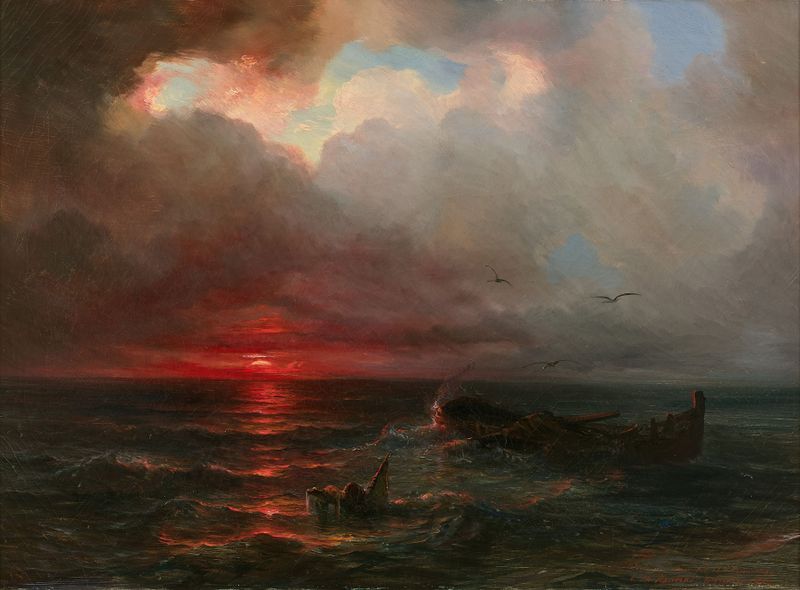
Coucher de soleil sur un littoral
Théodore Gudin
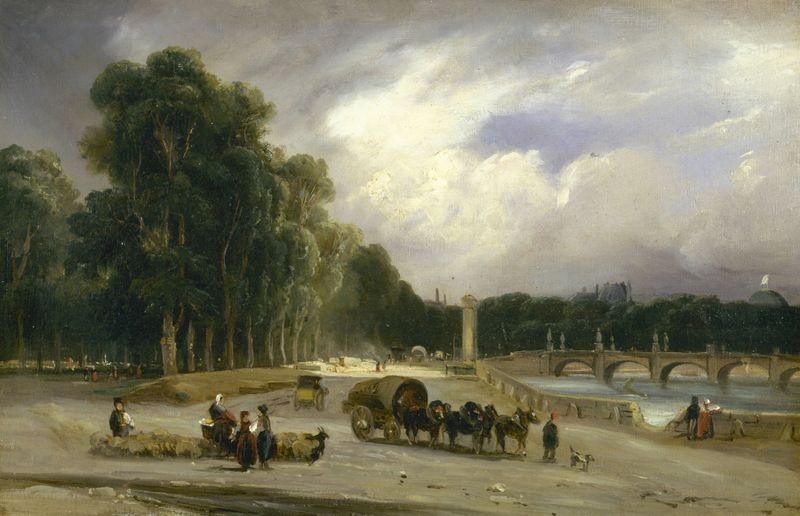
Le Cours-la-Reine
Théodore Gudin
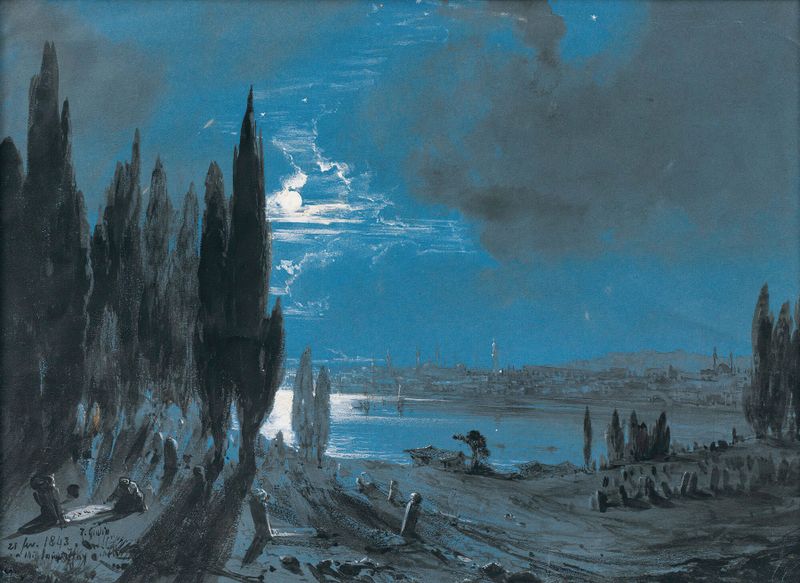
Coastal scene by moonlight
Théodore Gudin
View Of Constantinople
Théodore Gudin

Shipwreck at Castello sul Mare in Rapallo
Théodore Gudin
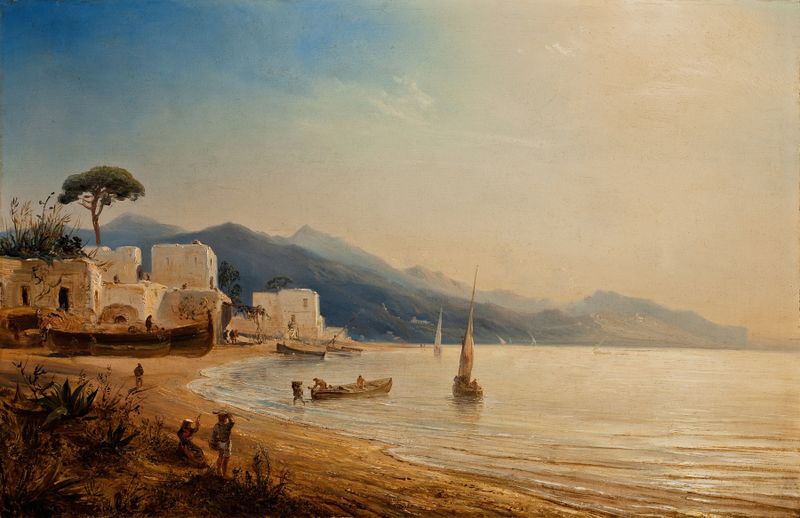
The Coast Near Naples
Théodore Gudin





