
Columns of the Temple of Neptune at Paestum — History & Facts
In the serene embrace of ruins, grief lingers quietly, whispering its tales through the remnants of grandeur. Look to the left at the towering columns, their strength juxtaposed with the decay that surrounds them. The light plays delicately across the weathered stone, illuminating the textures of time, while shadows deepen the sense of loss. Bold hues of ochre and earthy greens evoke a somber beauty, guiding the eye through a landscape that speaks of both history and heartache. The contrast between the majestic columns and the empty space around them symbolizes an echo of what once was, inviting viewers to reflect on impermanence.
Notice the way the tranquil sky melds into the horizon, hinting at the passage of time, while the absence of figures amplifies the void left behind. It’s a meditation on the nostalgia of greatness lost, where every detail resonates with the weight of memory. Constantin Hansen painted this evocative piece in 1838 while traveling in Italy. It was a time of personal and artistic exploration for him, as he grappled with themes of mortality and history.
The Romantic movement was at its peak, encouraging artists to delve into emotional depth and the sublime beauty found in decay, making this work an essential reflection of both his life and the era's artistic concerns.
More Artworks by Constantin Hansen
Browse all →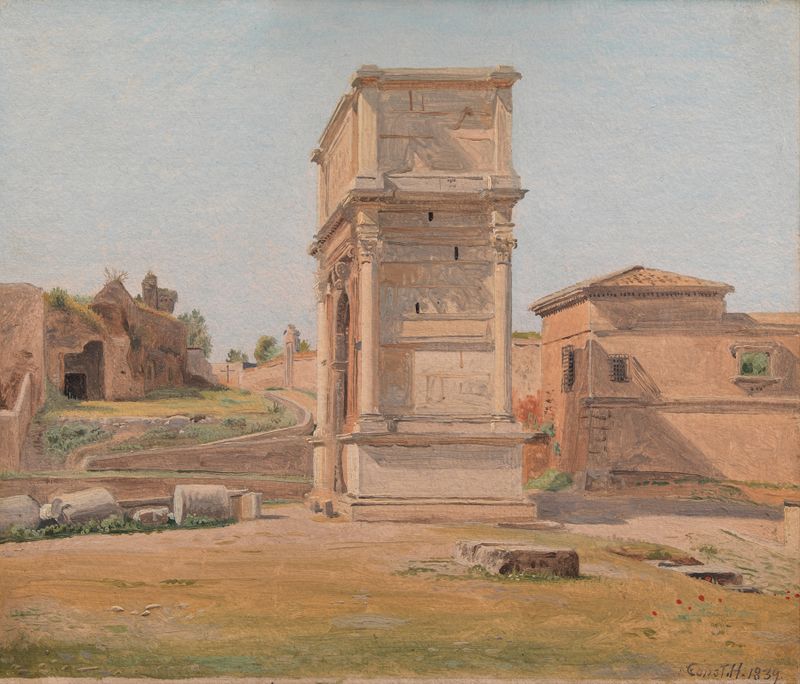
The Arch of Titus in Rome
Constantin Hansen
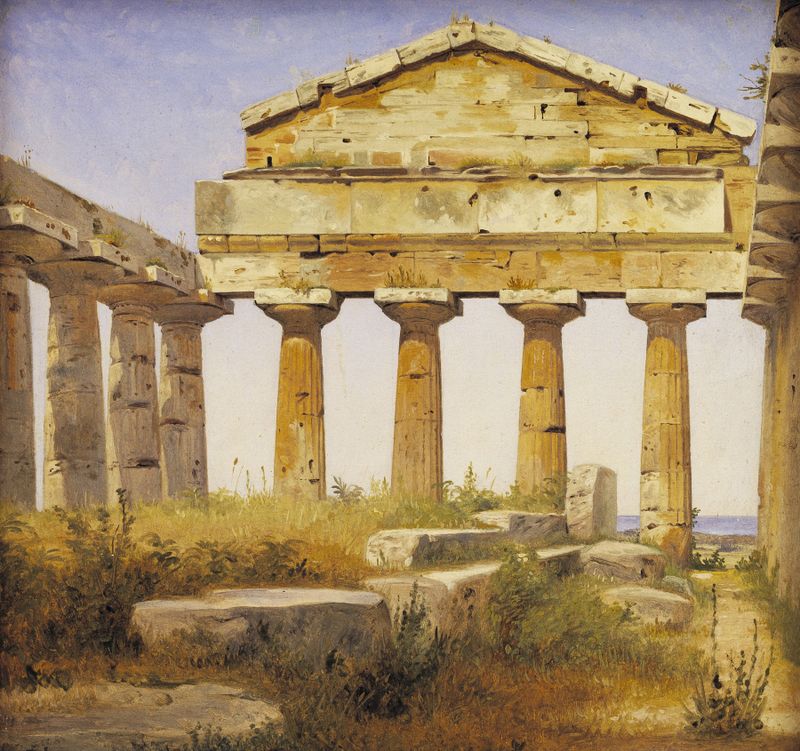
The Temple of Athena in Paestum
Constantin Hansen
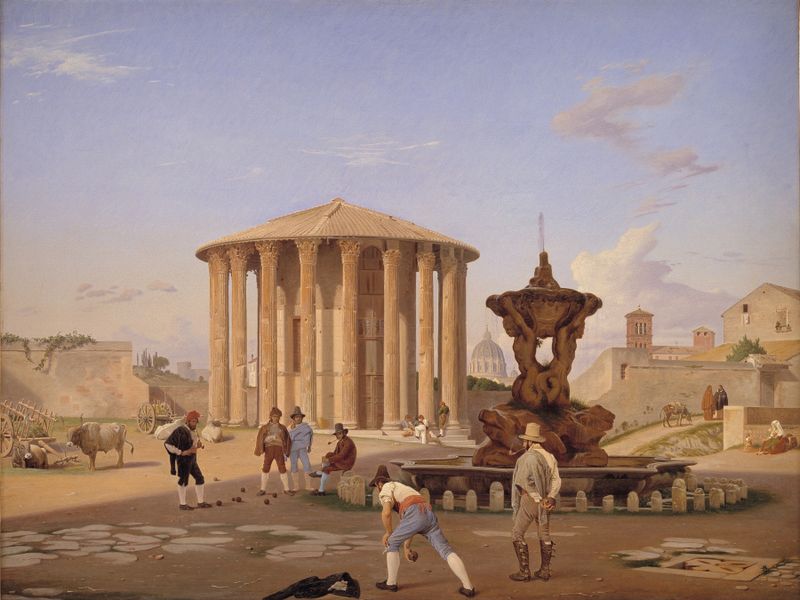
Piazza della Bocca della Verità with the so-called Vesta Temple in Rome
Constantin Hansen
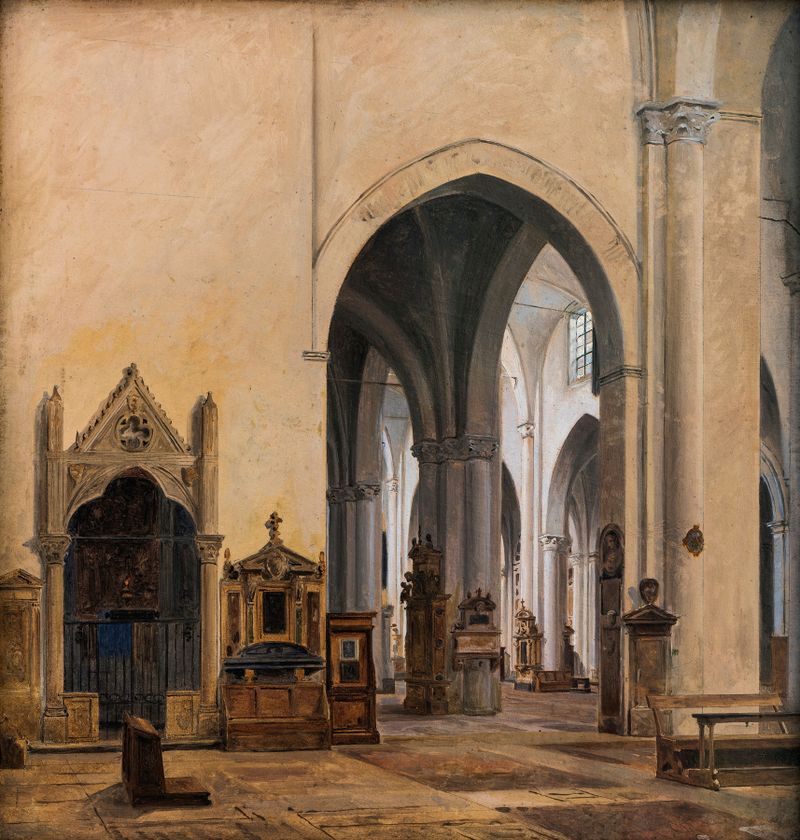
The interior of S. Maria sopra Minerva in Rome
Constantin Hansen
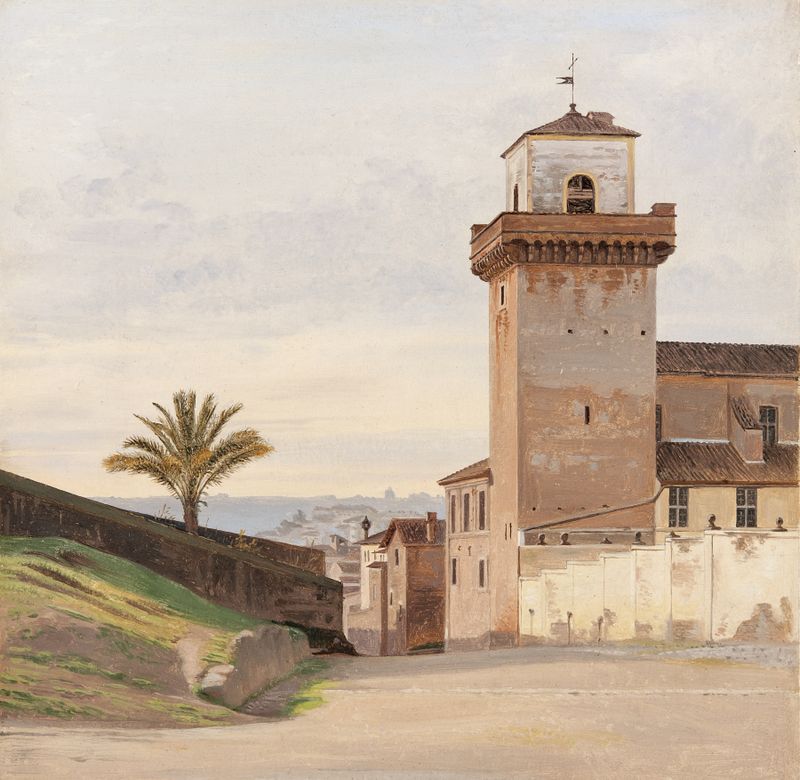
Church of San Pietro, Vincoli, Rome
Constantin Hansen
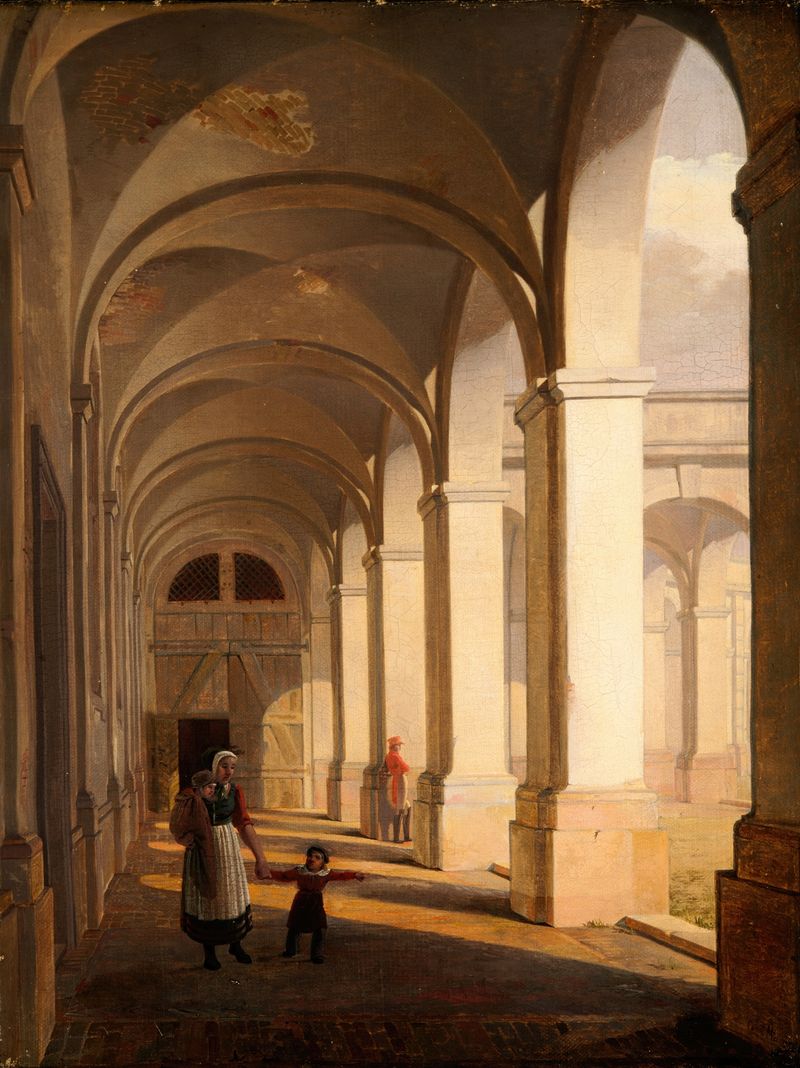
Portico of Christiansborg Castle, Copenhagen
Constantin Hansen
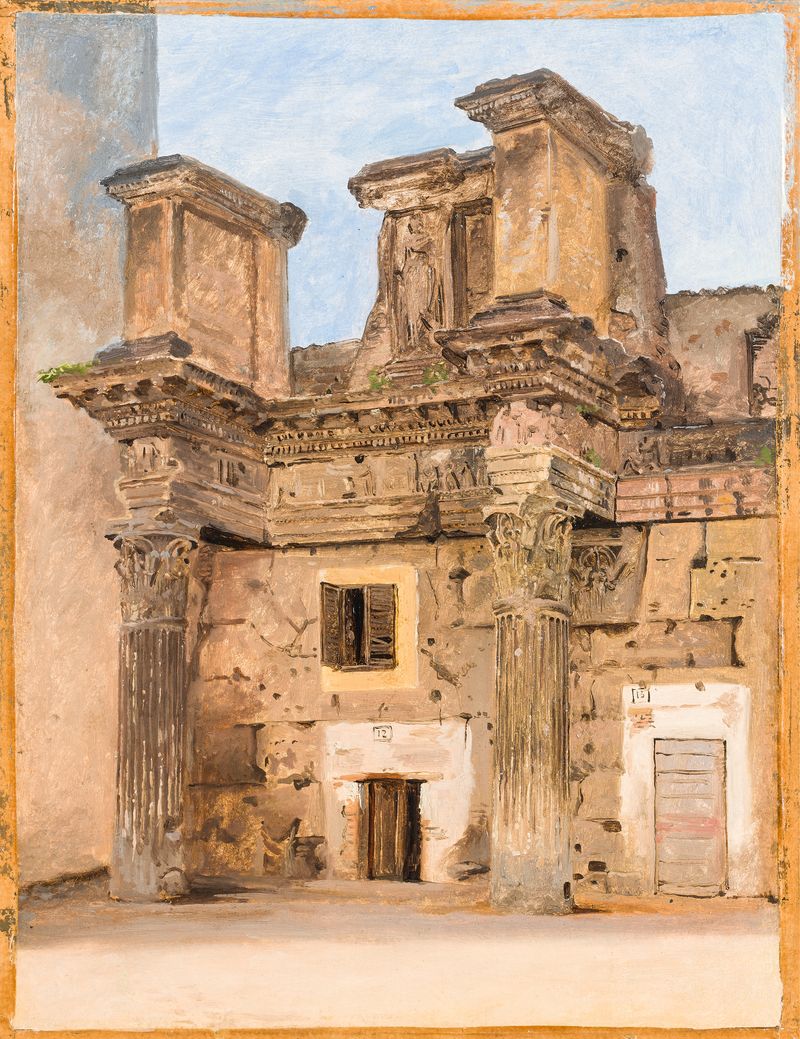
The Temple of Minerva on the the Forum of Nerva in Rome
Constantin Hansen
More Architecture Art
Browse all →
The statue of Liberty
Frédéric Auguste Bartholdi

View of Houses in Delft, Known as ‘The Little Street’
Johannes Vermeer

View of Houses in Delft, Known as ‘The Little Street’
Johannes Vermeer

The Cathedral in Rouen. The portal, Grey Weather
Claude Monet

The yellow house
Vincent van Gogh

The Church in Auvers-sur-Oise, View from the Chevet
Vincent van Gogh