
The Temple of Athena in Paestum — History & Facts
What secret hides in the quiet of the canvas? Beneath the stillness of the ancient ruins, a whisper of innocence lingers, inviting us to explore the beauty of a forgotten world. Look to the left, where the majestic columns rise against the pale blue sky, their weathered surfaces telling tales of time. The light cascades gently, casting soft shadows that breathe life into the stone structures. Notice the careful arrangement of the composition: the temple stands stoically as the focal point, framed by the lush greenery surrounding it.
The palette, a harmonious blend of earthy tones and cool blues, evokes a sense of serenity that invites contemplation. Yet, it is in the details that deeper meanings unfold. Each worn column bears the weight of history, symbolizing both strength and vulnerability, while the untouched landscape around hints at innocence, untouched by the passage of time. The juxtaposition of the enduring temple against the ephemeral beauty of nature suggests a dialogue between permanence and transience, as if the ruins are guardians of lost stories.
This contrast evokes a quiet nostalgia, urging us to reflect on what has been preserved and what has faded away. Constantin Hansen created this work in 1838 during a period of burgeoning Romanticism, where artists sought to capture the sublime beauty of nature and ancient history. At the time, he was in Italy, immersed in the classical tradition, which greatly influenced his artistic vision. This painting reflects not only his personal journey but also the broader cultural reverence for antiquity that defined an era of exploration and appreciation for the past.
More Artworks by Constantin Hansen
Browse all →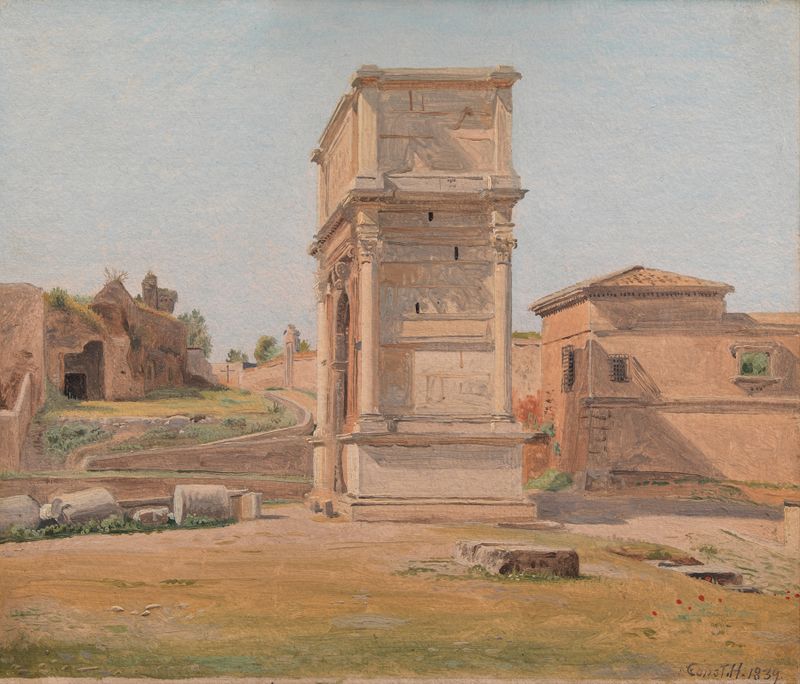
The Arch of Titus in Rome
Constantin Hansen
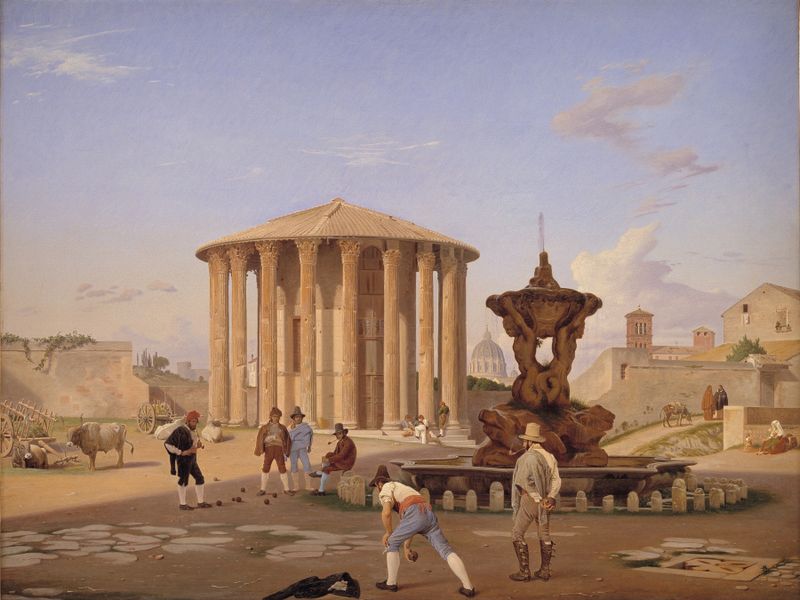
Piazza della Bocca della Verità with the so-called Vesta Temple in Rome
Constantin Hansen
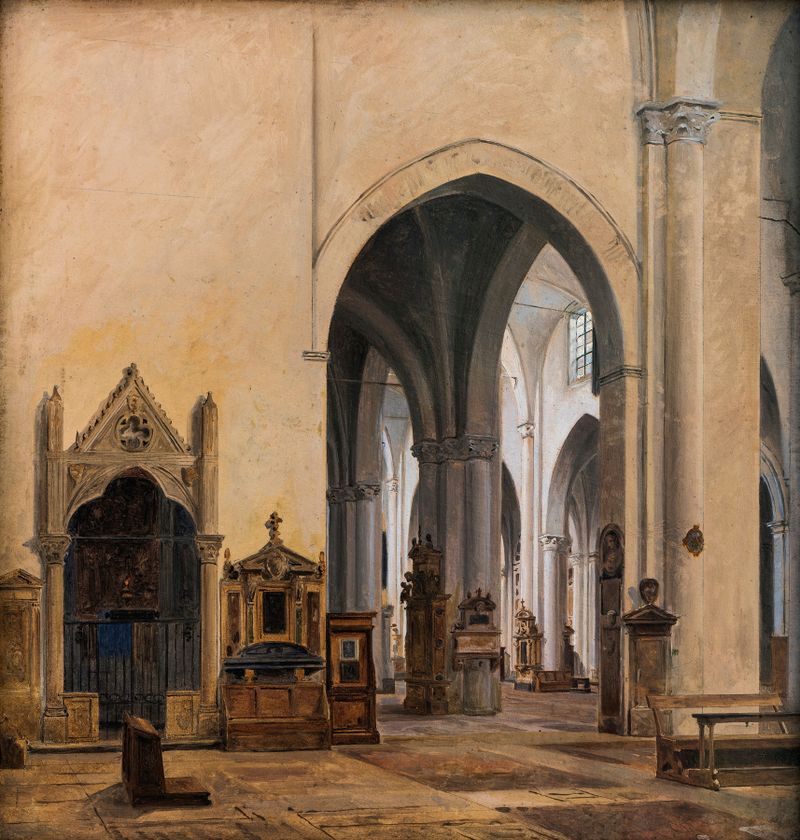
The interior of S. Maria sopra Minerva in Rome
Constantin Hansen
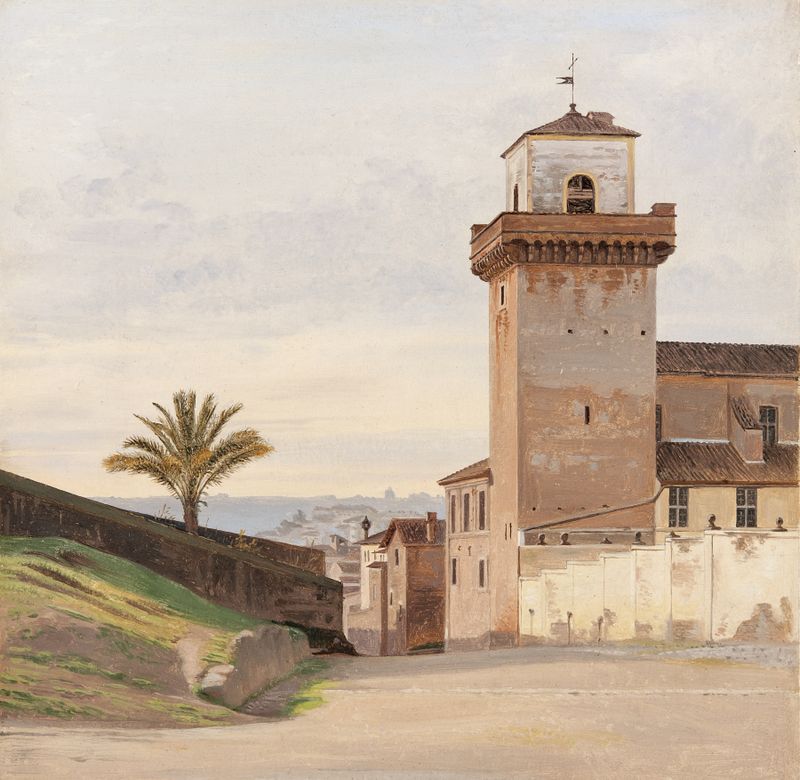
Church of San Pietro, Vincoli, Rome
Constantin Hansen
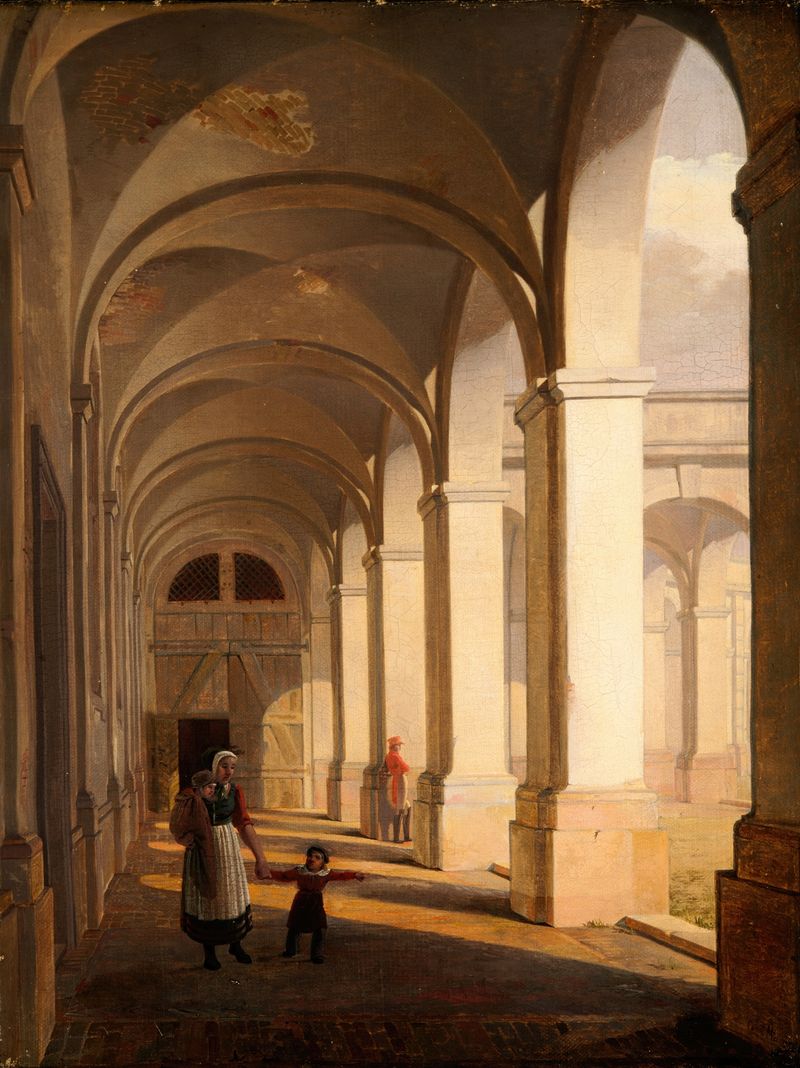
Portico of Christiansborg Castle, Copenhagen
Constantin Hansen
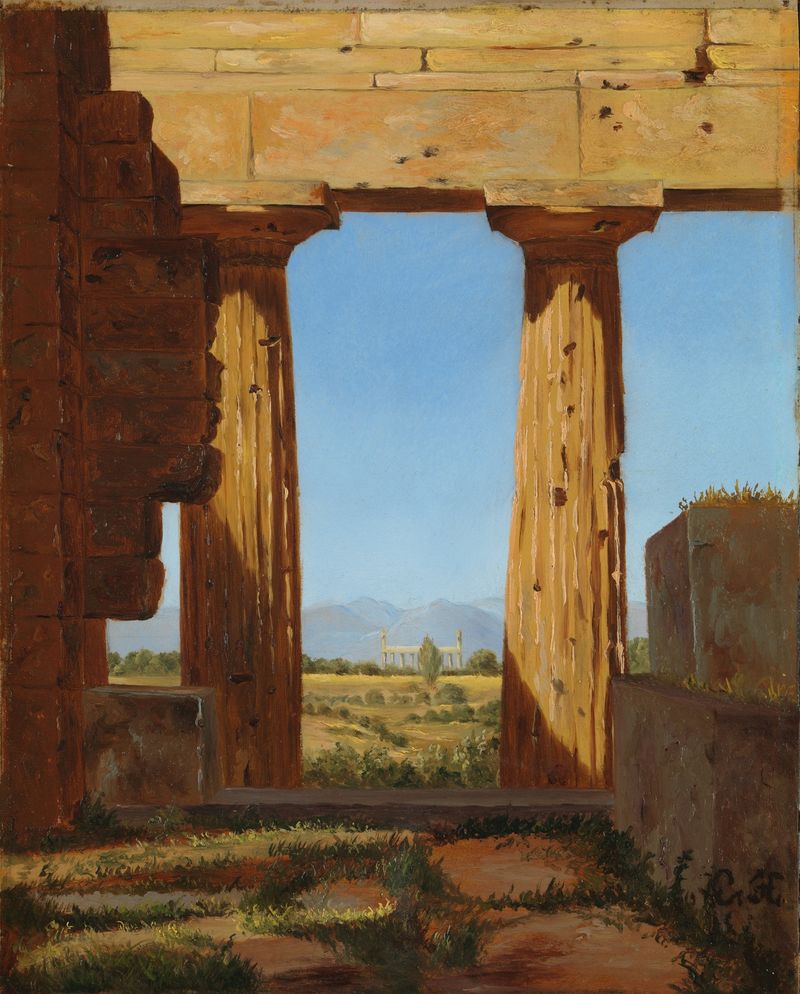
Columns of the Temple of Neptune at Paestum
Constantin Hansen
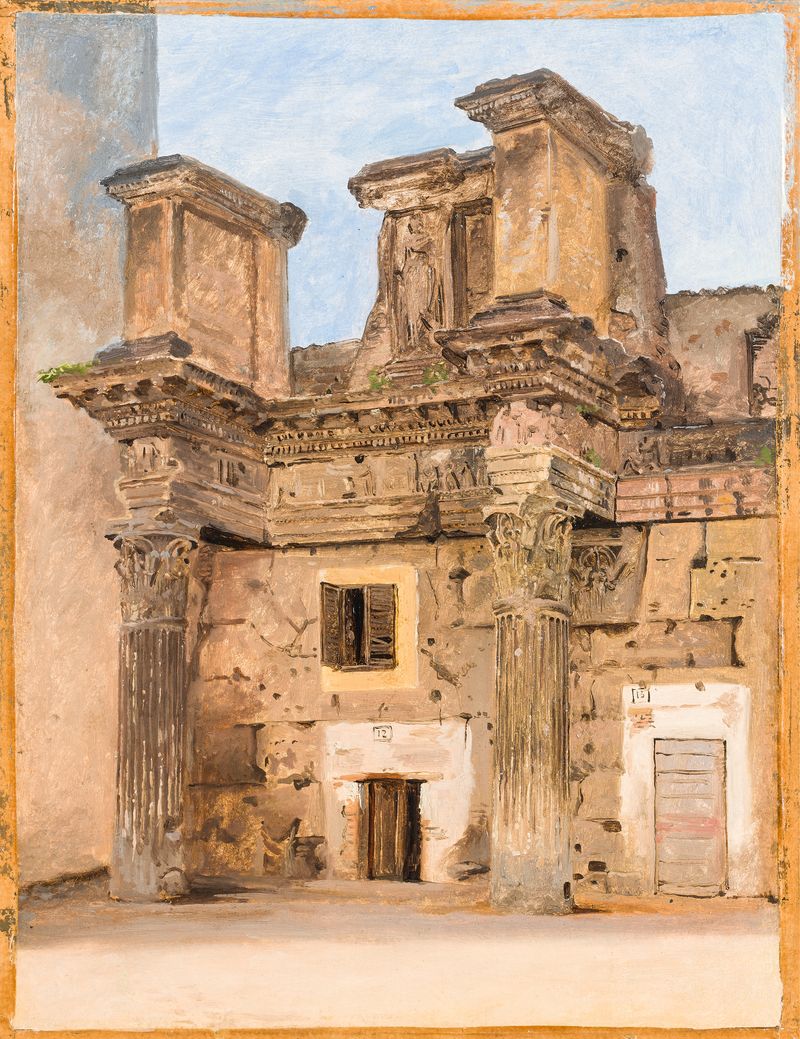
The Temple of Minerva on the the Forum of Nerva in Rome
Constantin Hansen
More Architecture Art
Browse all →
The statue of Liberty
Frédéric Auguste Bartholdi

View of Houses in Delft, Known as ‘The Little Street’
Johannes Vermeer

View of Houses in Delft, Known as ‘The Little Street’
Johannes Vermeer

The Cathedral in Rouen. The portal, Grey Weather
Claude Monet

The yellow house
Vincent van Gogh

The Church in Auvers-sur-Oise, View from the Chevet
Vincent van Gogh