Combat glorieux du vaisseau le Bucentaure contre trois vaisseaux anglais — History & Facts
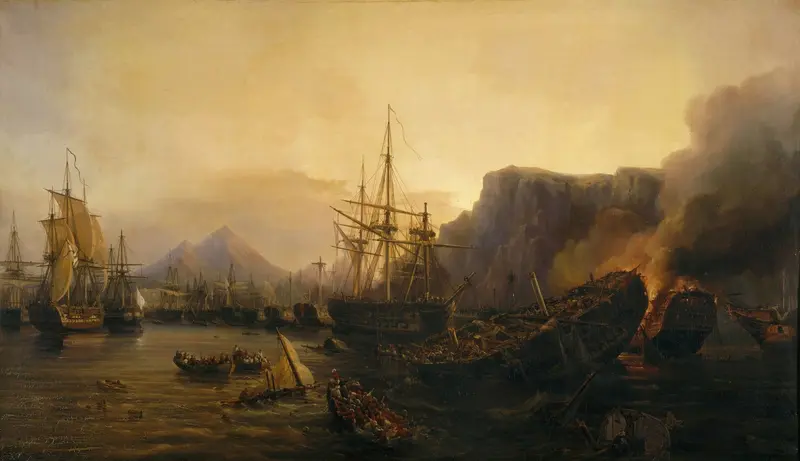
What first catches the eye in this painting is the drama of battle rendered through clouds of gun smoke and the battered sails of ships locked in deadly proximity. The artist, Auguste Étienne François Mayer, draws us into the chaos by placing the viewer almost at water level, where the cannon fire erupts in white bursts and tangled rigging cuts across the sky. The ships are not merely vessels, but characters: their flags torn, their decks crowded with figures in the thick of action.
Light pours in from the upper left, illuminating the smoke and giving the scene a sense of movement and urgency, while the calm blue above is a stark contrast to the violence below. Every detail, from the splintered spars to the anxious gestures of the crew, is orchestrated to hold the gaze and invite the viewer to imagine the sounds and shouts of the moment. Painted in 1836, this work belongs to a tradition of grand naval painting that flourished in the wake of the Napoleonic Wars, when maritime power was both a source of national pride and public fascination. Such paintings were often commissioned by governments or naval officers to commemorate victories, heroism, or the memory of famous ships—here, the Bucentaure, centerpiece of the French fleet at Trafalgar.
Yet history has kept few traces of this particular canvas; its original title and background were lost during the turmoil of the twentieth century, and its current identification is partly the result of later guesswork. Now housed in the Musée national de la Marine, the painting stands as both a record of historical imagination and a testament to the shifting fortunes of art and memory—inviting us to look again, and to wonder what stories still lie hidden in the haze.