
Conway Castle — History & Facts
What if beauty was never meant to be finished? In the interplay of light and shadow, Conway Castle compels us to confront the madness that resides within perfection. Look to the towering silhouette of the castle, dominating the canvas with its intricate battlements and looming presence. The artist skillfully employs a muted palette, blending earthy tones with wisps of gray, suggesting an atmosphere thick with history and whispers of forgotten tales. Notice how the light dances across the stonework, highlighting the textures and revealing the wear of time, while the surrounding landscape recedes into soft hues, almost as if bowing to the weight of the structure's majesty. Amidst the fortress's grandeur lies an unsettling tension—a sense that the beauty of this monumental creation is haunted by shadows of decay.
The contrast between the solid, formidable architecture and the ethereal quality of the sky above evokes a dialogue between resilience and fragility. This duality resonates with the viewer, inviting reflections on the nature of legacy—what remains when the brilliance of human endeavor begins to crumble? Carl Burckhardt painted Conway Castle during a period marked by profound artistic exploration in the early 20th century. Residing in Switzerland, he was influenced by the Romantic movement, which emphasized emotion and the sublime.
As Europe grappled with societal changes and the aftermath of the Great War, Burckhardt's work captured a longing for roots and identity, revealing the complex relationship between humanity and the landscapes they inhabit.
More Artworks by Carl Burckardt
Browse all →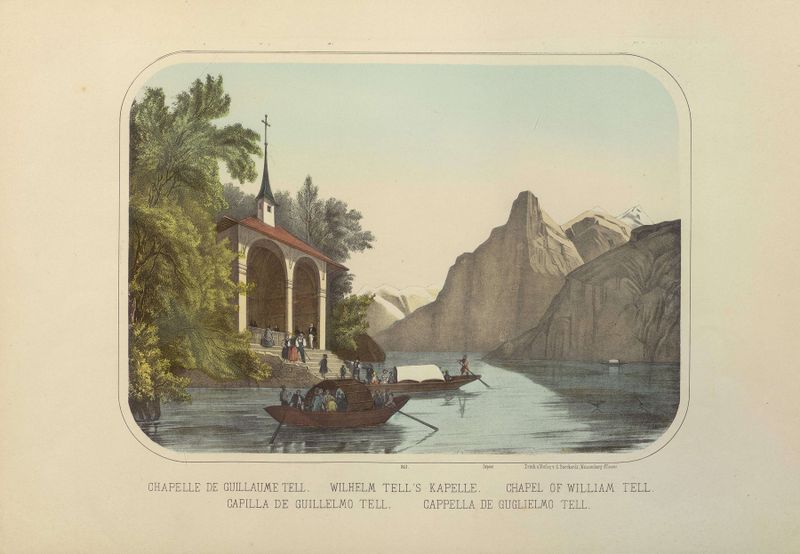
More Architecture Art
Browse all →
The statue of Liberty
Frédéric Auguste Bartholdi

View of Houses in Delft, Known as ‘The Little Street’
Johannes Vermeer

View of Houses in Delft, Known as ‘The Little Street’
Johannes Vermeer

The Cathedral in Rouen. The portal, Grey Weather
Claude Monet

The yellow house
Vincent van Gogh

The Church in Auvers-sur-Oise, View from the Chevet
Vincent van Gogh