Corn Field (Study) — History & Facts
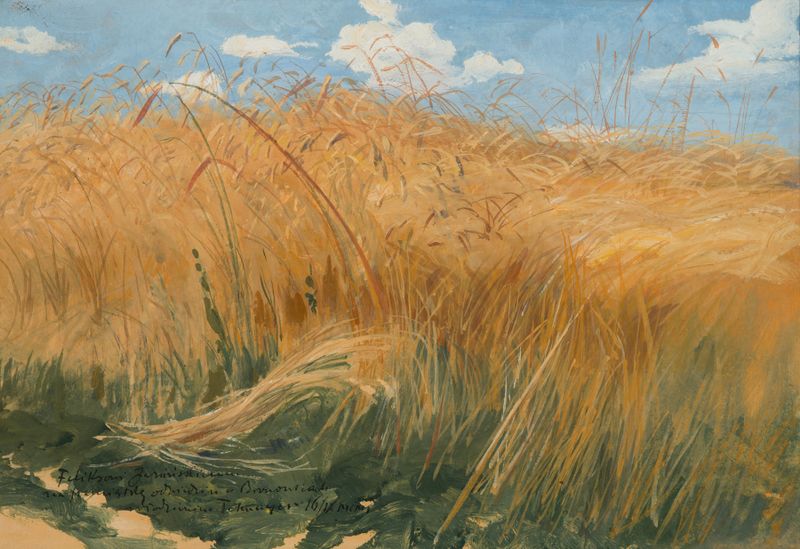
In the realm of art, the interplay between innocence and sorrow can reveal the most profound truths of the human experience. Focus on the intricate details within Corn Field (Study), where lush golden hues dance across the canvas. Look closely at the strokes that depict the corn swaying gently in the breeze, each blade whispering tales of growth and fragility. The layers of warm yellows and deep greens create a vibrant tapestry, drawing your gaze from the foreground to the horizon, where light seems to caress the earth, enveloping it in a soft embrace.
It's a moment suspended in time, both alive and haunting. Yet, beneath the surface lies a tension. The idyllic scenery, bursting with life, contrasts starkly with the quiet solitude of the solitary figure depicted in the distance—perhaps a farmer, tethered to the land, embodying the weight of responsibility. This juxtaposition between innocence and toil reveals a narrative of beauty intertwined with unvoiced struggles.
The corn, a symbol of abundance, also hints at the fragility of nature and the relentless cycle of growth and decay, urging the viewer to contemplate the bittersweet reality of life itself. Włodzimierz Tetmajer painted Corn Field (Study) in 1901 during a period of personal and artistic reflection. Living in Poland, he was deeply influenced by the natural landscapes surrounding him and the socio-political changes of his time. This work showcases his transition towards a more expressive style, merging impressionistic techniques with an emotional depth that resonates with viewers, inviting them to pause and ponder the complexities of existence.