Kłosy (Field and cereal studies) — History & Facts
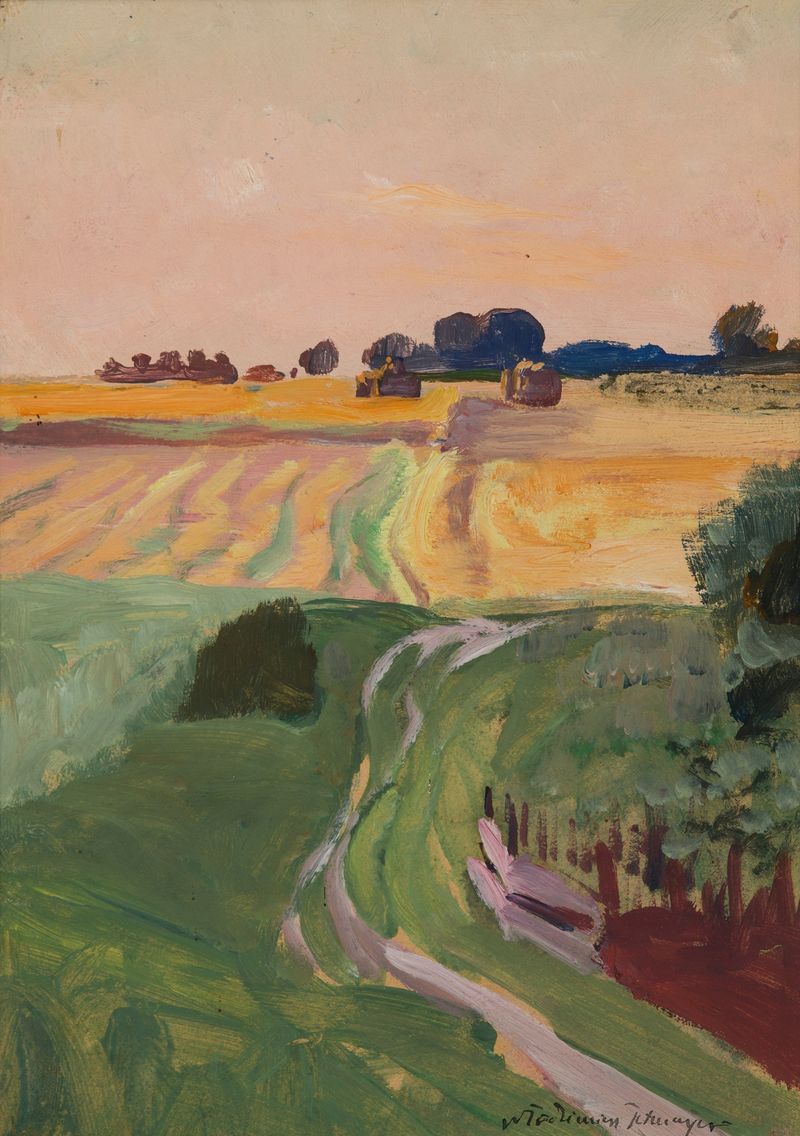
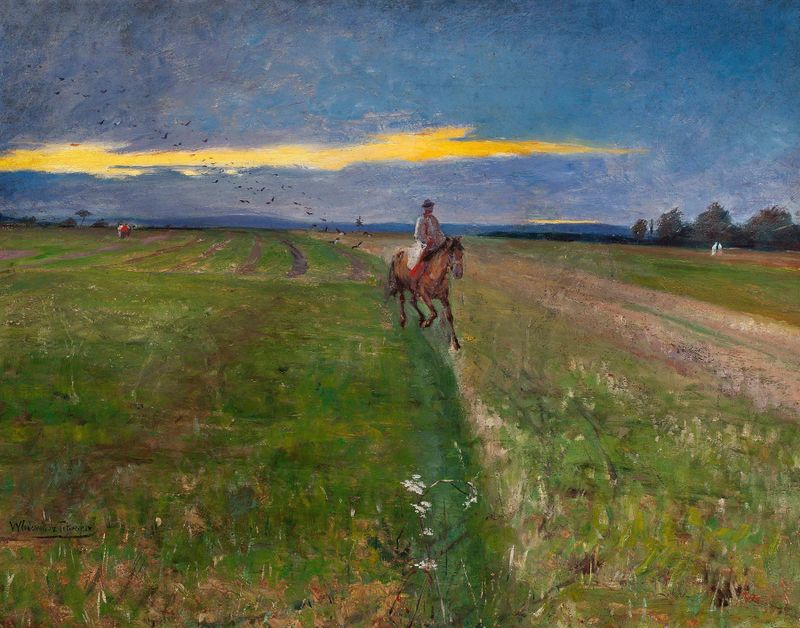
What secret hides in the quiet of the canvas? Beneath the serene surface of Kłosy, the whispers of change and revolution stir, waiting to be uncovered. Look to the lower left, where the ripe ears of grain sway gently under a soft, golden light. The artist’s deft brushstrokes create a lush texture, inviting you to run your fingers along the surface of the stalks. Notice how the delicate play of ochres and greens contrasts with the muted blues of the distant horizon, drawing the eye deeper into the scene.
The composition feels both expansive and intimate, as if the viewer is standing at the edge of an endless field, part of a moment that echoes with potential and promise. Hidden within the tranquil depiction of farmland lies a profound commentary on the socio-political climate of the time. The contrasting colors between the earth and sky reflect the tensions between tradition and progress. The abundance of the harvest symbolizes not just sustenance, but the seeds of upcoming change, hinting at the broader movements of the early 20th century that would soon reshape society.
Each ear of grain becomes a silent witness to the burgeoning hopes and aspirations of the people. Włodzimierz Tetmajer painted Kłosy in 1901, during a time of dynamic transformation in Poland and Europe. Living in the vibrant cultural milieu of Kraków, he immersed himself in the artistic currents of the era, influenced by the Symbolist movement and the nationalistic spirit rising in the region. As a member of the Young Poland movement, his work reflects both a reverence for the natural world and an undercurrent of societal change, capturing a pivotal moment that foreshadowed the turmoil and rebirth to come.