Cottage Garden — History & Facts
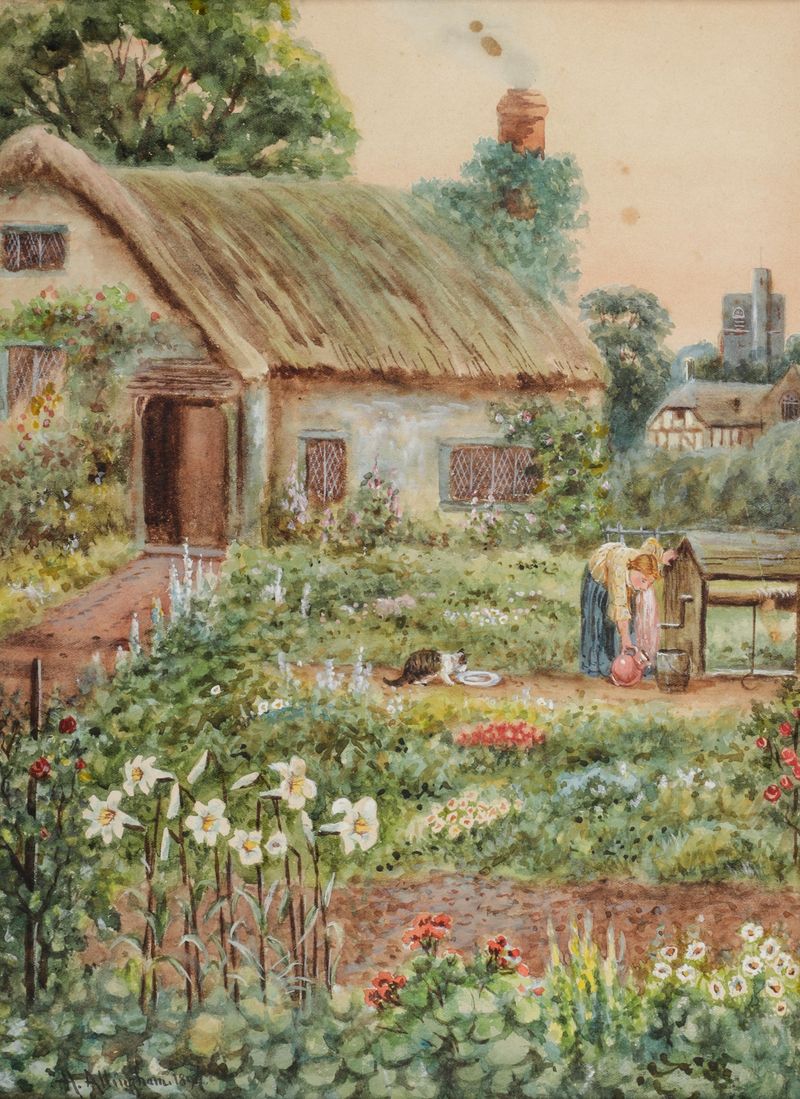
Sunlight spills through a canopy of leaves, dappling the ground with golden flecks. A quaint cottage nestled among vibrant flowers creates a perfect oasis, yet whispers of tension linger. A figure stands at the garden's edge, their hands poised as if caught between love for the blooms and the weight of unspoken secrets.
The air is thick with the scent of lilacs and roses, yet an undercurrent of betrayal weaves through the stillness. Look to the left at the riot of colors: roses, peonies, and foxgloves seem to bloom with unrestrained joy. Each petal is meticulously painted, revealing Allingham's keen observation of nature's beauty. The cottage, with its thatched roof and ivy-laden walls, draws the eye to its warm, inviting facade.
However, the soft light that bathes the scene contrasts sharply with the somber expressions conveyed by the solitary figure, hinting at a narrative beyond mere aesthetics. Within the vibrant garden, a tension arises between the idealized beauty of nature and the emotional turmoil of the figure. The flowers, full of life and color, juxtapose the uncertain posture, suggesting a hidden story of love and loss. Each bloom can be seen as a representation of longing, evoking emotions of joy tinged with sorrow.
This duality whispers of betrayals that can take root even in the most serene settings, where beauty and pain coexist. Helen Allingham painted Cottage Garden in 1894, a time when the British art scene was shifting toward the Pre-Raphaelite style. Living in the quaint countryside of Surrey, she found inspiration in the natural world around her. The late Victorian era was characterized by artistic exploration, yet Allingham's work continued to celebrate the intimacy of rural life, allowing her to infuse personal narratives into her lush landscapes.
More Artworks by Helen Allingham
Browse all →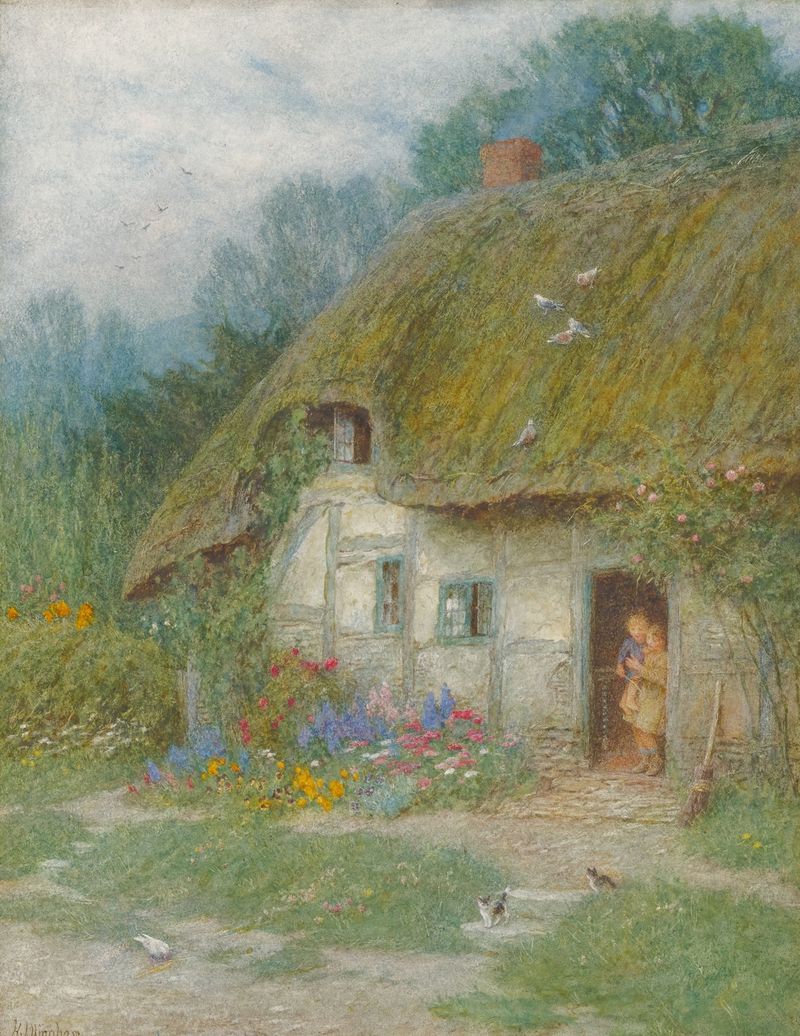
A Wiltshire Cottage
Helen Allingham
Cottage Garden
Helen Allingham

A Surrey cottage
Helen Allingham

A Gloucestershire cottage under the Cotswold Hills
Helen Allingham
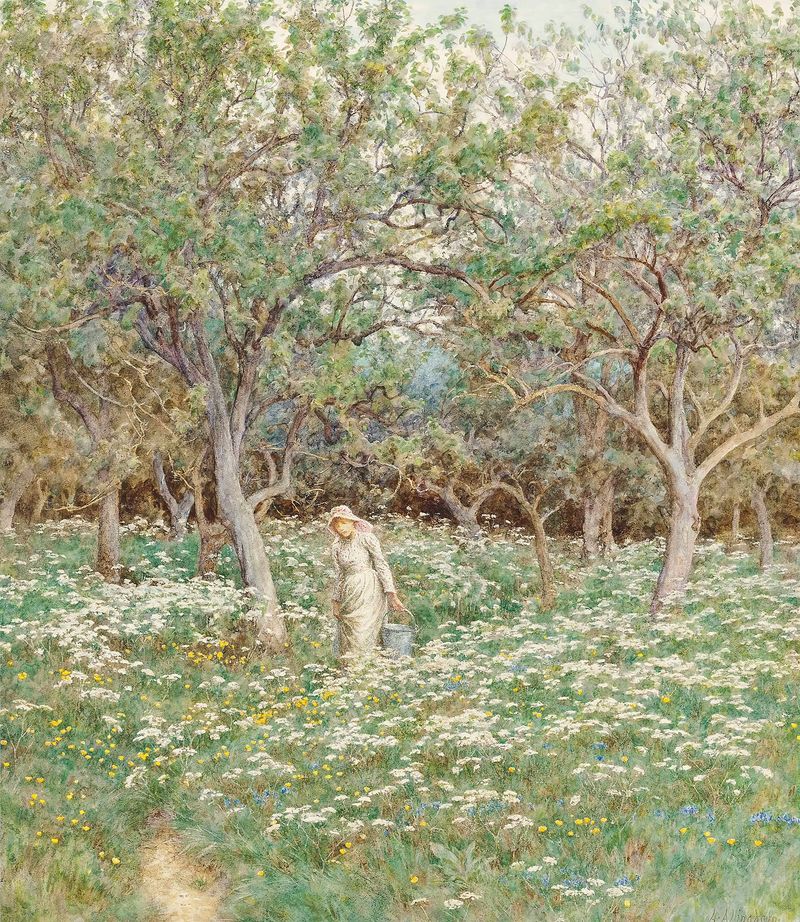
Woodland Flowers
Helen Allingham
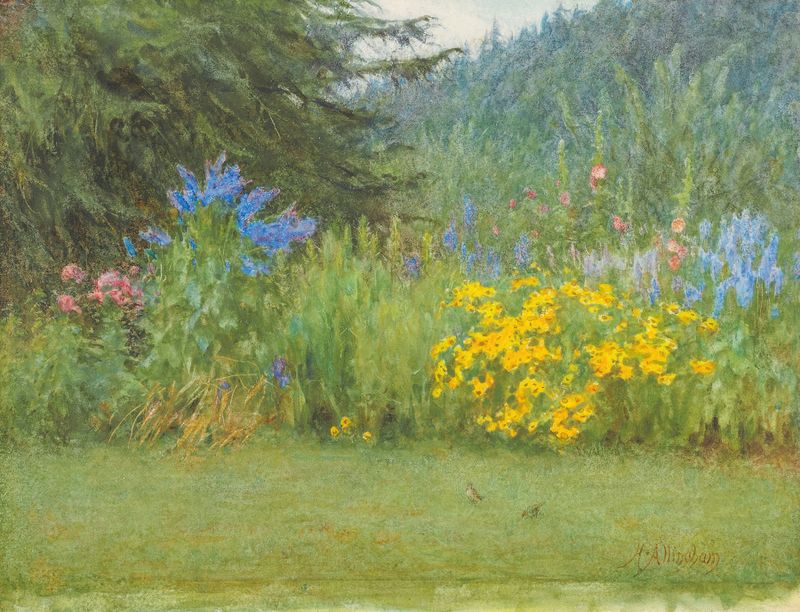
In a Surrey garden, Brook, near Witley
Helen Allingham
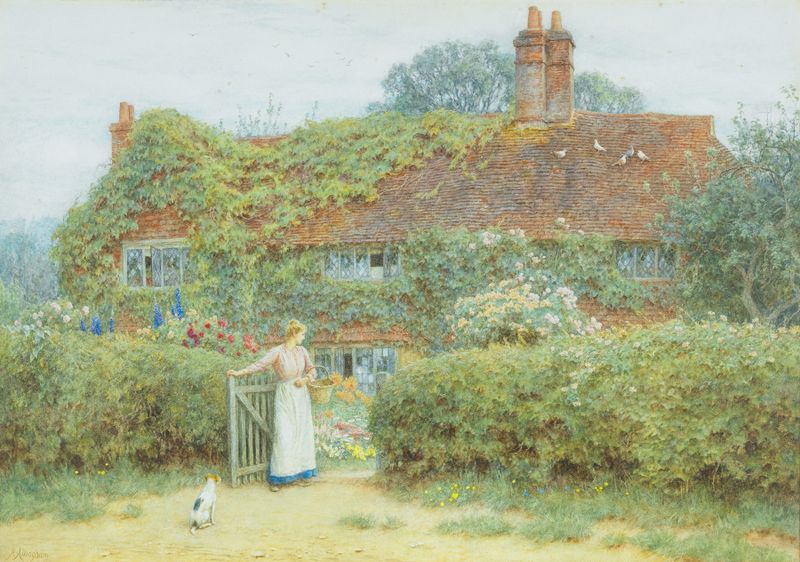
Old Surrey cottage
Helen Allingham
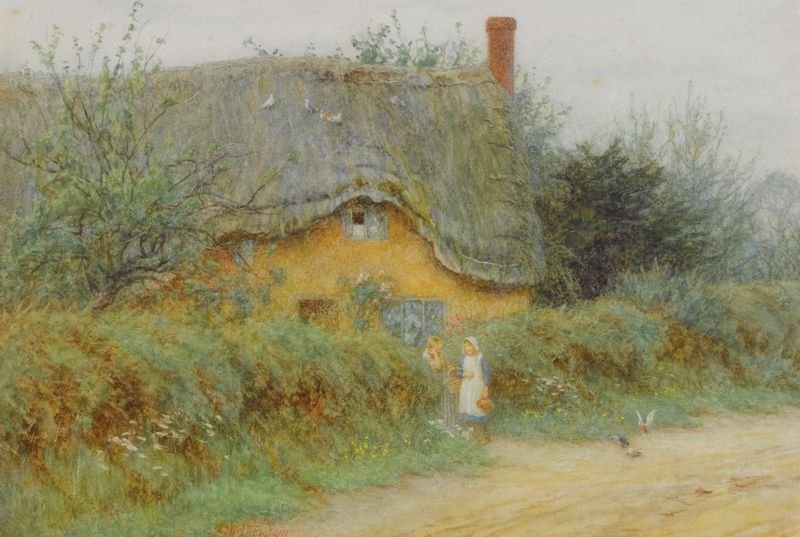
A Wiltshire Cottage
Helen Allingham