
Cour de la maison de ville à Basle — History & Facts
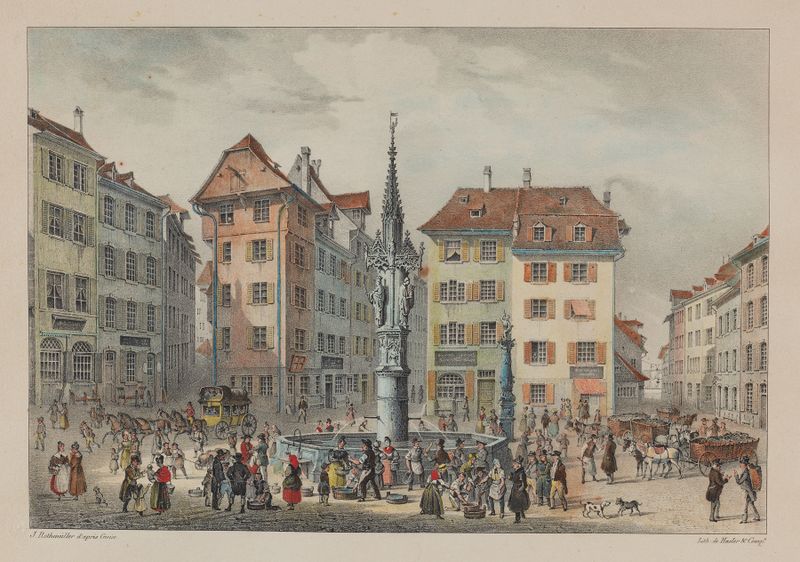
Can paint confess what words never could? It whispers secrets of turmoil and unease, serving as a haunting reminder of violence lurking beneath the surface of everyday life. First, look to the center of the canvas where a stark courtyard emerges, bordered by somber buildings that loom like silent witnesses to the scene. The muted color palette of greys and browns sets a heavy tone, while the starkness of the architectural lines draws the eye inward, suggesting both confinement and a hint of foreboding. Notice how the shadows deepen in the corners, creating a tension that feels almost palpable, as if the very air is still, thick with unspoken histories. Delving deeper, one can detect the subtle interplay of absence and presence within the composition.
The empty space in the foreground might evoke feelings of isolation, suggesting that something violent has just occurred—or is about to transpire. The harsh angles of the buildings contrast against the smoothness of the cobblestones, reflecting the duality of calm appearance and underlying threat. This tension between stillness and impending action encourages a personal reflection on the nature of violence, both physical and emotional, woven into the fabric of human existence. Created in a tumultuous period between 1915 and 1945, this work emerged when the world was grappling with the aftermath of war and societal upheaval.
Constantin Guise, active during this time, sought to capture the essence of a fractured reality, using his art to comment on the chaos that enveloped his surroundings. This piece stands as a testament to his engagement with the stark truths of life amid an era defined by conflict and uncertainty.
More Artworks by Constantin Guise
Browse all →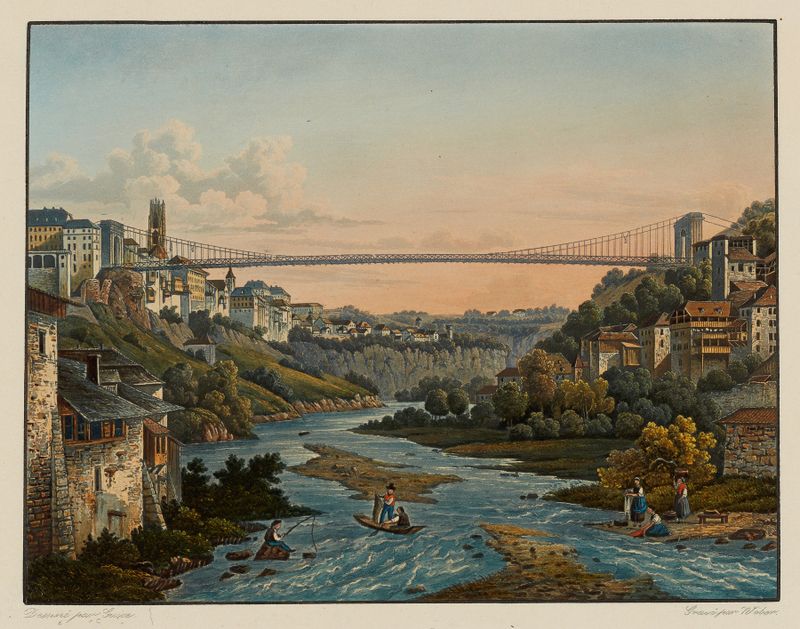
Vue de Fribourg et du Pont de fil en fer
Constantin Guise
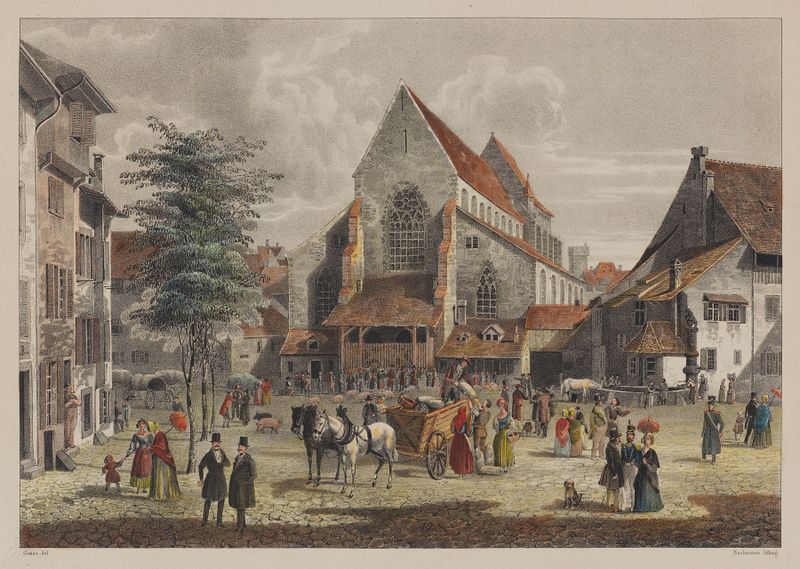
Eglise des Cordeliers à Basle
Constantin Guise
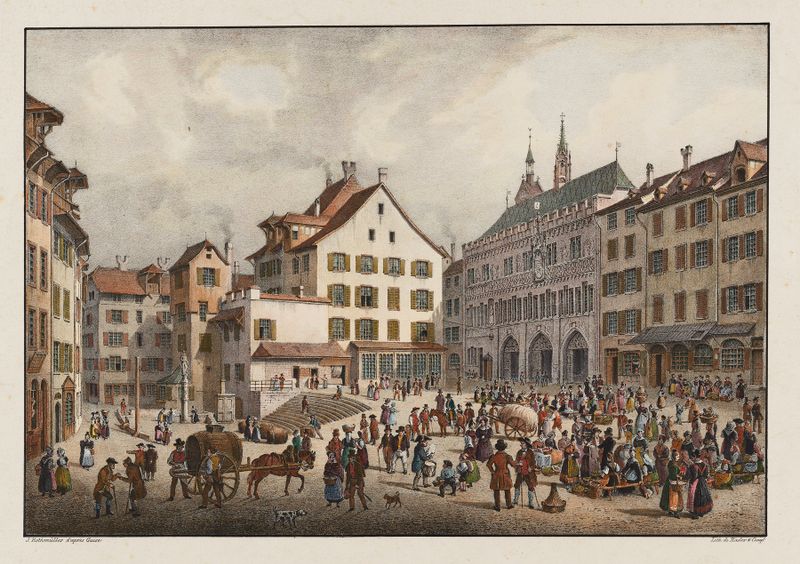
Vue du marché & de la maison de ville à Basle
Constantin Guise
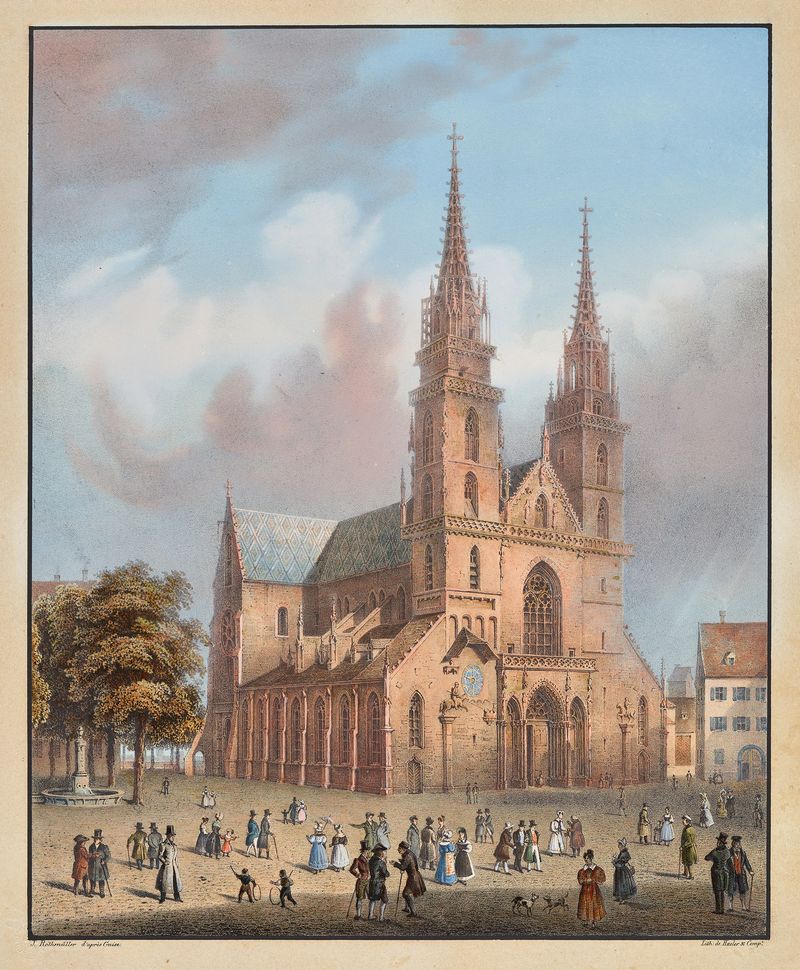
Vue de la cathédrale à Basle
Constantin Guise

La Maison de ville à Basle
Constantin Guise
Vue du marché aux poissons à Basle
Constantin Guise

Der Abbruch des Totentanzes zu Basel
Constantin Guise





