
La Maison de ville à Basle — History & Facts
It reverberates in the stillness of the canvas, where the past lingers like an uninvited guest. Each empty space speaks of absence, and the shadows whisper of hidden violence that has marked this place. Look to the center of the painting, where a modest building stands in muted tones, its façade worn yet dignified. The heavy brushstrokes create a texture that speaks to the years, the memory of life once bustling within.
Notice how the light falls upon the windows, illuminating them with a ghostly glow, while the surrounding area remains cloaked in somber hues, evoking a sense of isolation and unease. This juxtaposition invites the viewer to question what exists behind those closed doors. Within the stillness lies a complex narrative of resilience and trauma. The structure itself, a symbol of stability, seems to bear the weight of untold stories.
The faint outlines in the background suggest unrest, perhaps a memory of conflict that has etched itself into the very bricks of this home. The connection between the mundane and the violent becomes palpable, forcing one to reflect on how history imprints itself upon our spaces and our lives. Created between 1915 and 1945, this work emerges from a tumultuous period in Europe, marked by two world wars and profound societal upheaval. Guise, navigating this landscape, captures the essence of displacement and survival, reflecting both personal and collective experiences.
In a time when art sought to convey the chaos of the world, this painting stands as a haunting reminder of the silent stories that dwell within the walls of our existence.
More Artworks by Constantin Guise
Browse all →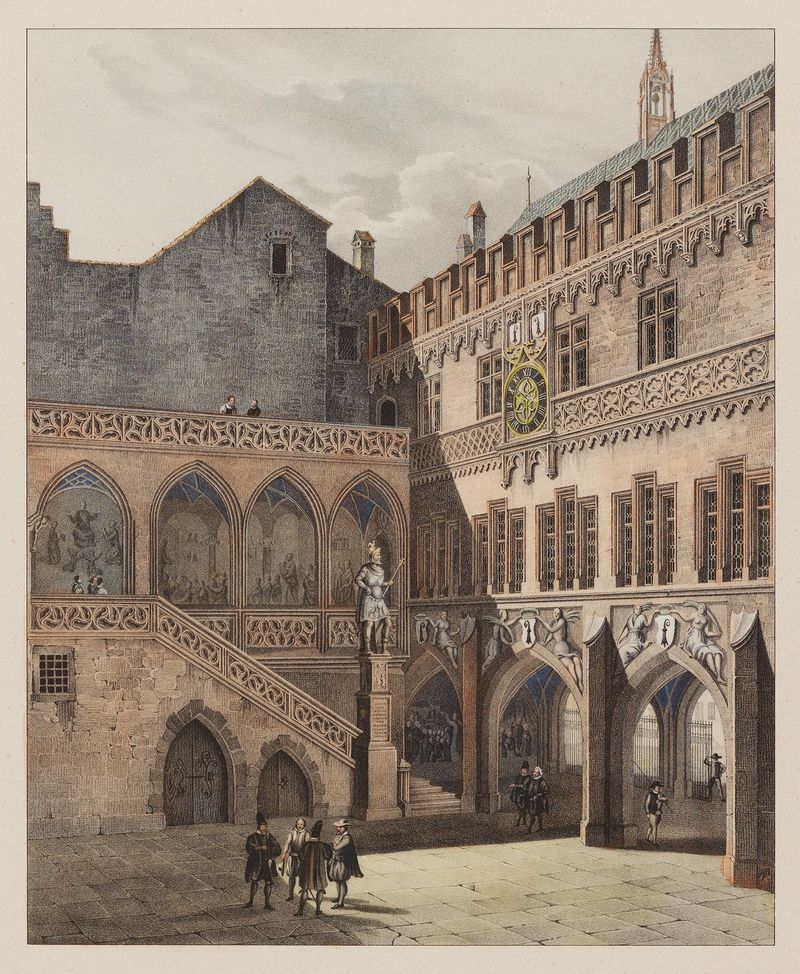
Cour de la maison de ville à Basle
Constantin Guise
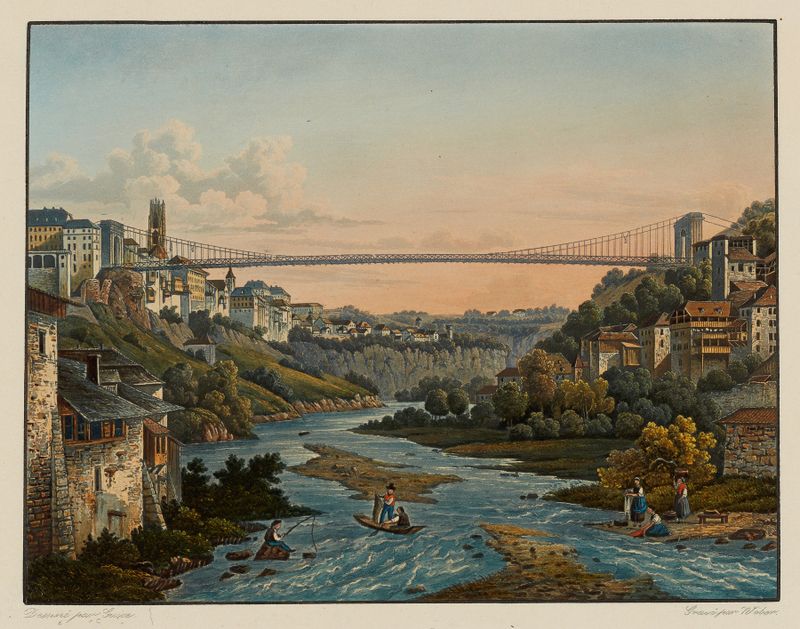
Vue de Fribourg et du Pont de fil en fer
Constantin Guise
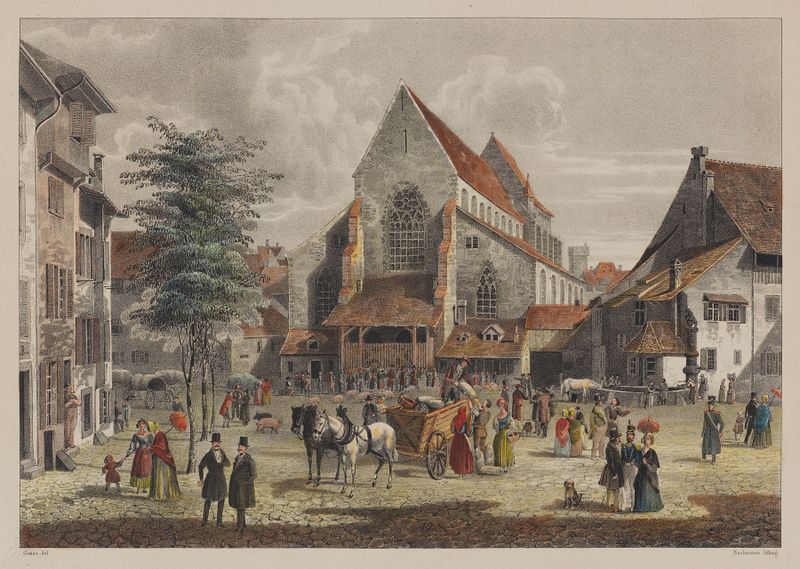
Eglise des Cordeliers à Basle
Constantin Guise
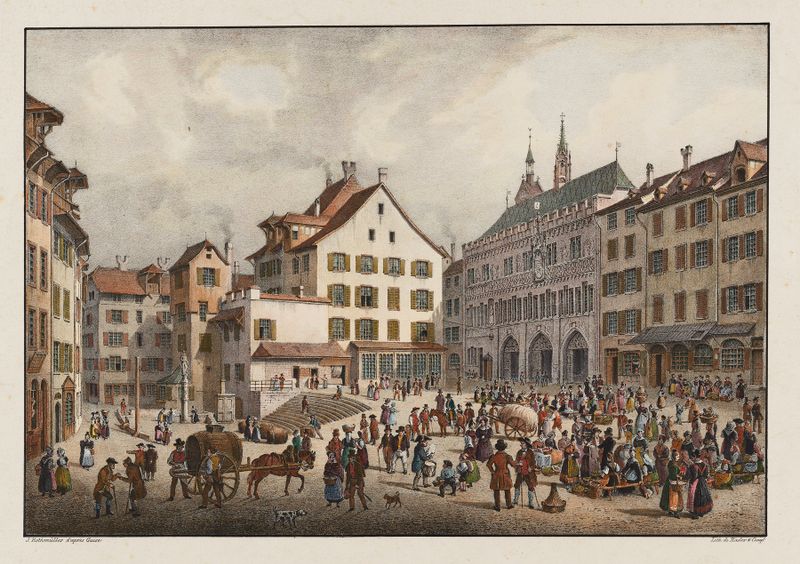
Vue du marché & de la maison de ville à Basle
Constantin Guise
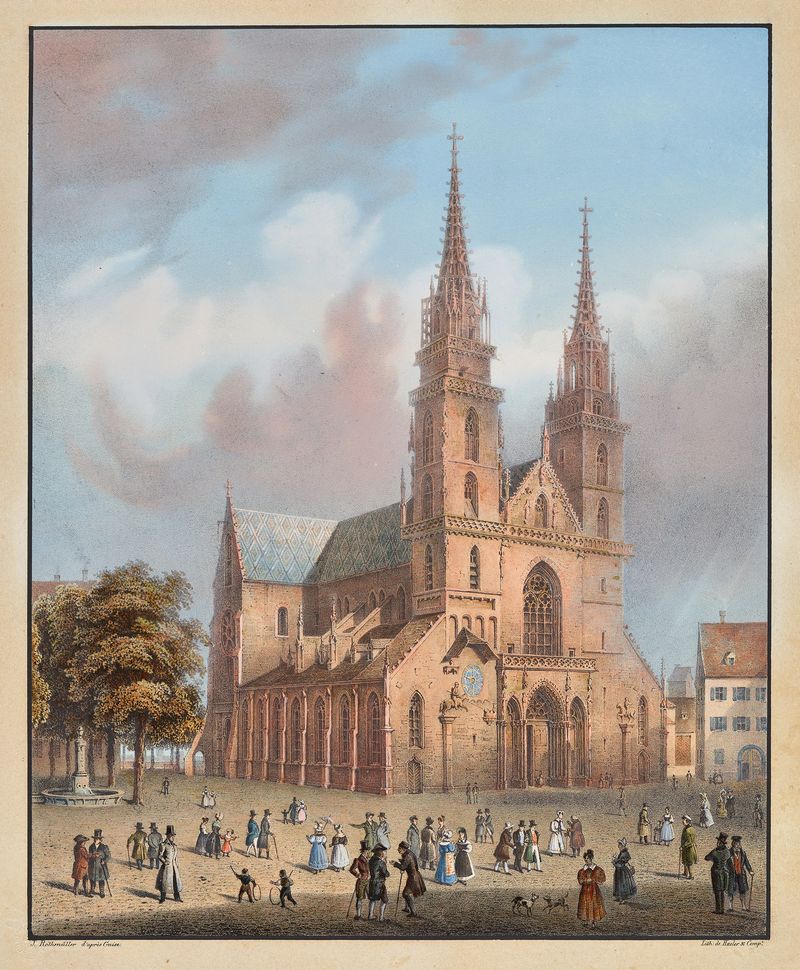
Vue de la cathédrale à Basle
Constantin Guise
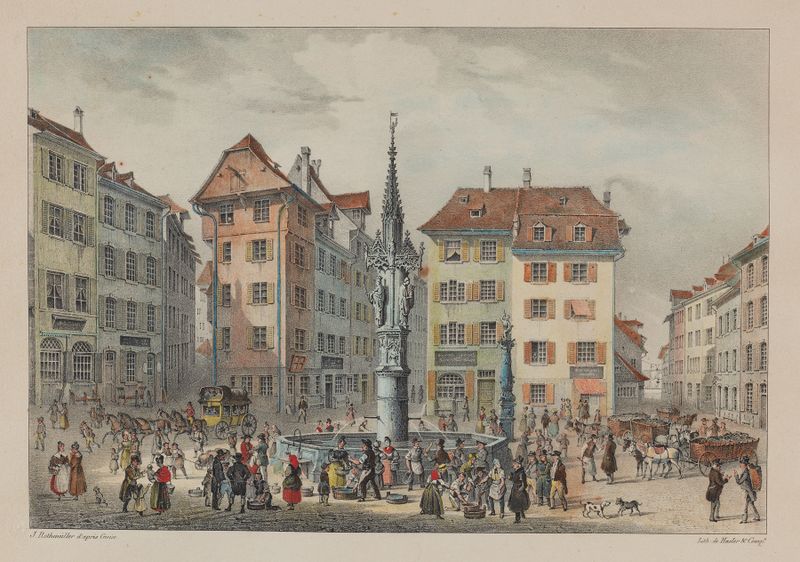
Vue du marché aux poissons à Basle
Constantin Guise

Der Abbruch des Totentanzes zu Basel
Constantin Guise
More Architecture Art
Browse all →
The statue of Liberty
Frédéric Auguste Bartholdi

View of Houses in Delft, Known as ‘The Little Street’
Johannes Vermeer

View of Houses in Delft, Known as ‘The Little Street’
Johannes Vermeer

The Cathedral in Rouen. The portal, Grey Weather
Claude Monet

The yellow house
Vincent van Gogh

The Church in Auvers-sur-Oise, View from the Chevet
Vincent van Gogh