
Vue de Fribourg et du Pont de fil en fer — History & Facts
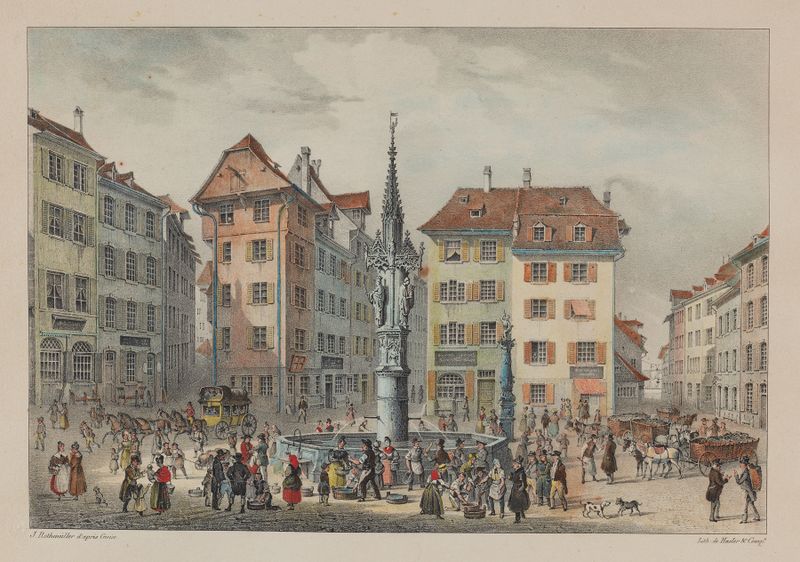
In a world where fleeting impressions often overshadow lasting legacies, this painting stands as a testament to the enduring power of perception. Focus on the vibrant hues that cradle the canvas, drawing your eyes to the central bridge that gracefully arches over the tranquil waters. Notice how the light dances upon the surface, illuminating the intricate details of the iron structure while casting soft reflections below. The lush landscape surrounding the scene softens the industrial lines, creating a dialogue between nature and manmade form, inviting viewers to ponder the harmony between the two. Beneath the surface, the painting conveys a deeper narrative about the tensions of progress and preservation.
The bridge, a symbol of connectivity, contrasts with the serene waters that suggest a quiet, unyielding legacy of the past. The rich colors in the foliage hint at the vibrancy of life, yet there is an underlying stillness—a reminder that change, though beautiful, can evoke feelings of nostalgia and loss. These layers enrich the viewer's experience, evoking a contemplative state. Constantin Guise painted this work between 1915 and 1945, a time marked by dramatic shifts across Europe.
Residing in Switzerland during the turmoil of both world wars, he sought to capture the essence of his homeland while reflecting on the effects of modernity. In a period where art was often overshadowed by conflict, his painting emerges as a poignant exploration of legacy, intricately woven into the fabric of history.
More Artworks by Constantin Guise
Browse all →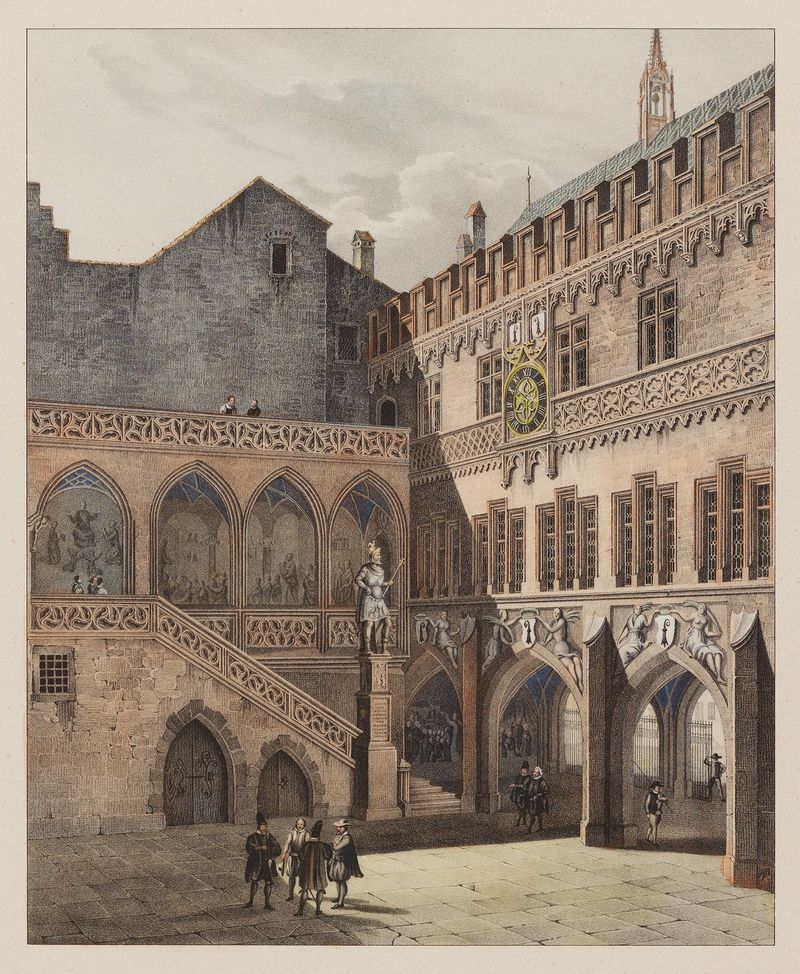
Cour de la maison de ville à Basle
Constantin Guise
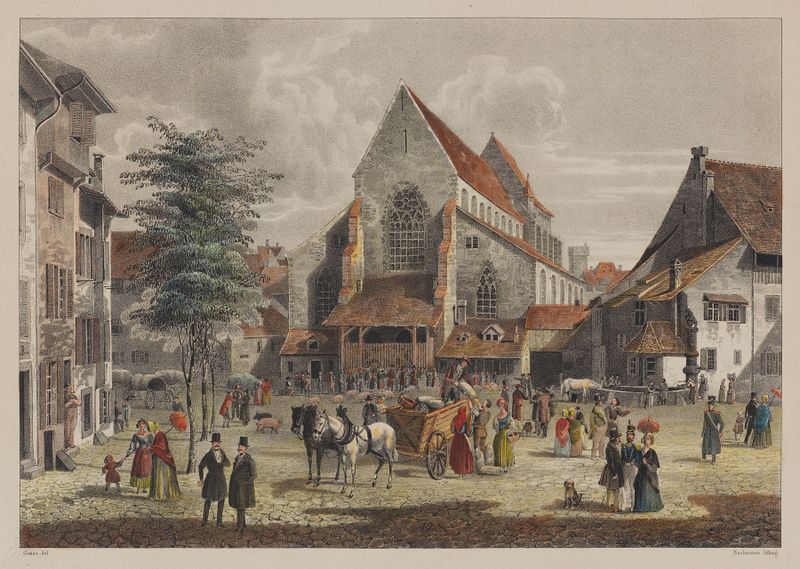
Eglise des Cordeliers à Basle
Constantin Guise
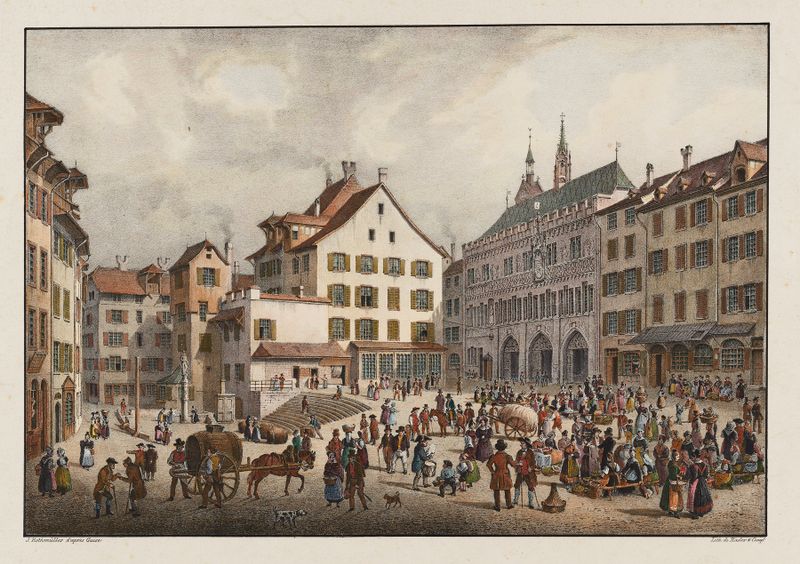
Vue du marché & de la maison de ville à Basle
Constantin Guise
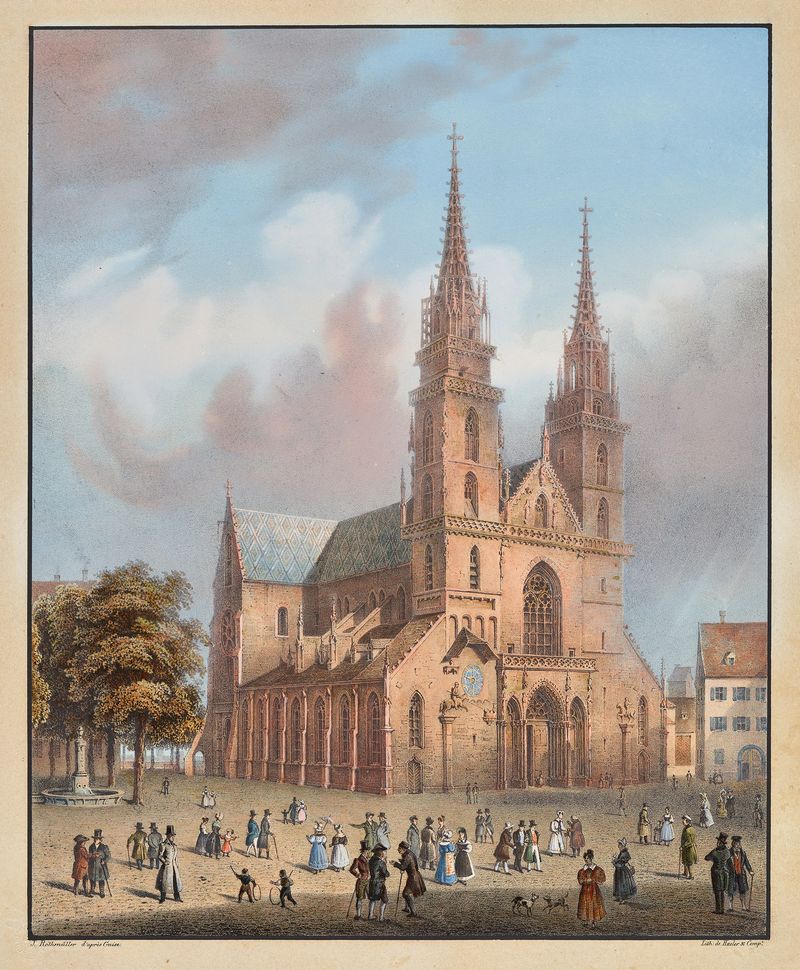
Vue de la cathédrale à Basle
Constantin Guise

La Maison de ville à Basle
Constantin Guise
Vue du marché aux poissons à Basle
Constantin Guise

Der Abbruch des Totentanzes zu Basel
Constantin Guise





