Cows in a Meadow — History & Facts
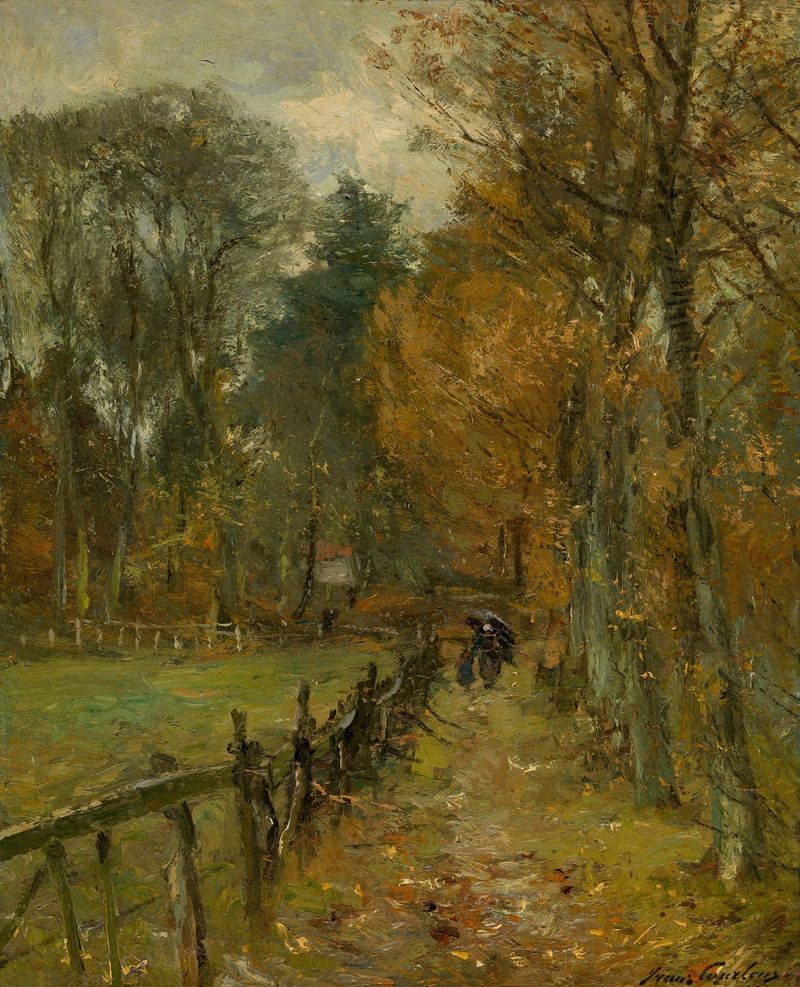
In a world where memories fade like whispers, the act of capturing life in paint becomes an echo of our existence. Look to the center of the canvas, where the cows graze peacefully, their forms gently curving against the lush, verdant meadow. Notice how the artist employs soft greens and deep browns to create a harmonious palette that evokes tranquility. The interplay of light and shadow dances across the animals’ backs, reflecting the warmth of a sun-drenched afternoon, while wispy clouds float above, hinting at a fleeting moment suspended in time. On closer inspection, the subtle details reveal a deeper narrative.
The positioning of the cows suggests a comforting familiarity, yet their gazes seem to reflect a melancholic distance. The background flourishes with wildflowers, symbolizing beauty and transience, a reminder of nature’s impermanence. Each element, from the gently rustling grass to the distant horizon, beckons the viewer to ponder the quiet life that exists just beyond the frame—a life both serene and ephemeral. Franz Courtens painted this piece in the early 20th century, a time marked by rapid change and a growing disconnection from pastoral life as urbanization swept across Europe.
This work emerged during his time in Belgium, where he sought to capture the simplicity of rural existence even as the world around him evolved. In this artwork, Courtens immortalizes a moment that resonates with nostalgia, reflecting his deep appreciation for nature in an age yearning for connection.