Landscape with Sheep — History & Facts
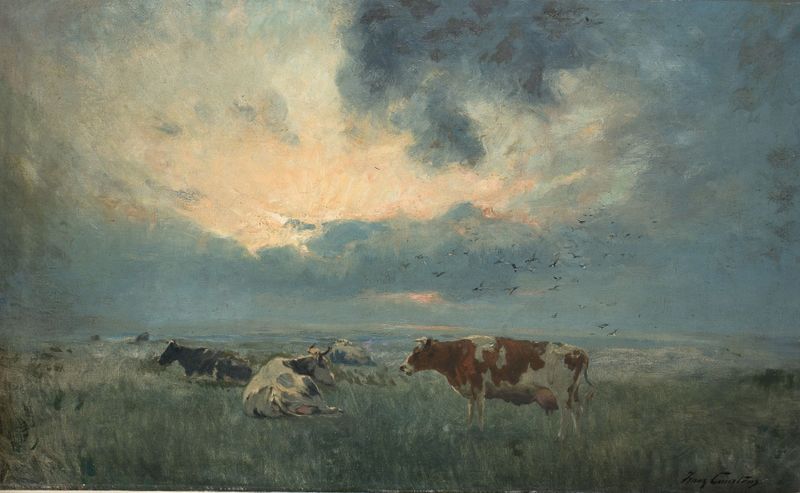
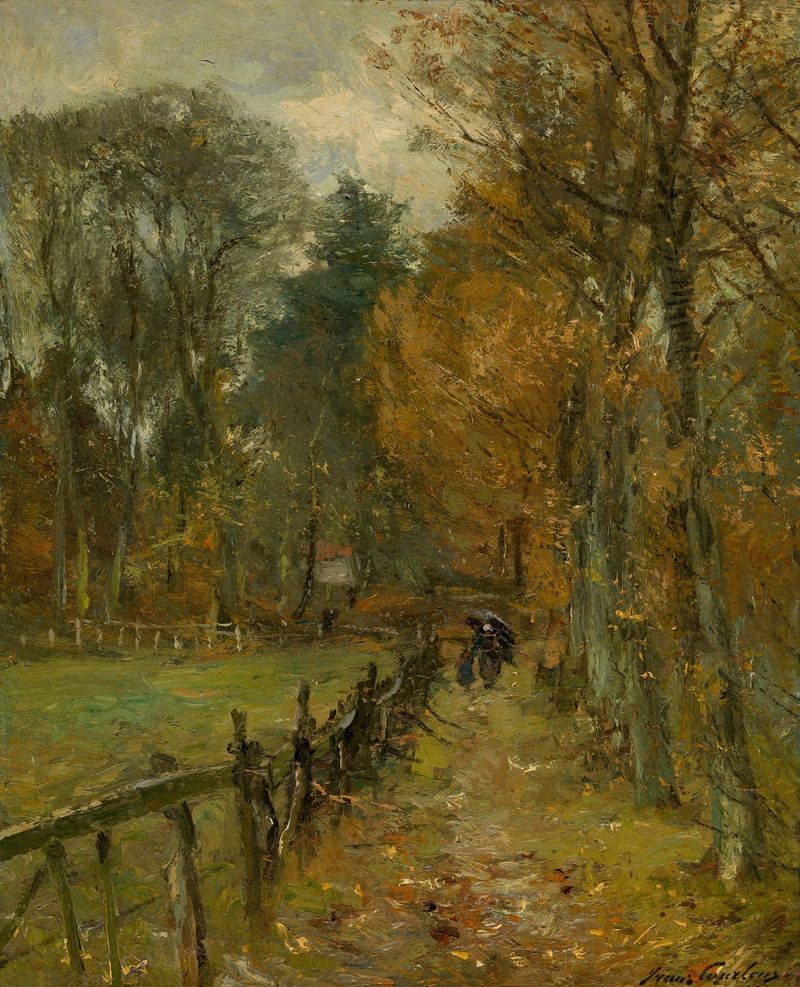
Could a single brushstroke hold eternity? In Landscape with Sheep, every stroke carries whispers of nature and time, inviting us to pause and reflect. The interplay of light and shadow reveals not only the landscape's beauty but also the deeper emotions etched within its tranquil scenes. Look to the foreground where fluffy sheep graze in verdant pastures, their woolly forms contrasting against the lush greens and gentle browns of the earth. Notice how the light falls upon the hillside, creating a play of warm and cool tones that breathes life into the canvas.
The horizon, painted with soft blues and grays, merges seamlessly with the sky, guiding the viewer's gaze upward and fostering a sense of continuum between land and air. Beneath the surface, this artwork speaks of harmony and simplicity, evoking feelings of serenity and pastoral bliss. The sheep, often seen as symbols of peace, suggest a deeper connection to the cycles of life and nature, while the gentle undulations of the landscape offer a soothing rhythm. In these details, there’s a tension between the fragility of existence and the permanence of nature, as if the scene captures a fleeting moment that stirs both nostalgia and hope. Franz Courtens painted this piece during an era marked by a growing appreciation for natural landscapes, likely in the late 19th to early 20th century.
Living in Belgium amid the shifting tides of the realist movement, he sought to capture the serene beauty of everyday life, drawing influences from both impressionism and his own observations of rural existence. This painting reflects his endeavor to immortalize simple scenes, bridging the gap between artistic exploration and heartfelt representation of the world around him.