Cows near a Watering Place — History & Facts
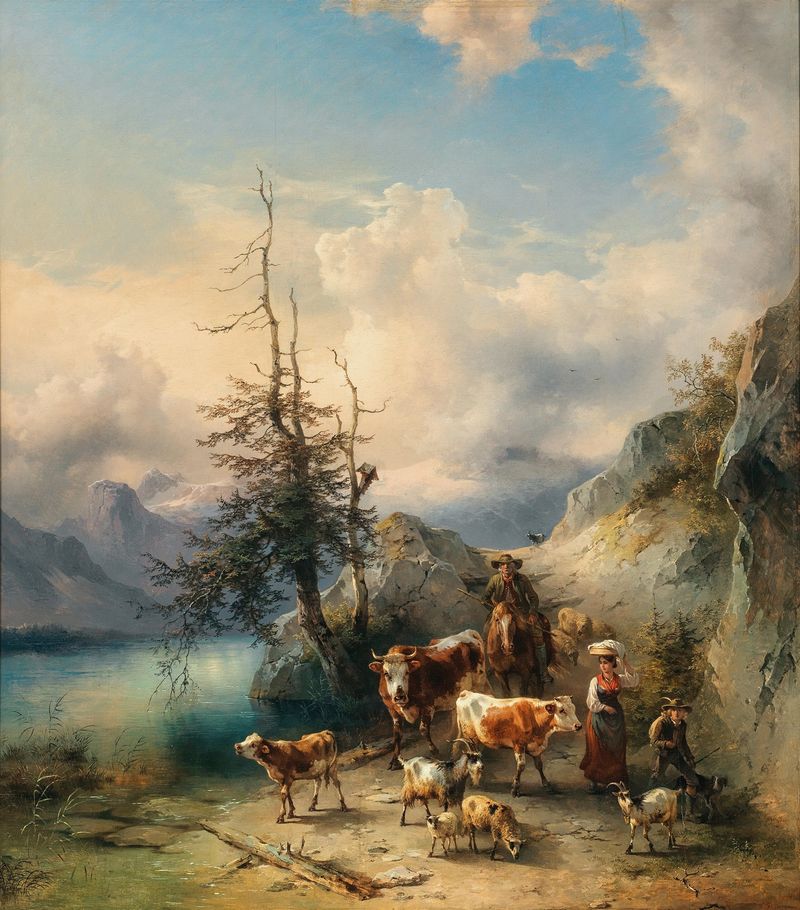
Could a single brushstroke hold eternity? In Cows near a Watering Place, Friedrich Gauermann captures not just a moment, but the profound isolation inherent in rural life. The scene resonates with loneliness, reminding us of the delicate dance between nature and solitude. Look to the left at the gentle curve of the riverbank where the bovine figures congregate, their bodies reflecting the softness of the landscape. Notice how the muted greens and browns blend seamlessly, inviting the eyes to wander.
The play of sunlight filtering through the leaves creates dappled patterns on the ground, highlighting the stark contrast between the liveliness of the animals and the stillness of their surroundings. Gauermann's technique—rich, textured brushstrokes—imbues the setting with a palpable serenity. Delve into the emotional tension within the composition: the cows, though surrounded by nature, embody a profound sense of isolation. The empty space surrounding them amplifies their solitude, acting as a counterpoint to the peaceful environment.
This juxtaposition speaks to a larger narrative of life’s quiet persistence in the face of loneliness, evoking a bittersweet sense of reflection and longing. Friedrich Gauermann painted this work in the 19th century, a time when the pastoral landscape genre was gaining popularity in Austria. His deep connection to rural life during this period, marked by personal struggles and the shifting tides of the art world, influenced his depiction of animals and landscapes. Gauermann sought to capture the essence of the countryside, and in this piece, he deftly evokes not just a scene, but an emotional landscape that transcends time.