Zugeschrieben – Naturstudie einer Felswand — History & Facts
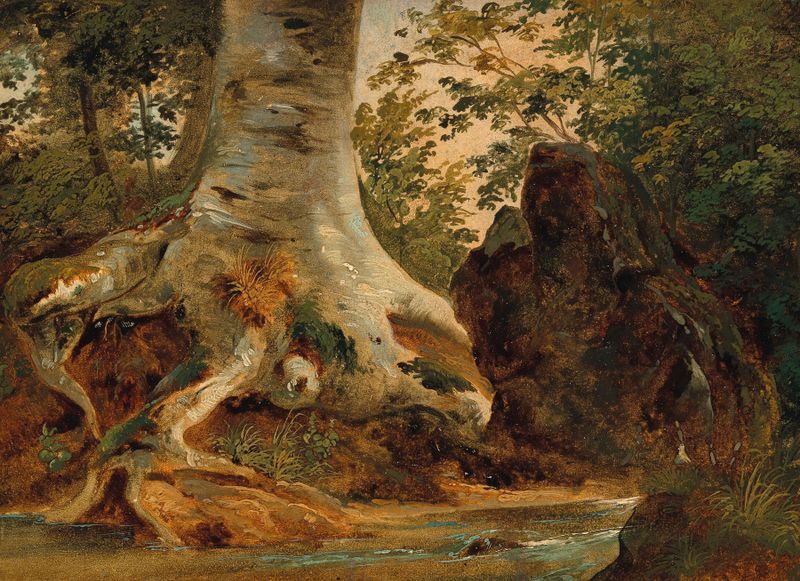
Can paint confess what words never could? In the somber embrace of nature, silence speaks volumes, and melancholy seeps through the crevices of the earth. Look to the left at the rugged contours of the rock face, where jagged edges interplay with soft shades of ochre and gray. The artist's meticulous brushwork captures the texture of the stone, revealing layers that feel both ancient and alive. Notice how the light filters down, creating a chiaroscuro effect that highlights the stark contrasts between shadow and illumination, drawing your gaze deeper into the image.
Gauermann's use of muted colors enhances the somber atmosphere, inviting reflection on the passage of time and the weight of existence. At the heart of this piece lies an exploration of solitude and permanence. The seemingly impenetrable rock wall stands as a metaphor for both resilience and isolation, evoking a sense of longing for connection amid the unyielding nature of life. Hidden among the crevices, delicate plants struggle for survival, embodying hope and fragility against the backdrop of a stark environment.
This tension between the harshness of reality and the delicate beauty of life enhances the painting's emotional depth, drawing viewers to contemplate their own vulnerabilities. Friedrich Gauermann created Zugeschrieben – Naturstudie einer Felswand in 1838, amidst a shift in the art world toward Romanticism and a deep appreciation for nature. At this time, he was living in Vienna, where he became increasingly focused on landscape painting, reflecting both personal struggles and broader societal transformations in Europe. The work embodies the key themes of his career, merging a love for the natural world with profound introspection, as he navigated the complexities of existence during a tumultuous era.