Waldbach — History & Facts
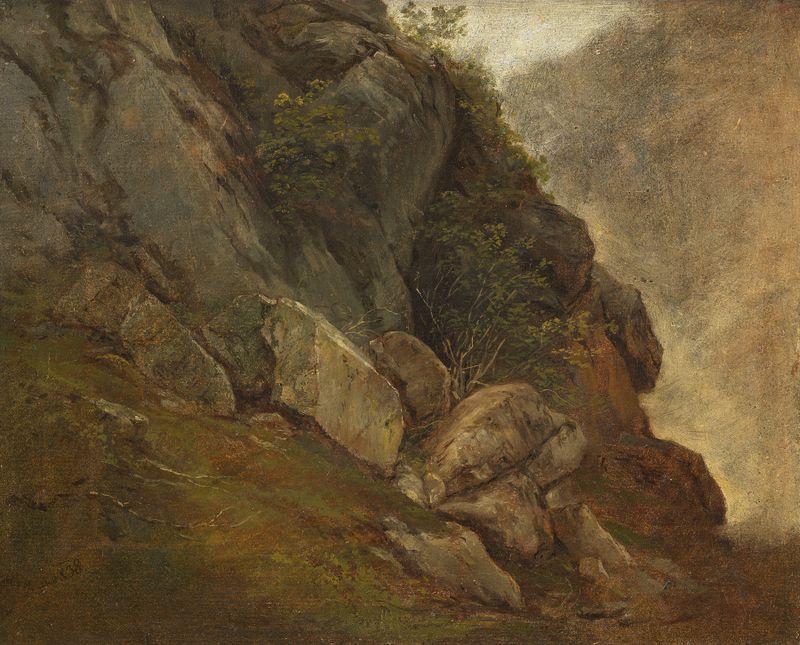
What secret hides in the quiet of the canvas? In Waldbach, the interplay of light and shadow beckons the viewer to wander deeper into an unseen world. Look to the left at the gentle cascade of water that tumbles over smooth stones, glimmering with reflections of soft green hues. Notice how the dappled sunlight filters through the canopy of trees overhead, casting intricate patterns on the forest floor. The colors blend harmoniously, with rich earthy browns and tender greens creating a serene atmosphere, while the careful brushwork crafts a sense of movement in both the water and the whispering leaves. Beneath the tranquil surface lies a tension between life and stillness.
The shadows shelter secret paths and hidden creatures, suggesting that nature holds mysteries waiting to be unveiled. The subtle juxtaposition of vibrant greens against the dark, enveloping shadows hints at the duality of existence—both nurturing and obscuring, inviting exploration while also concealing the unknown. Friedrich Gauermann painted Waldbach during a period when he sought to harmonize his love for nature with the emerging Romantic ideals of the early 19th century. Working in the Austrian countryside, he depicted landscapes that evoked emotion through their natural beauty, reflecting a world on the cusp of change as industrialization began to encroach upon untouched wilderness.
His fascination with shadow and light represents a pivotal moment in art history, balancing the Romantic quest for beauty and the impending realities of modern life.