The Cattle Drive in Altaussee with a View of the Dachstein Massif — History & Facts
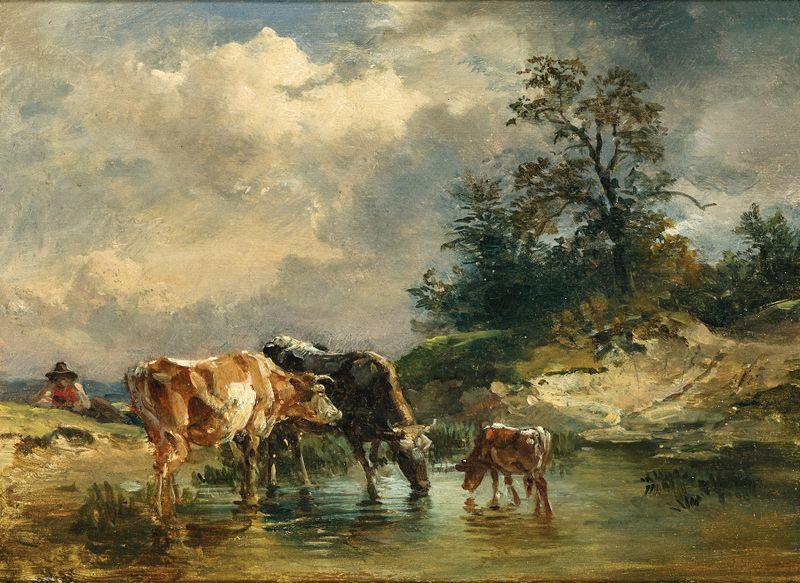
The illusion of harmony emerges from the chaos of nature, inviting a deeper contemplation of the connection between land and labor. Focus on the expansive horizon where the Dachstein Massif looms majestically in the background, a silent guardian over the cattle drive. Notice how the soft pastels of dawn's light caress the rolling hills and the weary figures of the cowherds, guiding your eyes upward toward the dramatic peaks. Gauermann’s meticulous brushwork brings texture to the cows’ coats, while gentle strokes evoke the lush grasses, creating an immersive experience of the Alpine landscape. In this composition, the interplay of human endeavor and the natural world unfolds.
The driven cattle symbolize the unyielding spirit of rural life, while the towering mountains convey both majesty and isolation, reflecting the tension between man and nature. The contrasts in color—warm earth tones of the cattle and cool blues of the distant peaks—further articulate the struggle and beauty inherent in the pastoral lifestyle. Friedrich Gauermann painted this work around 1855 in Austria, a period marked by a growing Romantic movement that celebrated nature and rural life. He was deeply entrenched in the artistic circles of his time, influenced by the desire to portray authentic rural experiences against the backdrop of the dramatic Alpine scenery.
This painting captures not just a moment in time, but the essence of a way of life that was rapidly changing.