
Crémière En Hiver — History & Facts
In the quiet embrace of winter, a solitary figure emerges from the chill, cradling her delicate wares as a testament to resilience and hope. This painting stands as a poignant reminder that, even in the depths of despair, humanity persists in its quest for warmth and connection. Look closely at the figure in Crémière En Hiver; her posture is both sturdy and gentle, embodying the duality of strength and vulnerability. The soft whites and muted earth tones of her clothing blend harmoniously with the snowy backdrop, accentuating her presence against the wintry scene.
Notice how the light softly caresses her face, casting subtle shadows that reveal the depth of her character and the quiet determination etched in her features. The juxtaposition of the crisp air and her warm demeanor creates a striking visual contrast that draws the viewer in. There is an emotional tension in her expression, hinting at the stories untold—perhaps of lost moments or dreams deferred. The juxtaposition of her humble offerings against the stark surroundings becomes a symbol of hope, suggesting that even in bitter cold, the spirit can flourish.
Each detail, from the way her hands cradle the produce to the serene expression on her face, speaks volumes about perseverance and the quiet strength found within simplicity. Victor Gabriel Gilbert painted this work in 1890, during a period of great change in France, where the Impressionist movement was reshaping artistic conventions. As he captured this rural scene, Gilbert was influenced by the emerging notions of modernity, yet his focus remained steadfast on the everyday lives of ordinary people. The warmth found in such intimate moments reveals not only the essence of his subjects but also a timeless connection to the human experience.
More Artworks by Victor Gabriel Gilbert
Browse all →
At the Flower Market
Victor Gabriel Gilbert

Reading the News
Victor Gabriel Gilbert

Le marchand de chansons
Victor Gabriel Gilbert

Le marché des fleurs
Victor Gabriel Gilbert
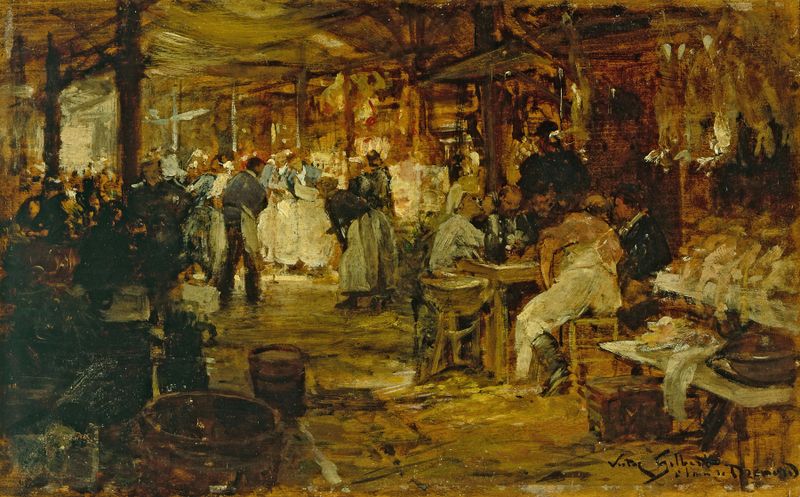
Le marché de la Madeleine
Victor Gabriel Gilbert

Femme assise à une table se réchauffant les mains après avoir ouvert des huîtres
Victor Gabriel Gilbert

Jeune femme à l’ombrelle achetant des fleurs
Victor Gabriel Gilbert
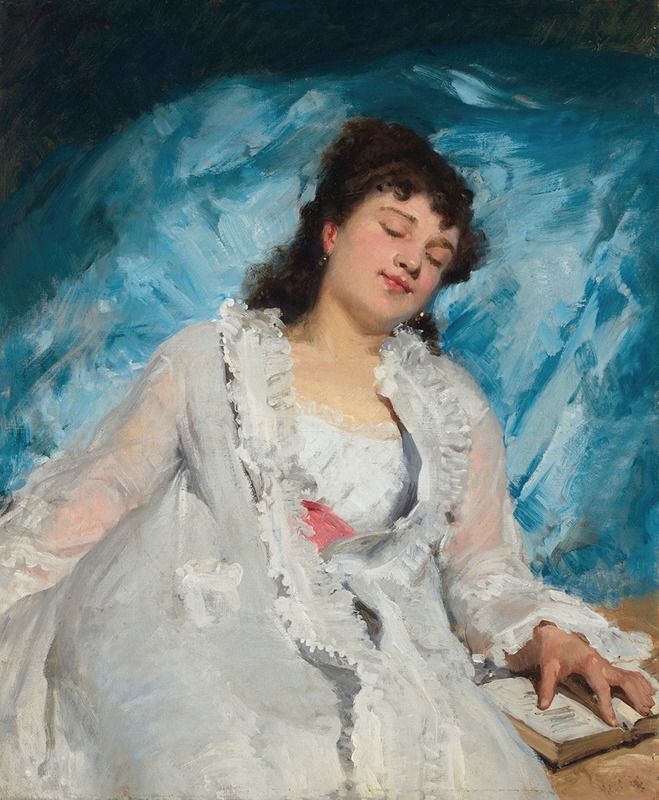
Doux repos
Victor Gabriel Gilbert

At Her Toilette
Victor Gabriel Gilbert
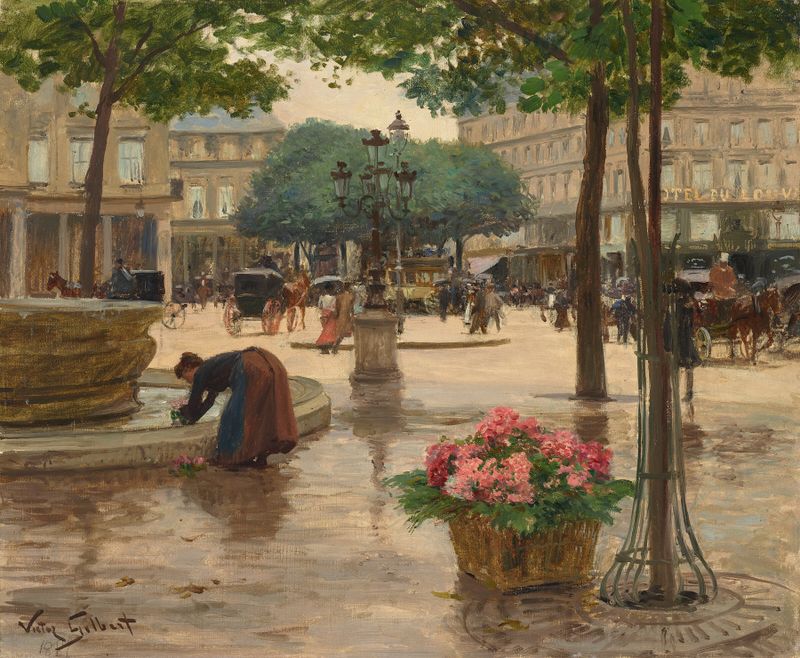
La Place du Théâtre Français
Victor Gabriel Gilbert





