
Le marchand de chansons — History & Facts
Is this a mirror — or a memory? The layers of human experience intermingle, reflecting faith and longing within the bustling life of a street vendor. Look to the left at the merchant, his face a canvas of concentration and devotion as he holds the reins of his vibrant display of songbooks. The interplay of soft pastels and rich browns draws you in, making the vendor the undeniable focal point amid a sea of colorful, hand-painted covers, each promising a melody to the passerby. Notice how the light cascades over his worn hat and the tattered edges of the books, illuminating the sweat of effort and the hope of connection.
The composition engages the viewer as it dances between the allure of the books and the human determination of the vendor, inviting you deeper into the scene. The juxtaposition of the vendor's earnest expression against the oblivious crowd hints at deeper narratives of isolation and aspiration. Each book symbolizes a story waiting to be heard, a faith in the transformative power of music. There’s a delicate tension between the vibrancy of the songbooks and the somberness of the vendor's gaze, suggesting that while he sells dreams, he may feel distant from them.
It raises questions about the value of such dreams—a poignant reminder that hope often exists alongside struggle. Victor Gabriel Gilbert painted Le marchand de chansons in 1903 during a time of great change in France, as the Belle Époque was giving way to modernity. His focus on everyday subjects reflected a broader trend in art towards realism and impressionism, capturing the intimacy of human experience against the backdrop of an evolving society. Gilbert, known for his depictions of urban life, was navigating his own artistic journey and the complexities of contemporary culture, echoing the very essence of faith that permeates this piece.
More Artworks by Victor Gabriel Gilbert
Browse all →
At the Flower Market
Victor Gabriel Gilbert

Reading the News
Victor Gabriel Gilbert
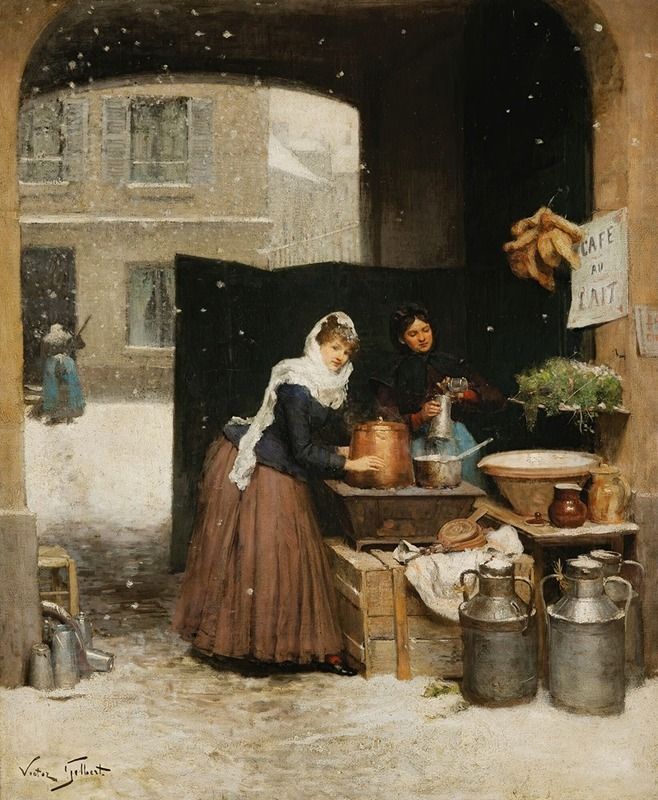
Crémière En Hiver
Victor Gabriel Gilbert

Le marché des fleurs
Victor Gabriel Gilbert
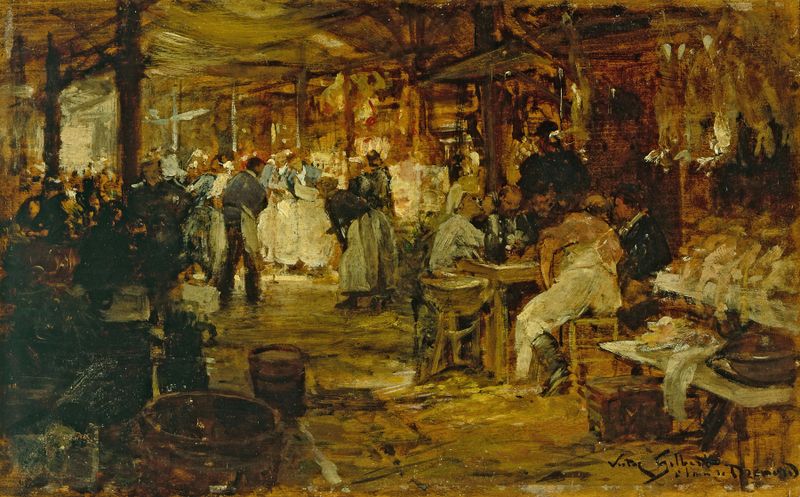
Le marché de la Madeleine
Victor Gabriel Gilbert

Femme assise à une table se réchauffant les mains après avoir ouvert des huîtres
Victor Gabriel Gilbert

Jeune femme à l’ombrelle achetant des fleurs
Victor Gabriel Gilbert
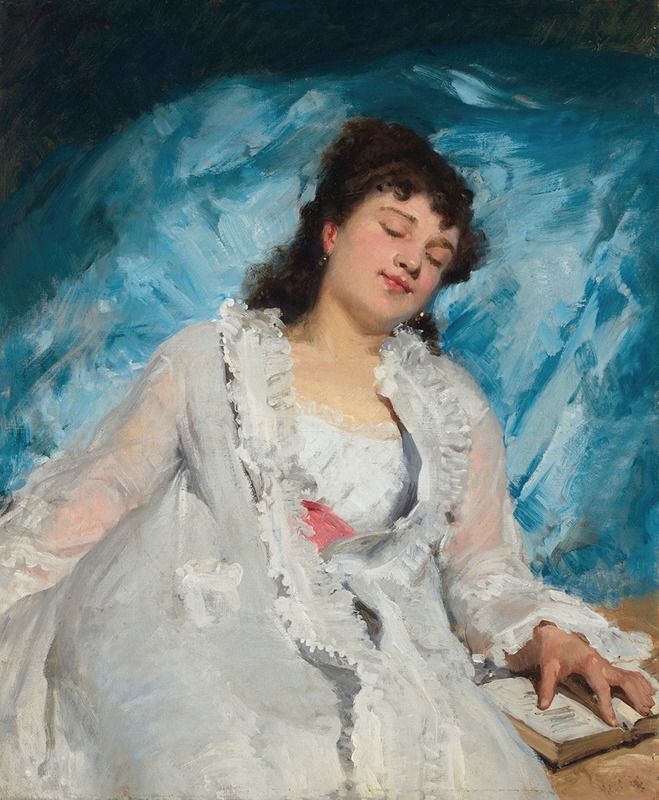
Doux repos
Victor Gabriel Gilbert

At Her Toilette
Victor Gabriel Gilbert
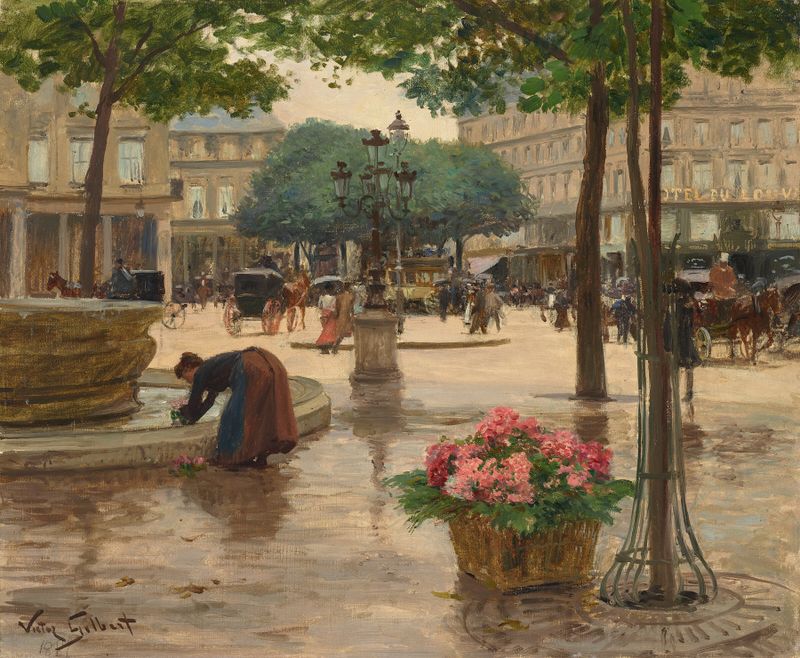
La Place du Théâtre Français
Victor Gabriel Gilbert





