
Crossing at Schreckenstein — History & Facts
Could beauty survive in a century of chaos? The stillness of a serene moment can often reveal the fragility of innocence amid turmoil. Look to the foreground, where a peaceful river winds through a lush landscape. The soft greens and blues contrast vividly with the earthy tones of the rocky outcrops, inviting the viewer to traverse the tranquil scene. Notice how the gentle light filters through the trees, casting dappled shadows that dance on the water's surface, suggesting life and movement in an otherwise static tableau. Delve deeper into the layers of emotion embedded in the scene.
The lone figure crossing the bridge embodies a poignant solitude, while the distant mountains loom overhead, hinting at both protection and isolation. This juxtaposition reflects a delicate balance between safety and vulnerability, urging contemplation of the relationship between nature and the human experience. The innocence of the traveler is underscored by the calm water, yet the imposing backdrop serves as a reminder of the chaotic world that lies beyond this fleeting moment. During the mid-19th century, Richter painted this piece while navigating the complexities of Romanticism in Germany.
As the art world grappled with the emotional depths of nature and individual experience, he sought solace in idyllic landscapes that celebrated both beauty and introspection. This period saw an exploration of the sublime, and Crossing at Schreckenstein stands as a testament to the enduring allure of innocence amidst an ever-changing reality.
More Artworks by Adrian Ludwig Richter
Browse all →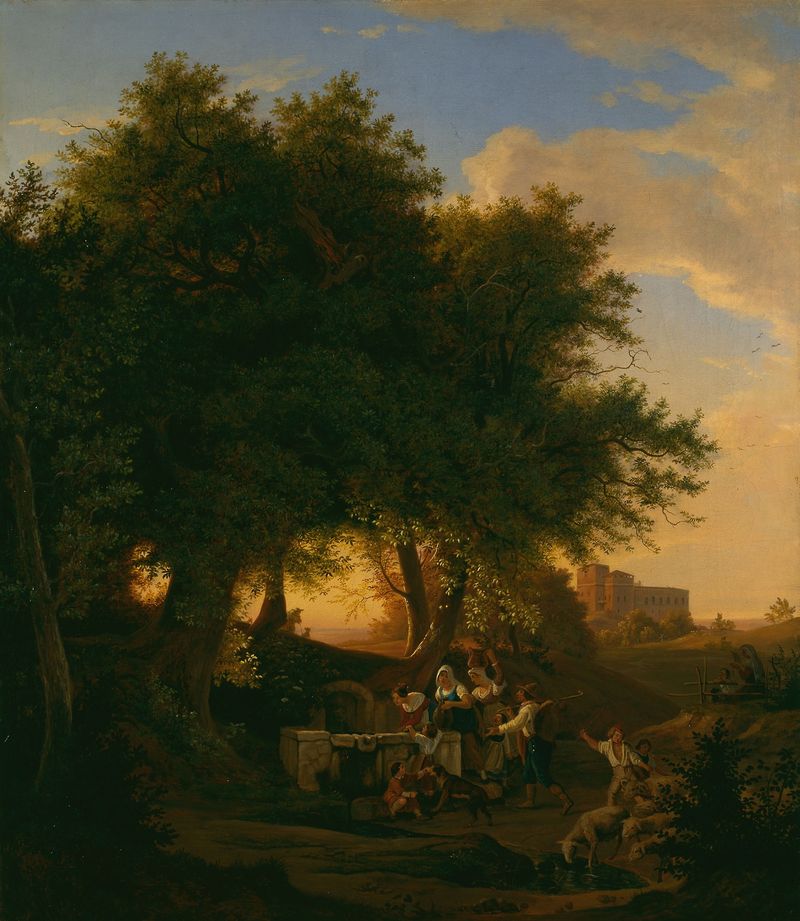
The Fountain at Grottaferrata
Adrian Ludwig Richter
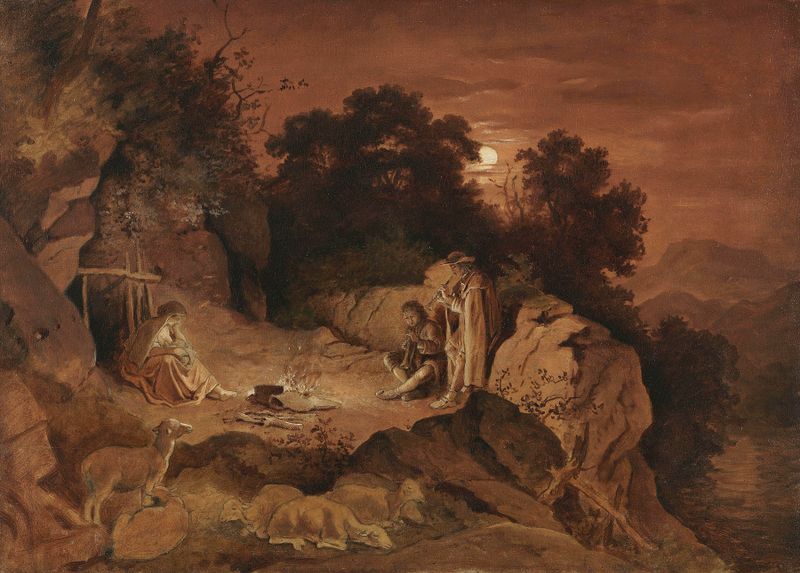
Hirten am Feuer (Abendlandschaft)
Adrian Ludwig Richter

Landschaft bei den Sabiner Bergen (Rocca di Mezzo)
Adrian Ludwig Richter

Civitella
Adrian Ludwig Richter

Italienische Landschaft mit Schafherden
Adrian Ludwig Richter
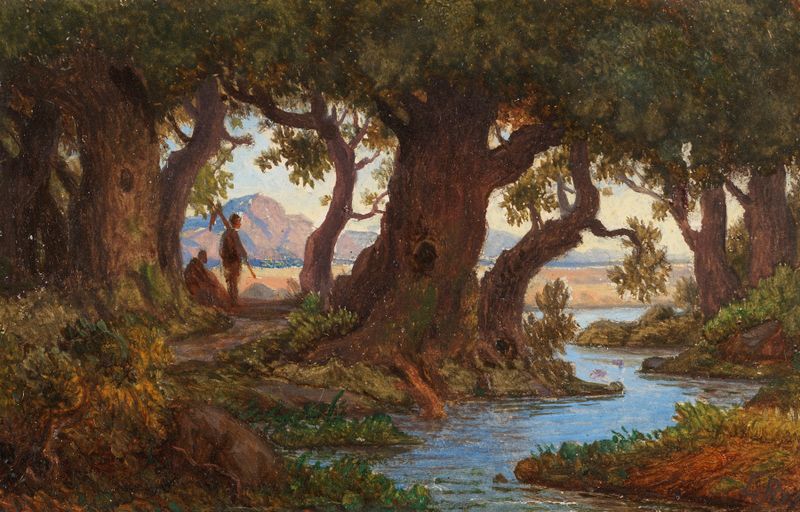
Italienische Flusslandschaft
Adrian Ludwig Richter

The Bay Of Naples, Capri Beyond
Adrian Ludwig Richter
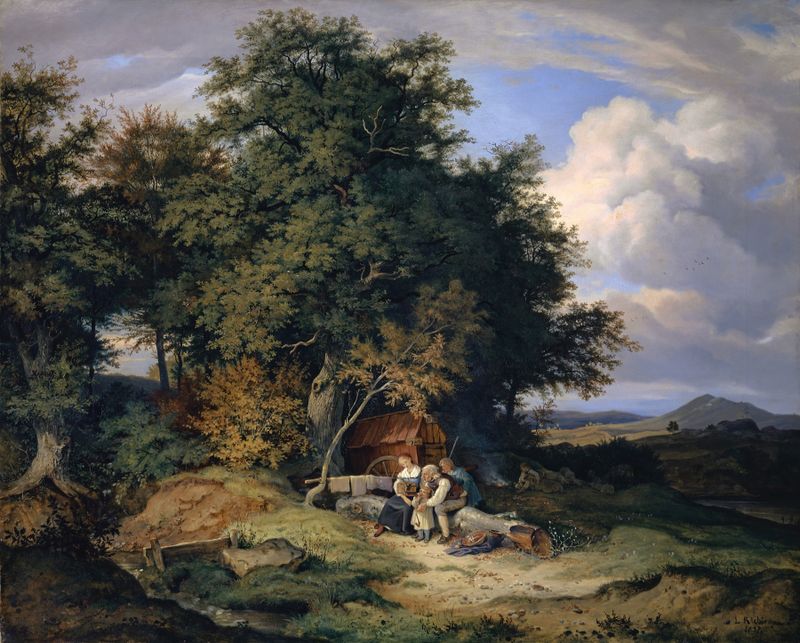
Herbstlicher Wald mit Schäferfamilie
Adrian Ludwig Richter

Ariccia
Adrian Ludwig Richter

Thunderstrom over Monte Scalambra near Olevano in the Sabine Mountains
Adrian Ludwig Richter





