
Italienische Flusslandschaft — History & Facts
Could a single brushstroke hold eternity? In Italienische Flusslandschaft, the delicate interplay of light and shadow unveils layers of emotions that speak to both beauty and betrayal. Look to the right at the serene river, its surface shimmering with a gentle dance of sunlight, while vibrant greens frame the scene, inviting the viewer into a tranquil oasis. Notice how the artist expertly employs soft pastels and rich earth tones, creating a harmonious blend that draws your eye toward the distant hills. The composition leads us through the landscape, connecting the foreground to the horizon, yet there lies an undercurrent of longing—a suggestive tension that simmers beneath the idyllic surface. As you explore further, subtle details emerge: a solitary figure stands apart from a small gathering, casting a veil of isolation amidst companionship.
This juxtaposition hints at a narrative of betrayal—perhaps an unseen conflict that shatters the placid moment. The way the light touches the figure’s back reveals emotional weight, suggesting that the beauty of the landscape belies deeper feelings of sadness or loss. Each brushstroke not only captures a landscape but also reflects inner turmoil, inviting contemplation of what lies beneath the surface. In 1825, while creating this piece, the artist was deeply influenced by the Romantic movement, embracing nature's beauty as a means of expressing personal emotion.
Richter's exploration of picturesque landscapes coincided with burgeoning interest in realism, as artists sought to depict not only idyllic settings but also the complexities of human experience within them. During this period of transformation in the art world, Richter deftly navigated his own path, intertwining beauty with poignant narratives.
More Artworks by Adrian Ludwig Richter
Browse all →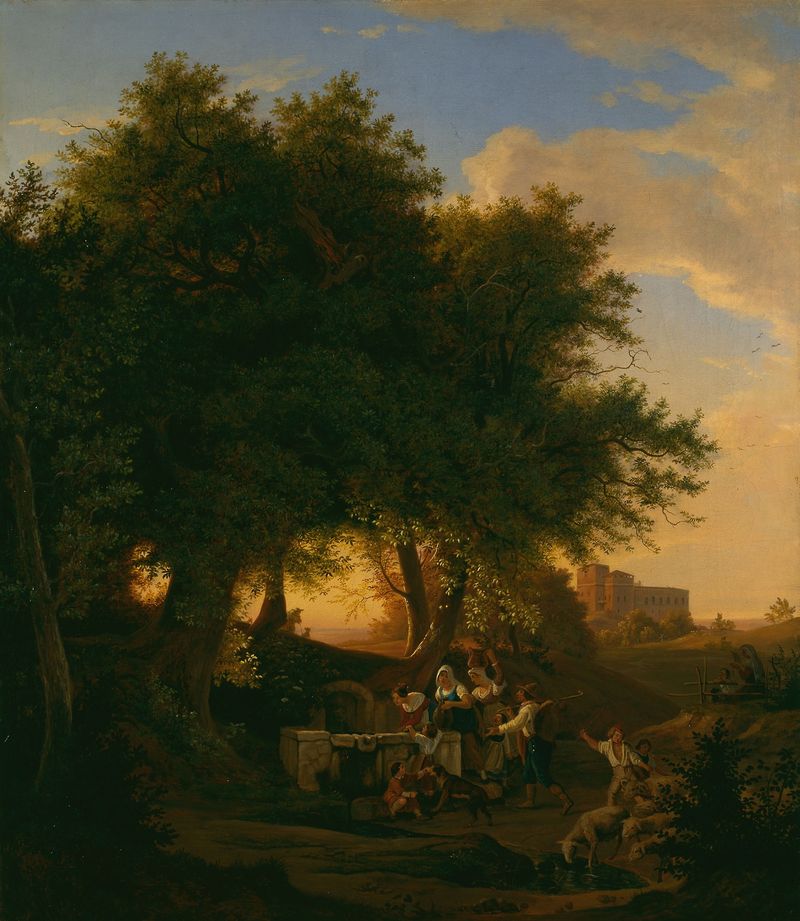
The Fountain at Grottaferrata
Adrian Ludwig Richter
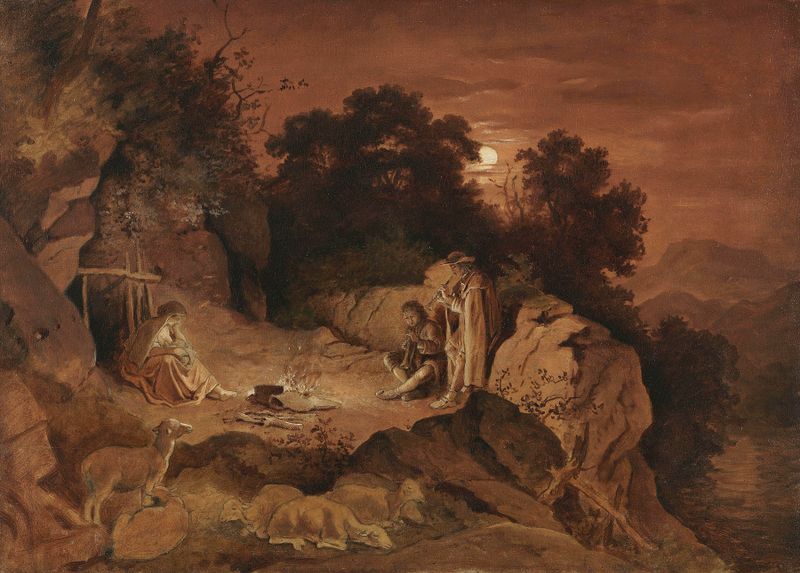
Hirten am Feuer (Abendlandschaft)
Adrian Ludwig Richter

Landschaft bei den Sabiner Bergen (Rocca di Mezzo)
Adrian Ludwig Richter

Civitella
Adrian Ludwig Richter

Italienische Landschaft mit Schafherden
Adrian Ludwig Richter

The Bay Of Naples, Capri Beyond
Adrian Ludwig Richter
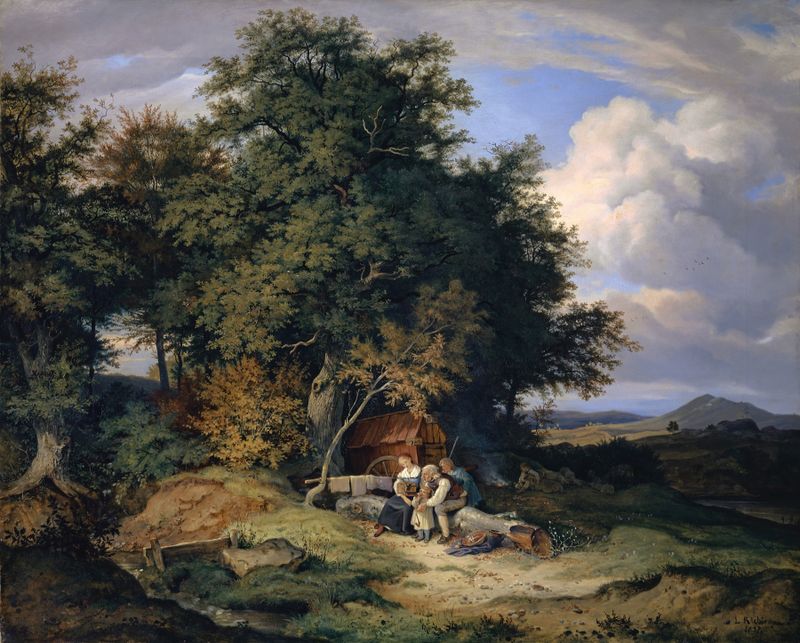
Herbstlicher Wald mit Schäferfamilie
Adrian Ludwig Richter

Ariccia
Adrian Ludwig Richter

Thunderstrom over Monte Scalambra near Olevano in the Sabine Mountains
Adrian Ludwig Richter

Crossing at Schreckenstein
Adrian Ludwig Richter





