
Landschaft bei den Sabiner Bergen (Rocca di Mezzo) — History & Facts
What secret hides in the quiet of the canvas? In Landschaft bei den Sabiner Bergen (Rocca di Mezzo), transformation whispers between the folds of the landscape, inviting viewers into its serene embrace. Look to the horizon, where gentle hills undulate in a soft cascade of greens and browns. The light bathes the scene in a warm glow, illuminating the distant peaks, while shadows stretch lazily across the foreground, hinting at the passage of time. Richer tones converge with delicate brushwork, drawing our eyes to the intricate details—the leaves that flutter, the water that glimmers, and the expansive sky that cradles the world below.
This marriage of color and technique reflects an artist deeply attuned to nature’s tranquil beauty. As you explore further, notice the contrast between the lush vegetation and the stark, rugged mountains. This juxtaposition encapsulates the delicate balance of nature's majesty and fragility. The soft cloud formations above mirror the rolling hills, suggesting a harmony that speaks to transformation—both in the landscape itself and in the viewer's perception.
There’s a palpable sense of anticipation, as if the very essence of the scene is on the brink of change, urging us to pause and reflect. In 1825, the artist found himself in a pivotal moment of his career, painting Landschaft bei den Sabiner Bergen during a time of romanticism’s rise in Germany. Living in Dresden, he was influenced by the burgeoning desire for emotional depth in art, reflecting the natural beauty surrounding him while grappling with themes of identity and history. His work emerged from a context where landscapes became not merely backgrounds, but integral elements of storytelling and personal experience.
More Artworks by Adrian Ludwig Richter
Browse all →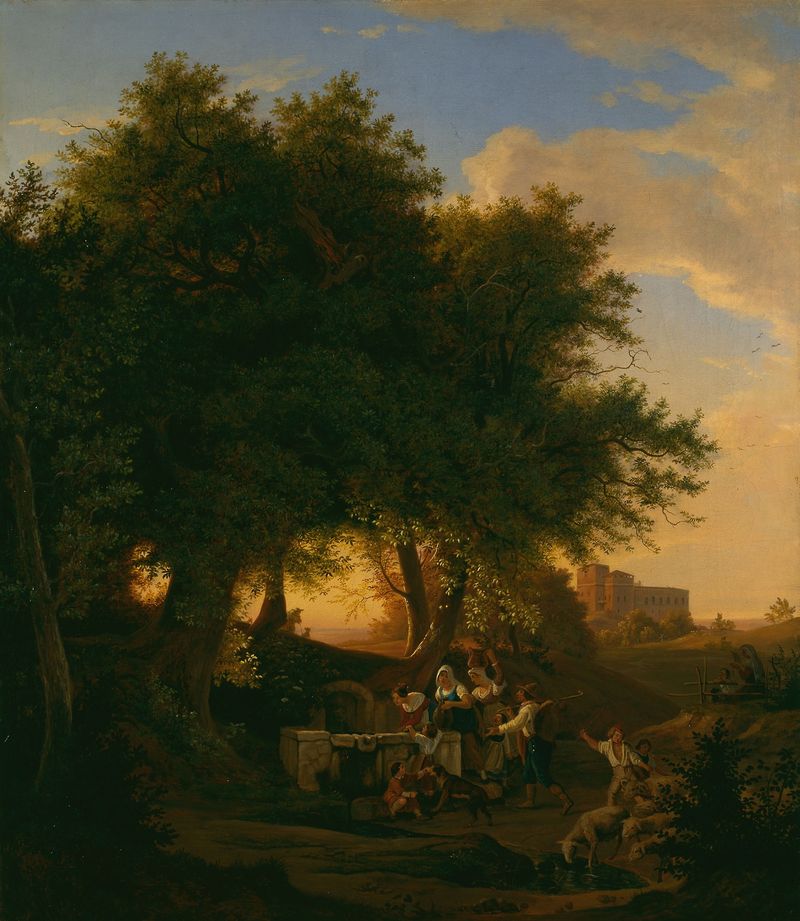
The Fountain at Grottaferrata
Adrian Ludwig Richter
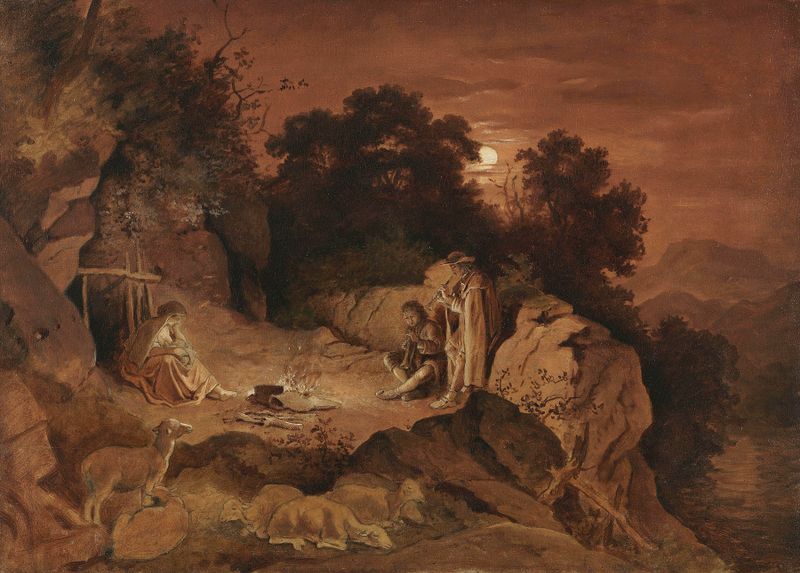
Hirten am Feuer (Abendlandschaft)
Adrian Ludwig Richter

Civitella
Adrian Ludwig Richter

Italienische Landschaft mit Schafherden
Adrian Ludwig Richter
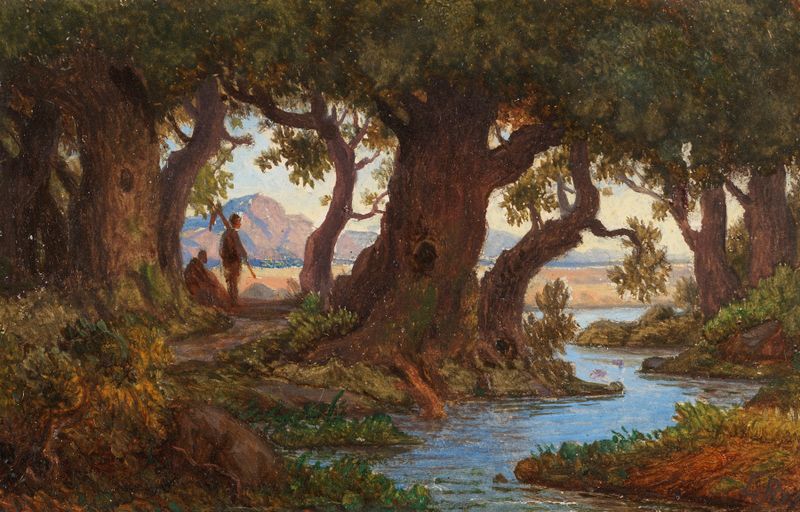
Italienische Flusslandschaft
Adrian Ludwig Richter

The Bay Of Naples, Capri Beyond
Adrian Ludwig Richter
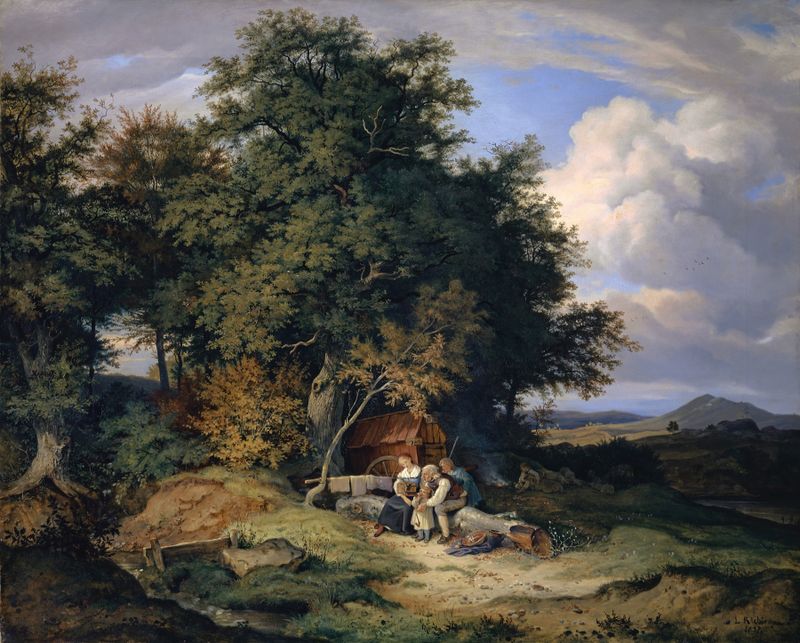
Herbstlicher Wald mit Schäferfamilie
Adrian Ludwig Richter

Ariccia
Adrian Ludwig Richter

Thunderstrom over Monte Scalambra near Olevano in the Sabine Mountains
Adrian Ludwig Richter

Crossing at Schreckenstein
Adrian Ludwig Richter





