
Crépuscule — History & Facts
Can beauty exist without sorrow? In Crépuscule, the delicate balance of twilight hues evokes a potent sense of decay that lingers in the viewer’s heart. Look to the left at the fading light that dances upon the horizon, casting long shadows over the landscape. The soft blend of blues and oranges creates a gentle transition, while wisps of clouds seem to hold their breath, as if reluctant to let the day slip away. Pissarro’s loose brushwork invites you to wander the scene, revealing a world that is simultaneously alive and on the brink of slumber, a harmonious union of color and form that stirs a feeling of nostalgia. The painting resonates with the tension between beauty and impermanence.
The vibrant colors mask the inevitable darkness of night, echoing the fleeting nature of life itself. Small details, like the silhouettes of trees at the edge, suggest a boundary between the known and the unknown, inviting contemplation of what lies beyond the light. Each stroke of the brush captures the ephemeral quality of twilight, serving as a poignant reminder that all moments, no matter how beautiful, carry the weight of their impending end. In 1879, Pissarro painted Crépuscule in Éragny, amid a flourishing Impressionist movement that celebrated the beauty of everyday life.
This period marked his exploration of light and color, as well as a deepening interest in rural scenes. As a Jewish artist in a time rife with social and political upheaval, his work also reflected the complexities of existence, merging aesthetics with the emotional undercurrents of society.
More Artworks by Camille Pissarro
Browse all →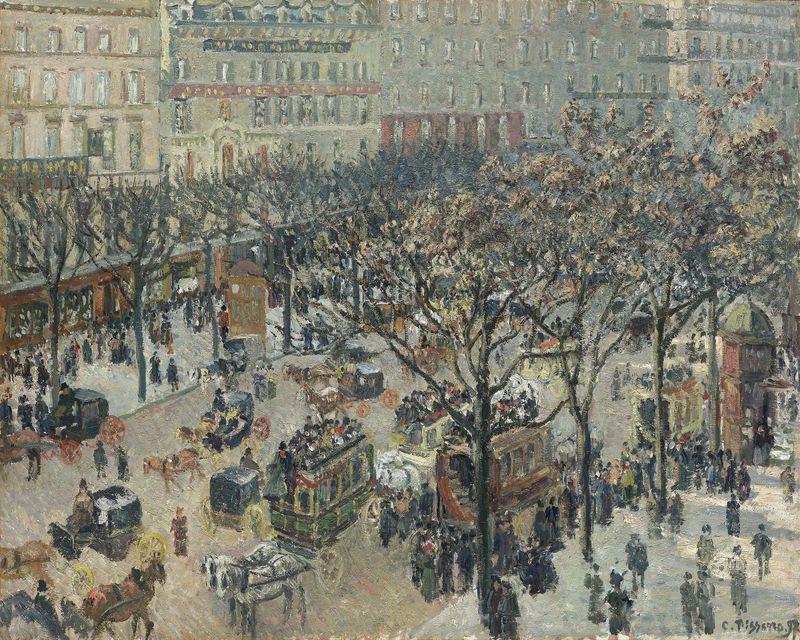
Boulevard des Italiens,Morning_Sunlight
Camille Pissarro
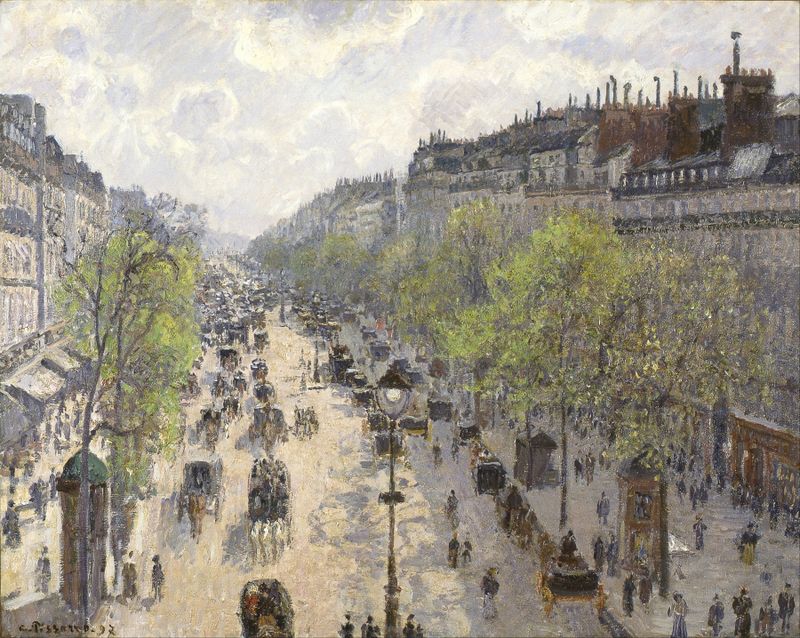
Boulevard Montmartre, Spring
Camille Pissarro
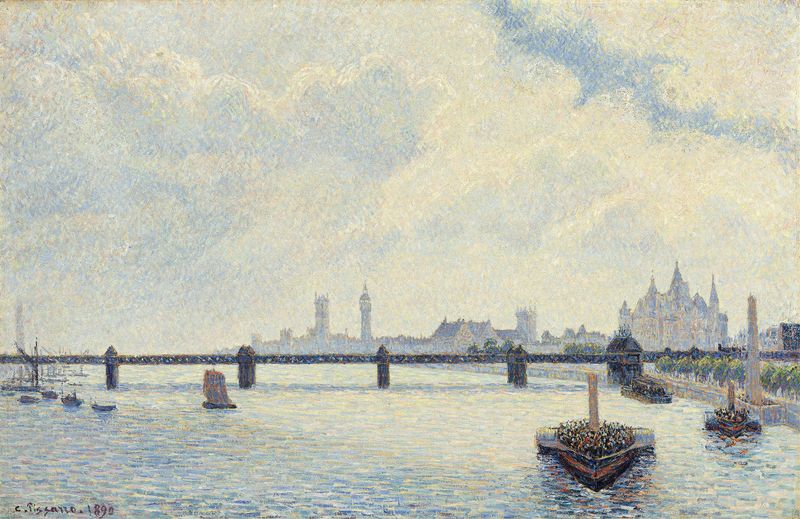
Charing Cross Bridge,London
Camille Pissarro
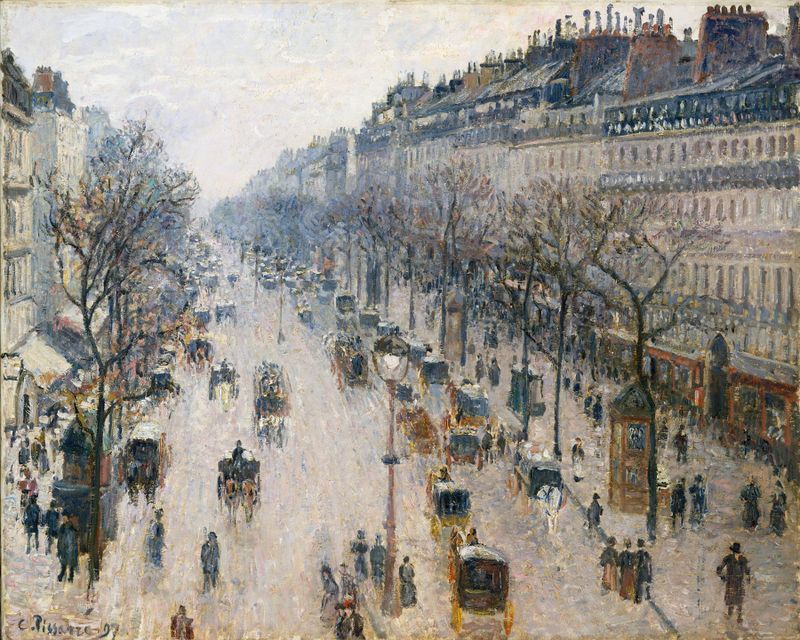
The Boulevard Montmartre on a Winter Morning
Camille Pissarro
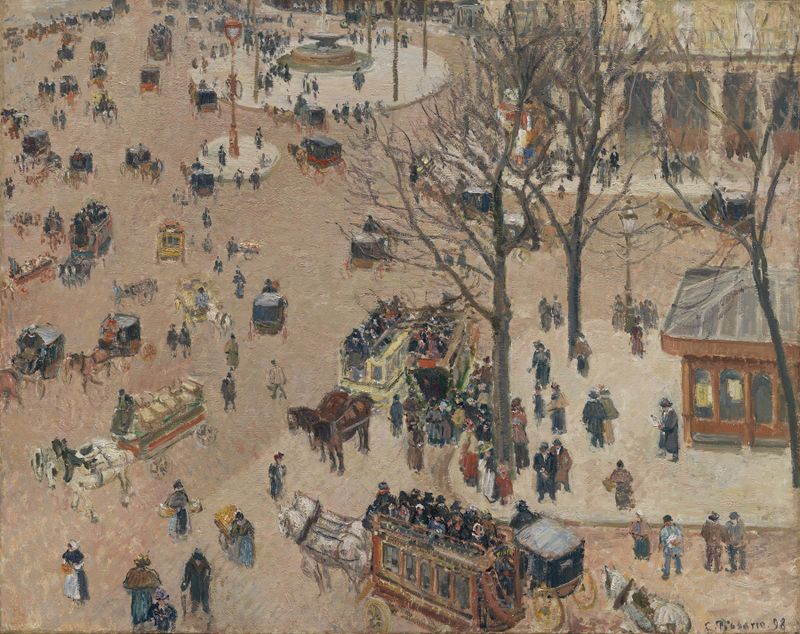
La Place du Théâtre Français
Camille Pissarro

Rue Saint-Lazare, Paris
Camille Pissarro
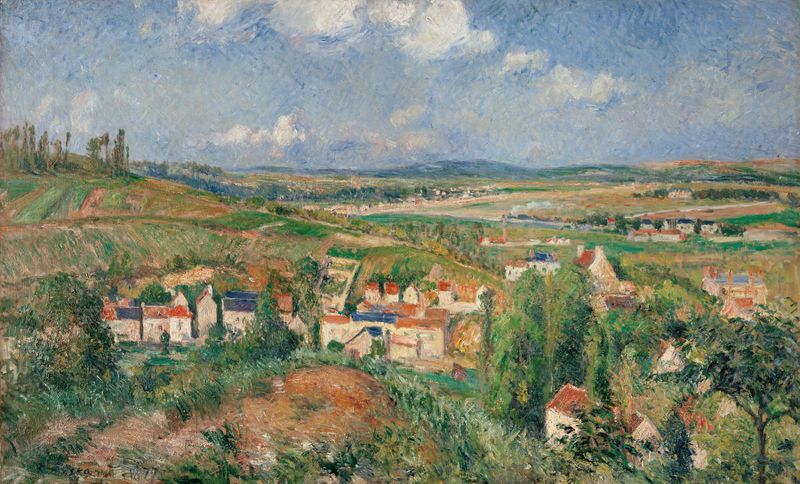
L’hermitage En Été, Pontoise
Camille Pissarro

Place du Theatre Francais,Fog Effect
Camille Pissarro
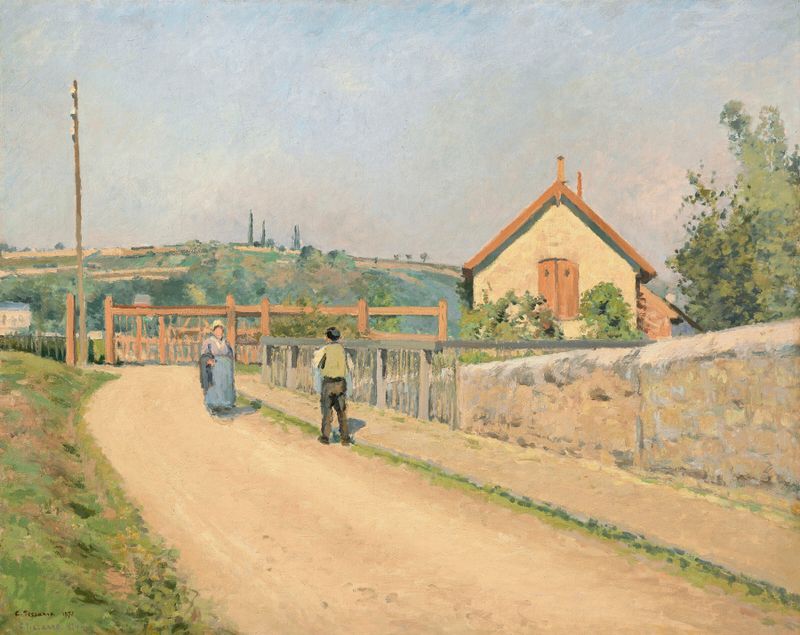
La barrière du chemin de fer, aux Pâtis près Pontoise
Camille Pissarro
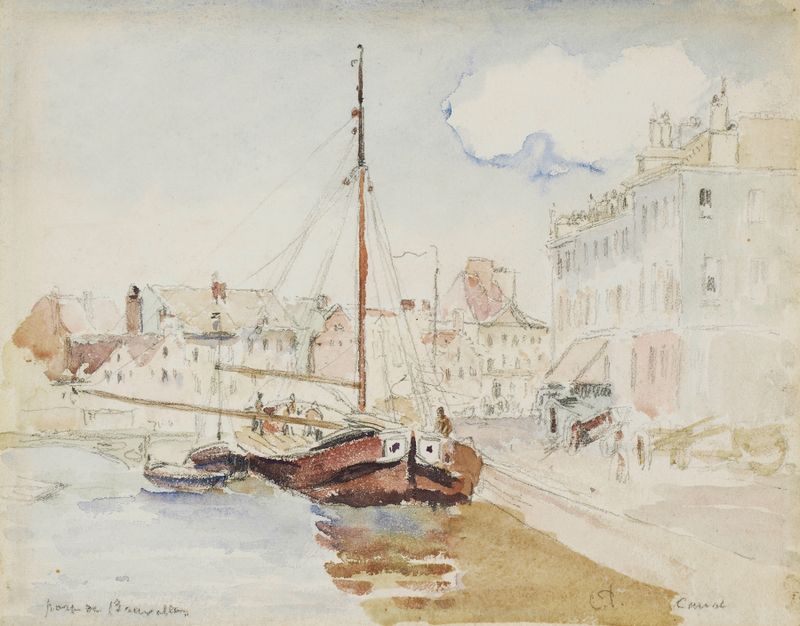
Port de Bruxelles
Camille Pissarro





