
Cwm Trifaen — History & Facts
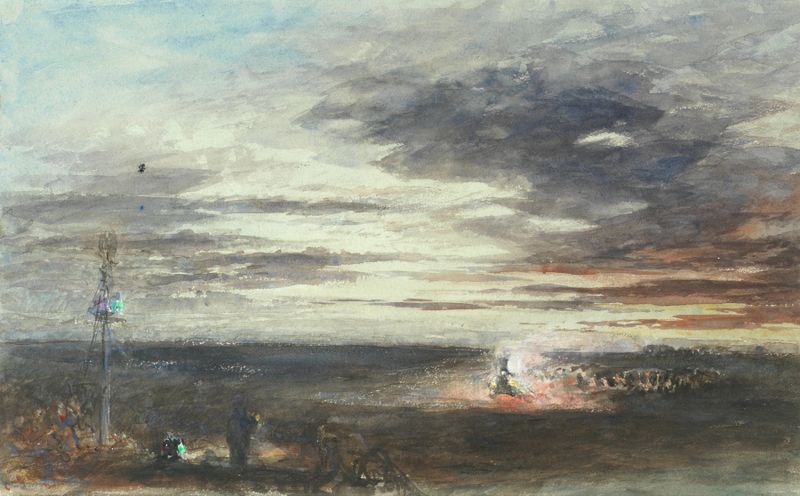
In the quiet embrace of Cwm Trifaen, ecstasy emerges like a phantom, suspended between reality and reverie, inviting us to step into its ethereal realm. Focus on the tranquil foreground where the water reflects a tapestry of soft hues, beckoning the viewer’s gaze. Notice the delicate brushwork that builds up the atmosphere; the interplay of light and shadow creates a dance across the land and sky, while the cool blues and warm ochres converge in harmonious celebration. The gentle undulations of the hills, flanked by wisps of clouds, evoke a palpable sense of serenity as if time itself pauses to breathe. In this landscape, emotional tensions reveal themselves through nature’s quiet beauty.
The flowing water symbolizes the passage of time, while the distant peaks stand as guardians of forgotten dreams. There’s a contrast between the stillness of the foreground and the turbulent sky, suggesting an inner turmoil masked by the momentary peace of the scene. Hidden details, like the lone tree standing resolutely against the elements, invite contemplation on resilience and solitude, reminding us that ecstasy and melancholy often walk hand in hand. Created around 1857, this piece reflects Alfred William Hunt’s deep connection to the natural world during a period of artistic exploration in England.
As the Pre-Raphaelite Brotherhood began to challenge conventional approaches to art, Hunt delved into the nuances of light and color, portraying landscapes infused with emotion. Balancing realism with an almost poetic vision, he captured the ephemeral beauty of nature during a transformative time in the art world.
More Artworks by Alfred William Hunt
Browse all →
Mount Snowdon through Clearing Clouds
Alfred William Hunt

Snowdon, after an April Hailstorm
Alfred William Hunt
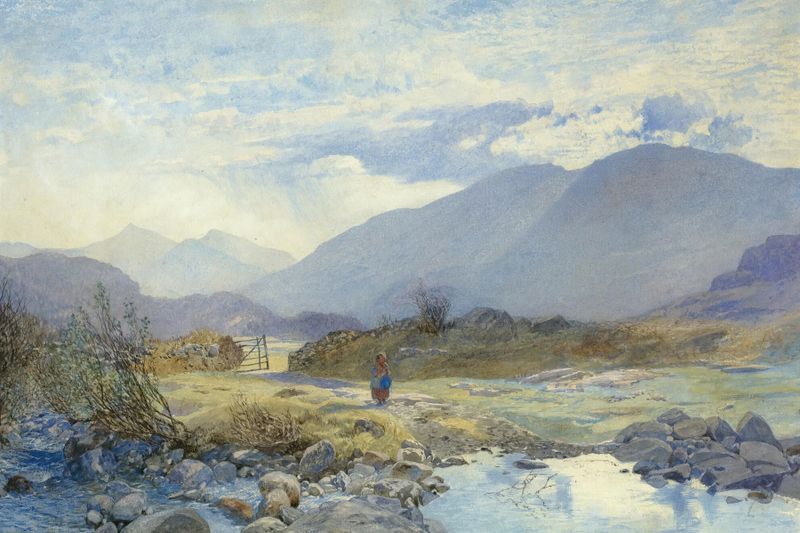
Capel Curig With Snowdon And The Glyders In The Distance, North Wales
Alfred William Hunt
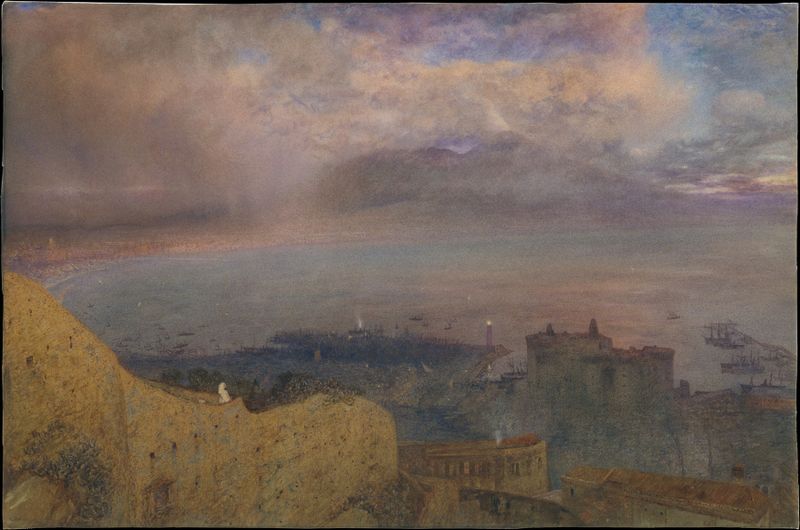
View of the Bay of Naples with Vesuvius, Smoking, in the Distance (Evening)
Alfred William Hunt
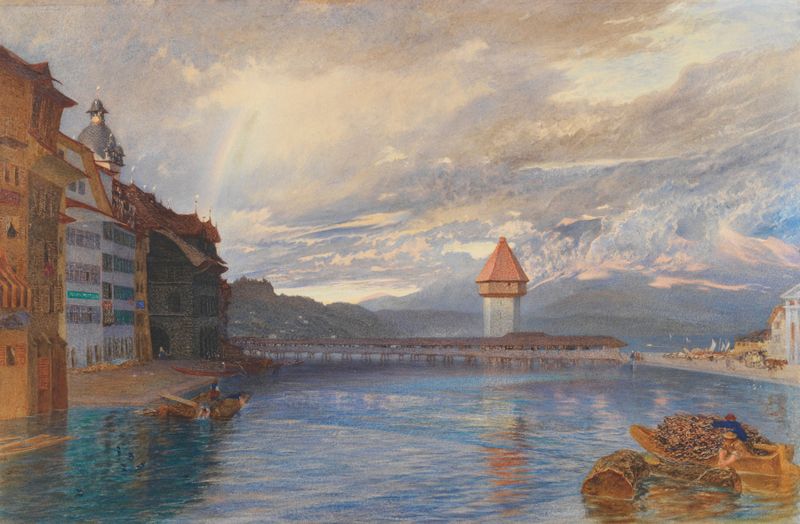
Lucerne
Alfred William Hunt
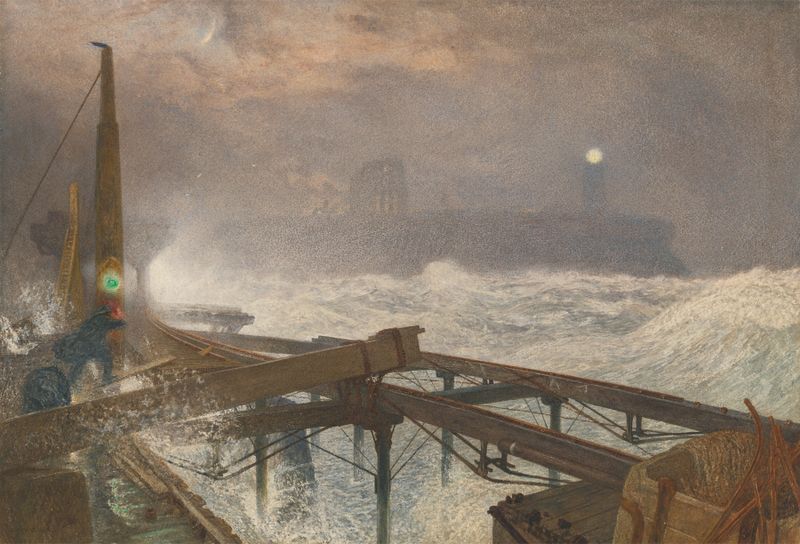
Tynemouth Pier – Lighting the Lamps at Sundown
Alfred William Hunt
Waiting for the train
Alfred William Hunt

The hayfield
Alfred William Hunt





