
The hayfield — History & Facts
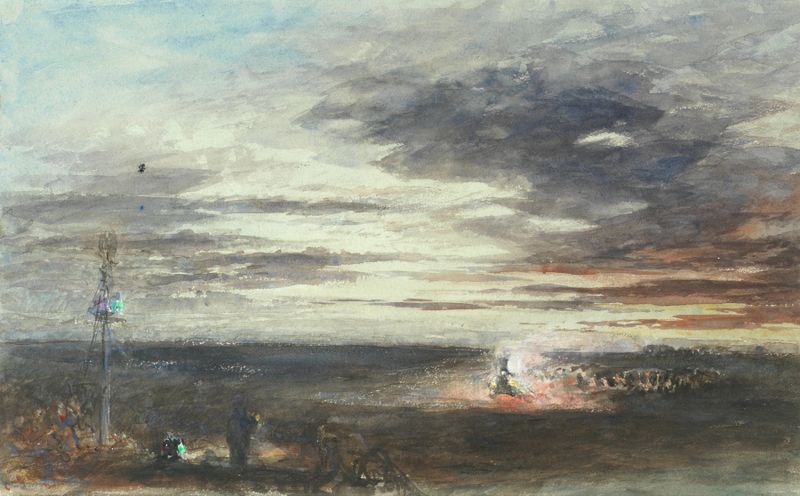
Where does light end, and longing begin? In the delicate embrace of nature, an obsession unfurls, intertwining with the shadows of the mind. Look to the left at the vibrant greens of the hayfield, alive with strokes that dance in the gentle caress of the sun. Notice how the light filters through the trees, casting dappled shadows that invite the viewer to step into the scene. The palette, a harmonious blend of earthy tones and light-infused hues, draws our eye across the canvas, revealing the artist's meticulous attention to detail in the subtle undulations of the landscape. Amidst this pastoral scene lies a tension between tranquility and the yearning for something beyond—perhaps a sense of nostalgia or an unfulfilled desire.
The juxtaposition of the lush hayfield against the fading light hints at a fleeting moment, capturing the impermanence of beauty. The distant horizon, painted in soft blues and golds, suggests dreams that linger just out of reach, beckoning the viewer to ponder what lies beyond the frame. In 1864, Alfred William Hunt was deeply immersed in the Pre-Raphaelite movement, which emphasized a return to detail and vivid color. At this time, he was exploring his own style, focusing on the interplay of light and atmosphere within the English countryside.
The world around him was undergoing rapid change, yet his work remained rooted in the serenity of nature, reflecting a longing for a simpler, more connected existence.
More Artworks by Alfred William Hunt
Browse all →
Mount Snowdon through Clearing Clouds
Alfred William Hunt

Cwm Trifaen
Alfred William Hunt

Snowdon, after an April Hailstorm
Alfred William Hunt
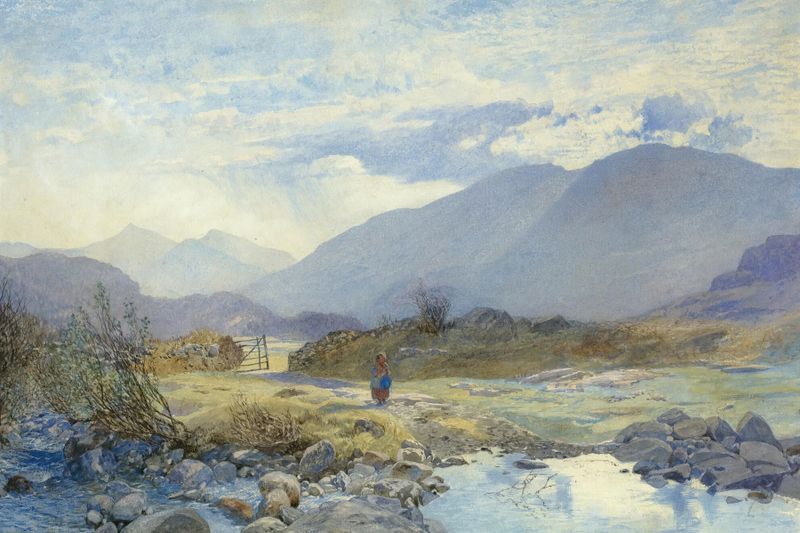
Capel Curig With Snowdon And The Glyders In The Distance, North Wales
Alfred William Hunt
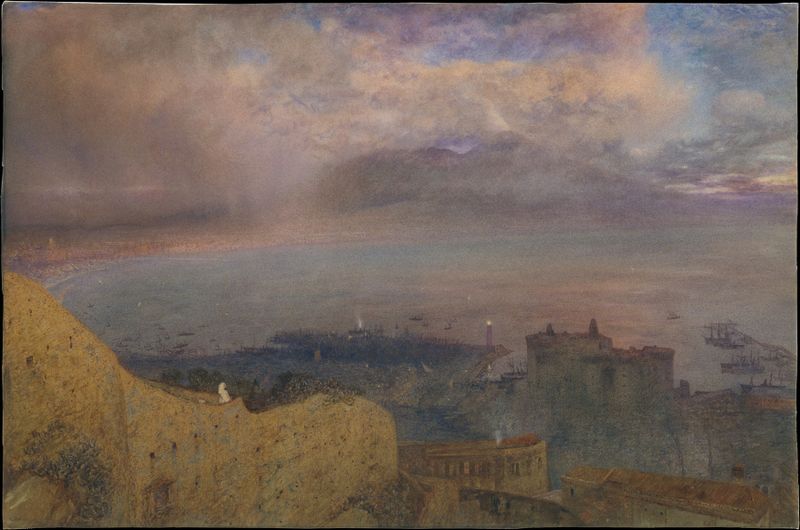
View of the Bay of Naples with Vesuvius, Smoking, in the Distance (Evening)
Alfred William Hunt
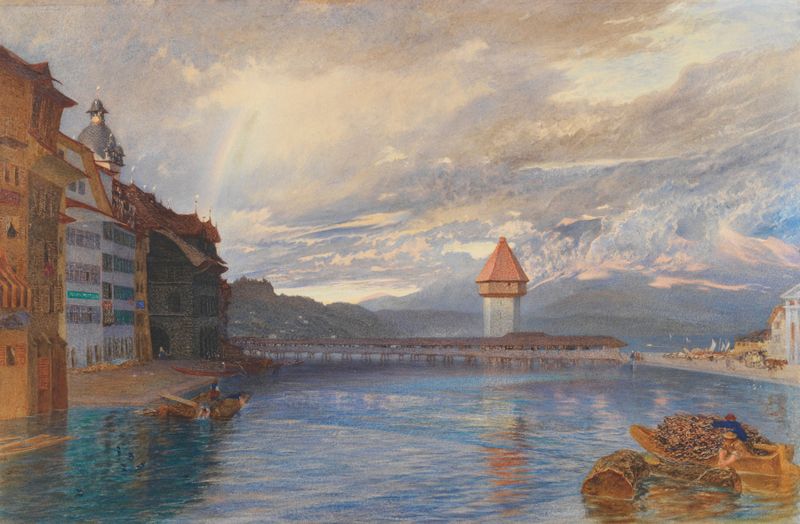
Lucerne
Alfred William Hunt
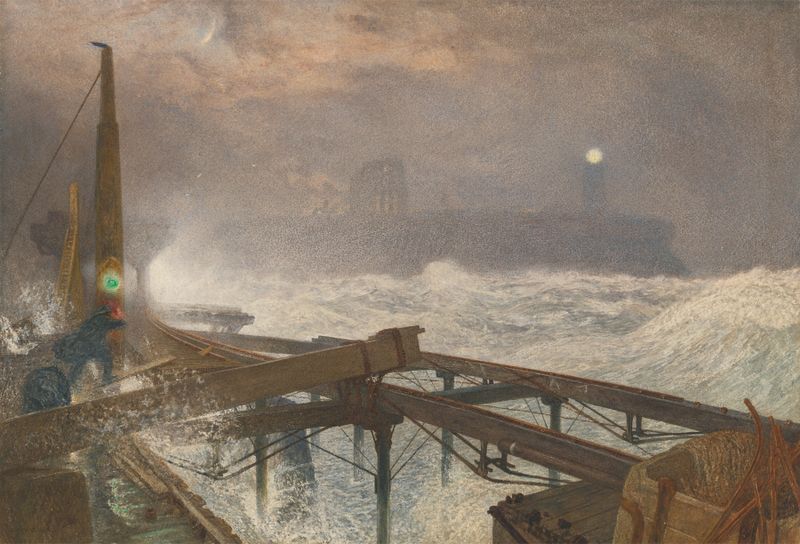
Tynemouth Pier – Lighting the Lamps at Sundown
Alfred William Hunt
Waiting for the train
Alfred William Hunt





