
Mount Snowdon through Clearing Clouds — History & Facts
In the quiet embrace of nature, a sense of melancholy lingers, evoking the feeling of fleeting moments captured in a breath. Look to the center of the composition where Mount Snowdon rises majestically, its peaks kissed by wisps of cloud. The subtle palette of muted blues and grays envelops the landscape, while the interplay of light and shadow reveals the mountain's rugged texture. Notice how the clouds, like soft, ephemeral whispers, part to unveil the striking silhouette of the mountain, drawing the viewer’s eye instinctively towards its grandeur.
The delicate, almost ethereal quality of the brushwork contrasts sharply with the imposing form of Snowdon, a reminder of nature's vastness and solitary beauty. Delve deeper into the painting, and one can sense the emotional tension woven into the scene. The clouds not only obscure but also reveal—offering a glimpse of the mountain’s stoic permanence against the transitory nature of weather. This interplay speaks to a universal truth: the inevitable passage of time and the bittersweet beauty of life’s impermanence.
The muted colors evoke a feeling of introspection, inviting viewers to reflect on their own experiences with solitude and longing. In 1857, the artist captured this moment during a period of significant transition in his life, as he navigated both personal challenges and the evolving landscape of the art world. Hunt, associated with the Pre-Raphaelite Brotherhood, was exploring the relationship between light and atmosphere, pushing boundaries in his quest for realistic yet emotive representations of nature. The work reflects not just his artistic ambitions but also a yearning for connection with the sublime forces of the natural world.
More Artworks by Alfred William Hunt
Browse all →
Cwm Trifaen
Alfred William Hunt

Snowdon, after an April Hailstorm
Alfred William Hunt
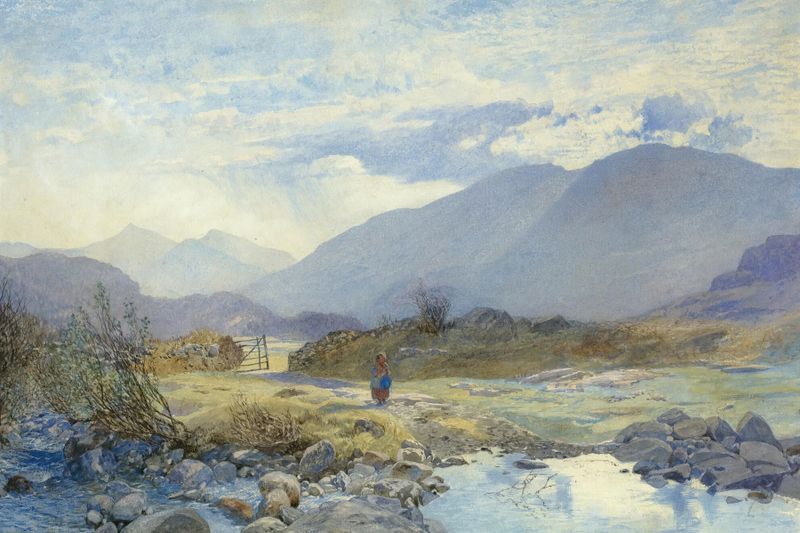
Capel Curig With Snowdon And The Glyders In The Distance, North Wales
Alfred William Hunt
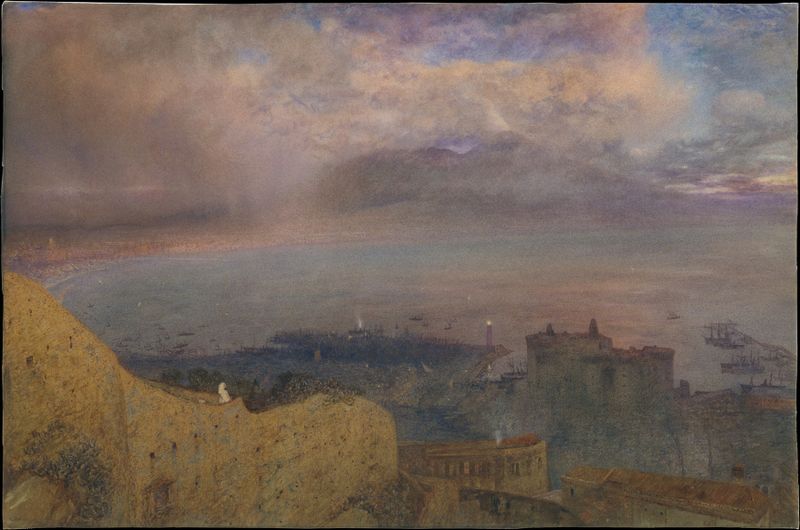
View of the Bay of Naples with Vesuvius, Smoking, in the Distance (Evening)
Alfred William Hunt
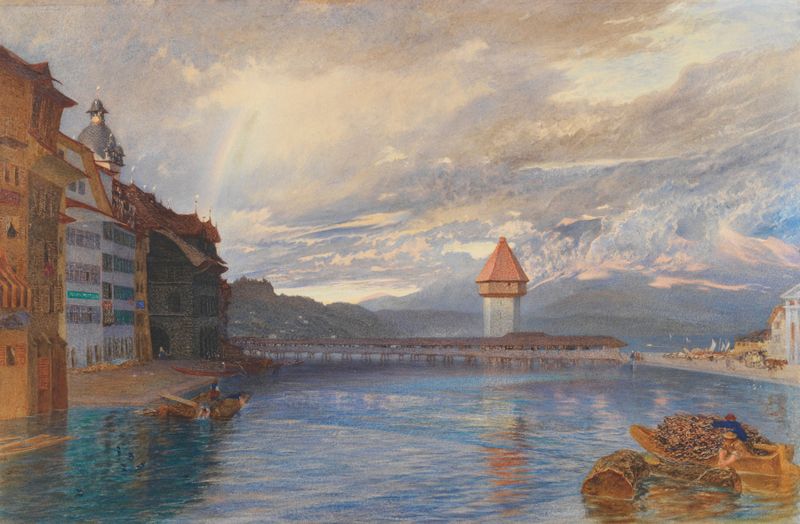
Lucerne
Alfred William Hunt
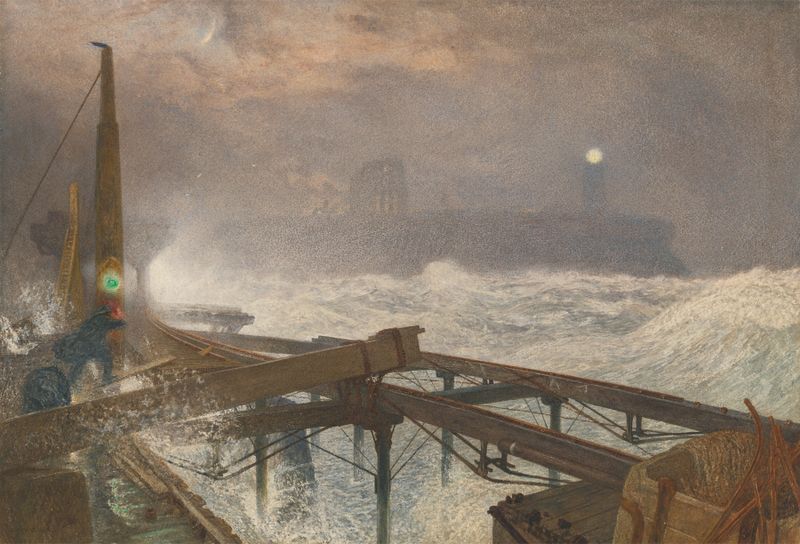
Tynemouth Pier – Lighting the Lamps at Sundown
Alfred William Hunt
Waiting for the train
Alfred William Hunt

The hayfield
Alfred William Hunt





