
Waiting for the train — History & Facts
Can beauty exist without sorrow? This question resonates deeply within the tender nuances of Waiting for the Train. To the viewer, the painting invites exploration of the haunting landscape. Look closely at the foreground, where a solitary figure stands, lost in thought, beneath the sweeping expanse of a moody sky. The delicate brushwork conveys a blend of silvery blues and muted grays, evoking a sense of melancholy.
Notice how the light, filtered through clouds, creates a soft glow that illuminates the figure's face, highlighting the deep lines of contemplation etched there. This interplay of shadow and light draws you into a moment suspended in time. Within this scene lies a profound dialogue between expectation and loss. The train, though unseen, looms large in the imagination, representing not just a physical journey, but the weight of anticipation that often accompanies human connection.
The figure's stillness contrasts sharply with the energy of the absent train, suggesting an unresolved tension that speaks to the universal experience of waiting—waiting for a loved one, for closure, or perhaps for a moment that never arrives. This poignant duality heightens the emotional resonance, inviting deeper reflection. Alfred William Hunt painted Waiting for the Train during a period marked by personal challenges and shifts in the art world. Working in England in the late 19th century, he found himself in the midst of evolving artistic movements, moving toward a more impressionistic style.
This painting reflects both his masterful technique and a period of introspection, capturing not only the essence of a moment but also the deeper currents of longing that pull through the fabric of life.
More Artworks by Alfred William Hunt
Browse all →
Mount Snowdon through Clearing Clouds
Alfred William Hunt

Cwm Trifaen
Alfred William Hunt

Snowdon, after an April Hailstorm
Alfred William Hunt
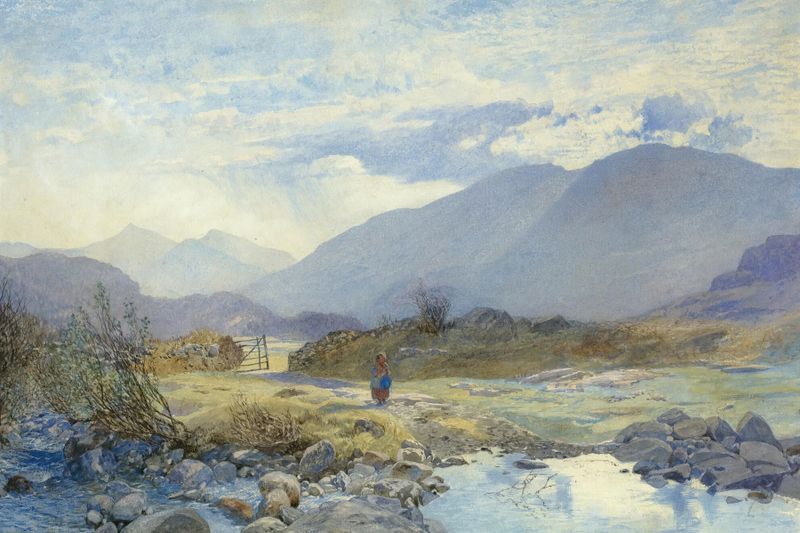
Capel Curig With Snowdon And The Glyders In The Distance, North Wales
Alfred William Hunt
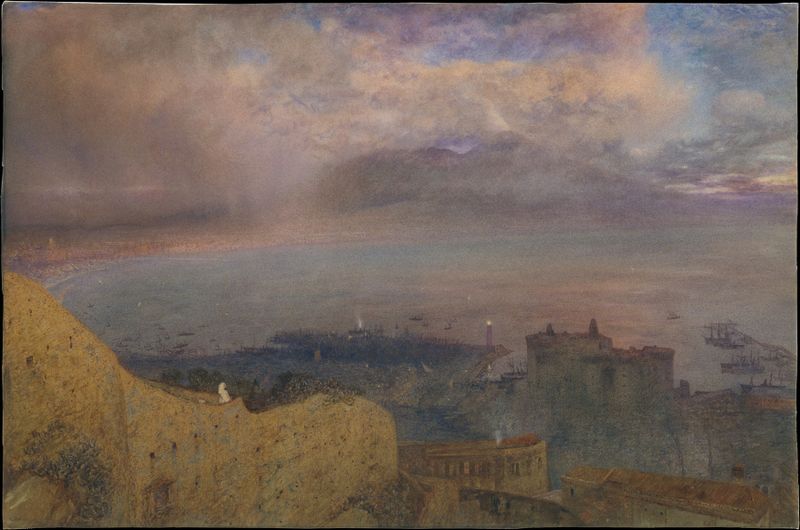
View of the Bay of Naples with Vesuvius, Smoking, in the Distance (Evening)
Alfred William Hunt
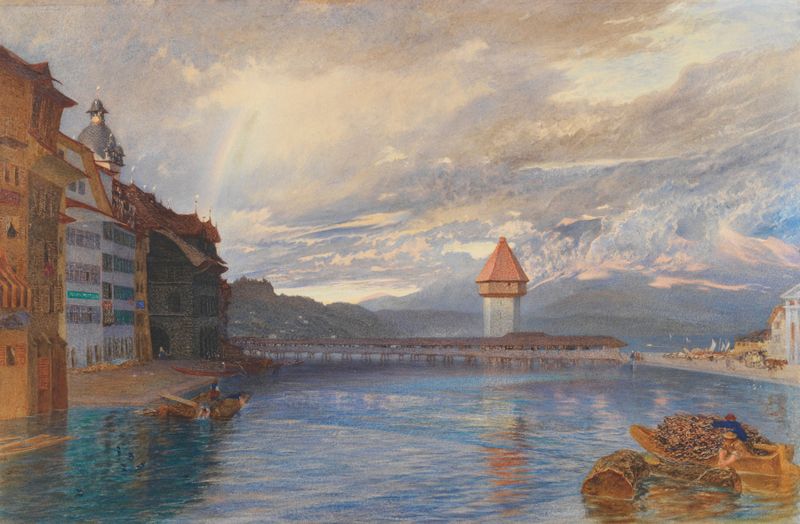
Lucerne
Alfred William Hunt
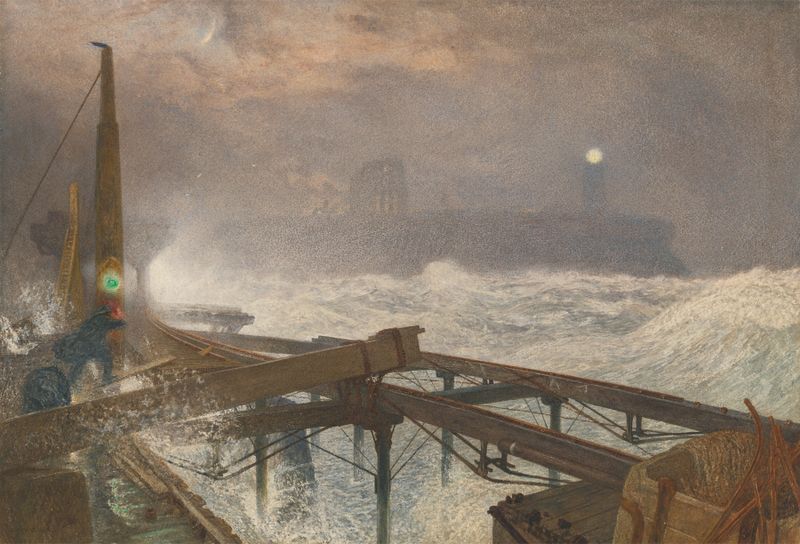
Tynemouth Pier – Lighting the Lamps at Sundown
Alfred William Hunt

The hayfield
Alfred William Hunt





