Das Bürgerversorgungshaus im Jahr 1888 — History & Facts
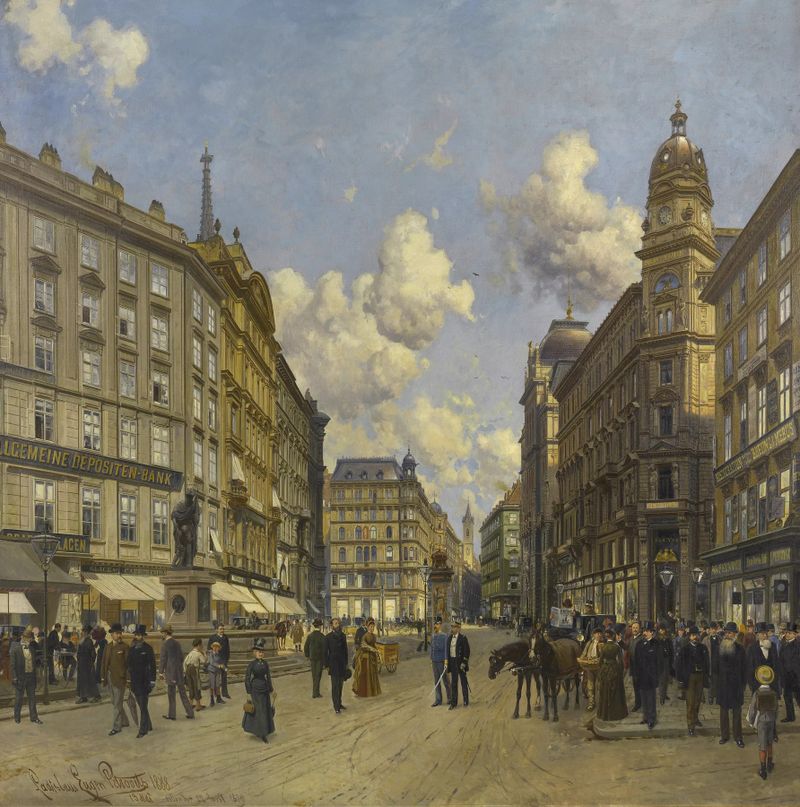
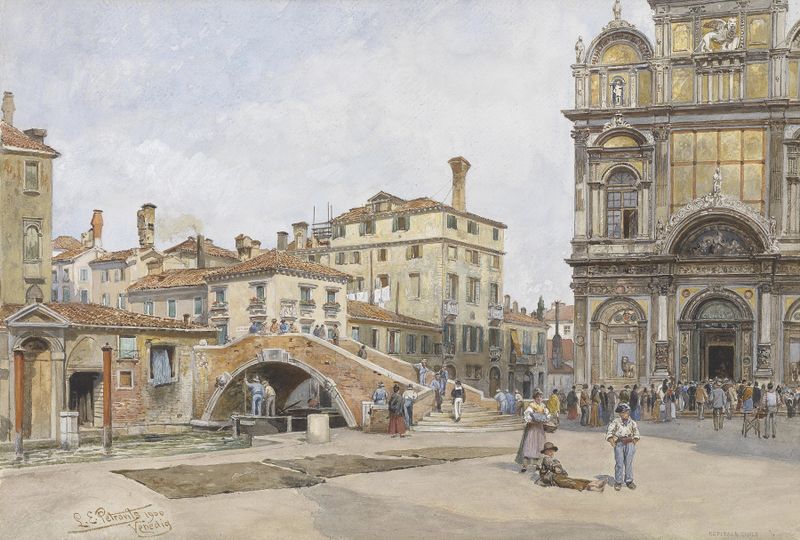
Where does light end, and longing begin? In Das Bürgerversorgungshaus im Jahr 1888, the interplay of shadow and illumination invites us to ponder the delicate boundary between life and the inevitable passage of time. Look to the upper left, where soft morning light filters through the window, casting ethereal patterns on the floor. This gentle illumination contrasts with the somber hues of the surrounding architecture, emphasizing the sanctuary’s solemn purpose. The carefully rendered details of the building—its sturdy walls and arched doorways—evoke a sense of permanence, while the painter's textured brushwork adds depth and dimension, inviting the viewer to step inside and explore. The painting speaks to the tension between hope and despair; it captures a moment of quiet reflection amidst the backdrop of mortality.
Notice the small figures in the foreground, their gestures imbued with a sense of purpose yet tinged with an undercurrent of vulnerability. They embody the intersection of life’s vitality and the delicate fragility that defines human existence, as if they are aware that this refuge is both a sanctuary and a reminder of life’s transient nature. In 1888, when this work was created, Ladislaus Eugen Petrovits was exploring themes of social compassion intertwined with architectural beauty. Set against a backdrop of a rapidly industrializing Europe, he sought to highlight the importance of community welfare through his art.
This painting reflects Petrovits' commitment to represent the realities of urban life, capturing the essence of public service institutions during a time of profound societal change.