
Das Innere eines Waldes — History & Facts
When did color learn to lie? The vibrant hues of green and gold draw the eye, yet they whisper secrets of fragility hidden beneath their allure. Look to the left at the dappled light filtering through the canopy, illuminating the underbrush with an ethereal glow. Notice how the artist's brushstrokes dance across the canvas, each layer of paint breathing life into the scene. The play of shadows creates a gentle contrast, evoking a sense of serenity while hinting at an underlying tension within the forest—a world both alive and vulnerable. Subtle details emerge upon closer examination: the delicate twigs and leaves, seemingly weightless, suggest a moment suspended in time where everything is in balance, yet precariously so.
The juxtaposition of vibrant colors against soft shadows conveys a duality, embodying the tension between life and decay. Each element serves as a reminder that beauty is often transient, and that the peace captured here is but a moment before the inevitable passage of time takes its toll. The work emerged during a time of transition for its creator, reflecting a period when he was deeply influenced by the Symbolist movement, likely while living in Germany in the late 19th century. As he navigated the complexities of art and nature, he sought to capture the essence of landscapes, revealing both their splendor and fragility.
The world around him was evolving, mirroring the delicate balance portrayed in this enchanting forest scene.
More Artworks by Paul Müller-Kaempff
Browse all →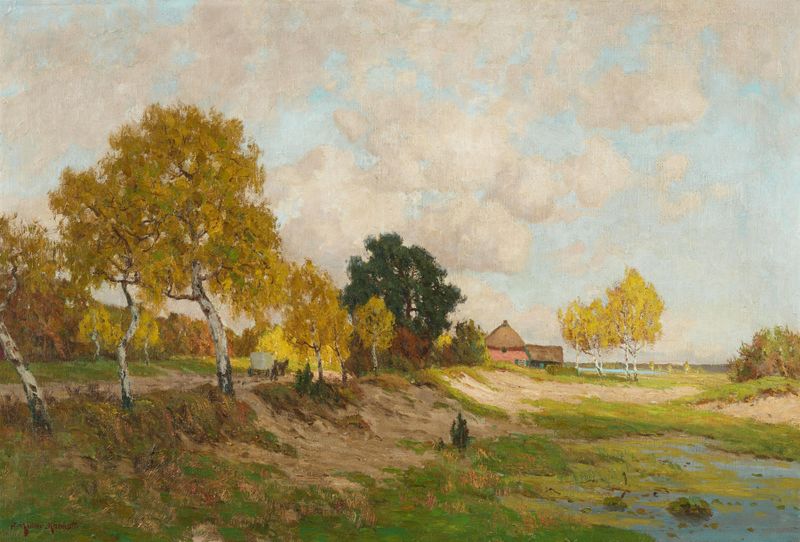
Herbstliche Landschaft bei Ahrenshoop
Paul Müller-Kaempff
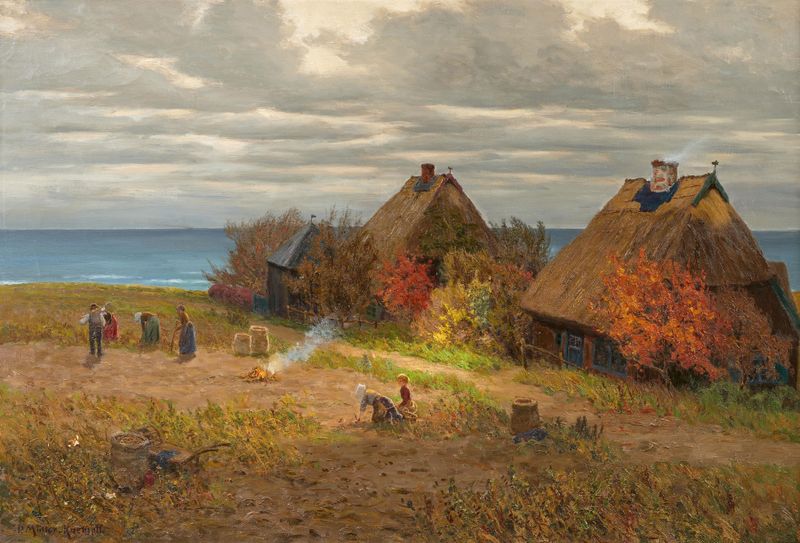
Grenzweg in Ahrenshoop mit Bäuerinnen bei der Kartoffelernte
Paul Müller-Kaempff
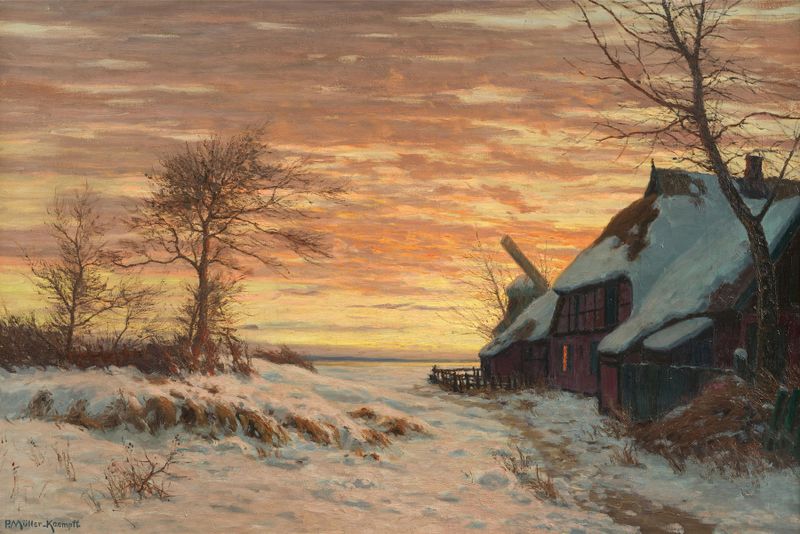
Bauernhof und Mühle im winterlichen Ahrenshoop
Paul Müller-Kaempff
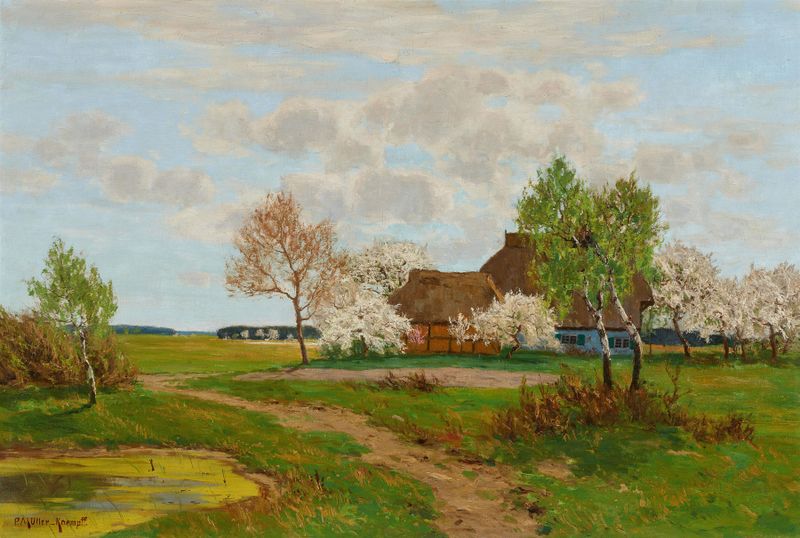
Frühsommerliche Landschaft mit Bauernkaten bei Ahrenshoop
Paul Müller-Kaempff

Bauernhaus in den Dünen
Paul Müller-Kaempff
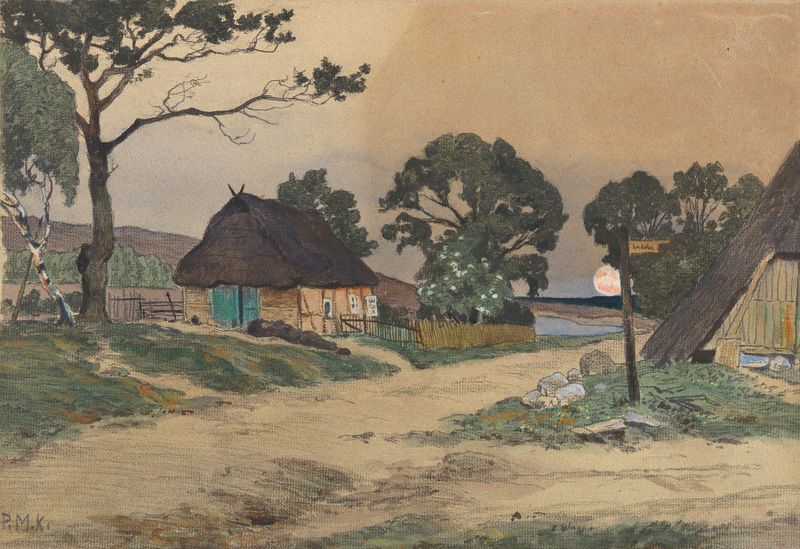
Abend im Haidedorf
Paul Müller-Kaempff
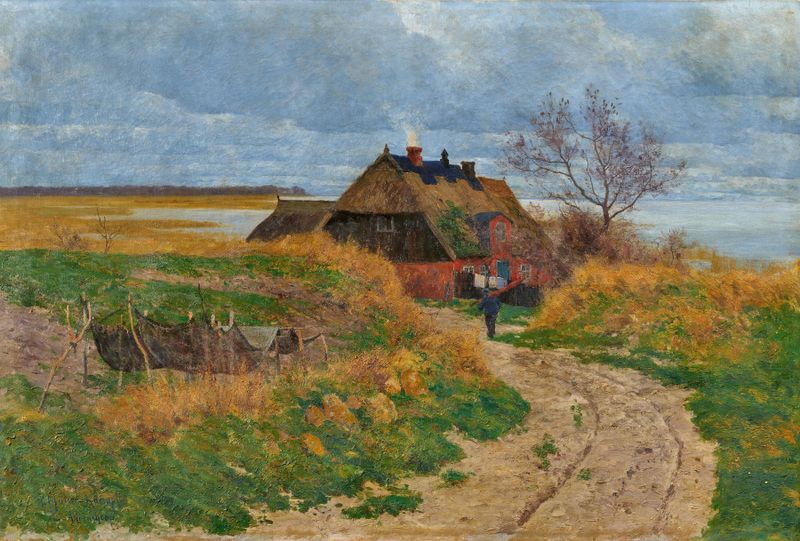
Einsames Fischerhaus
Paul Müller-Kaempff
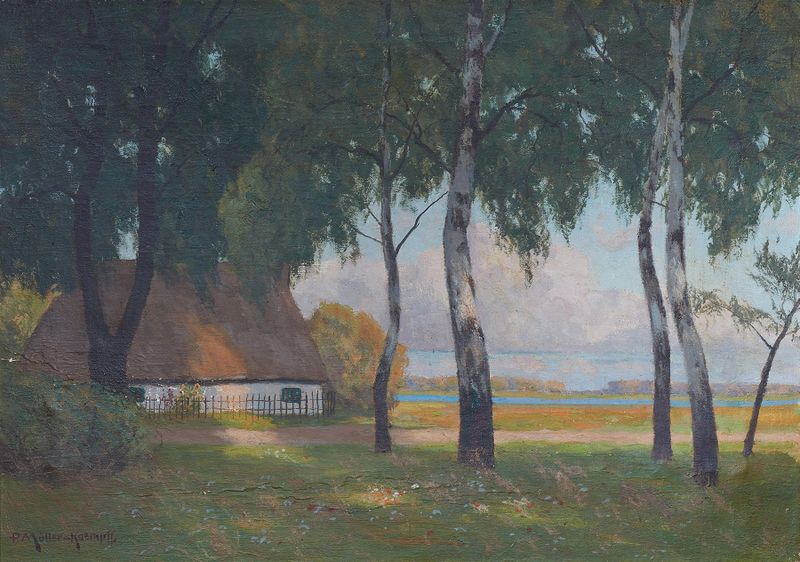
Katen hinter Birken
Paul Müller-Kaempff
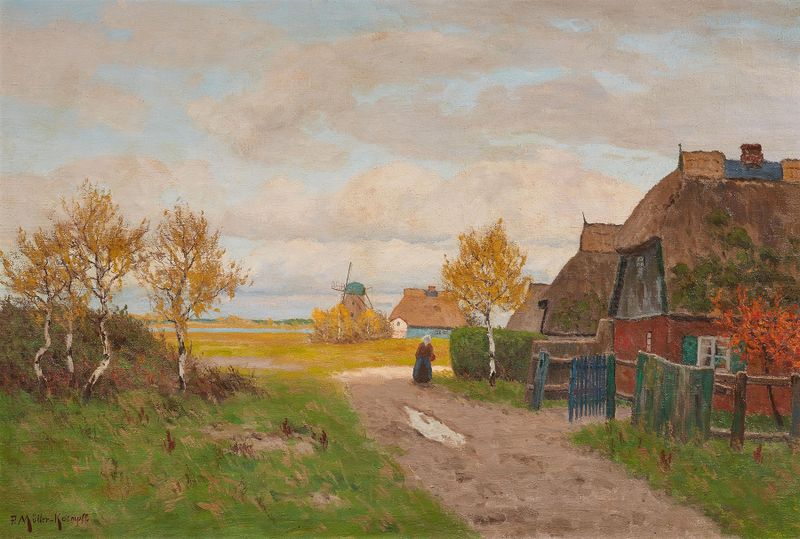
Landschaft mit Bauernhäusern und Windmühle
Paul Müller-Kaempff

Landschaft mit Kartoffelfeuer
Paul Müller-Kaempff





