David and Goliath: the story and the Sistine Chapel corner
David, with all his boyish strength, is cutting off the giant's head while soldiers around the camp look on in wonder: so Giorgio Vasari described this scene. This is David and Goliath, which Wikidata and the Web Gallery of Art date to 1509, painted by Michelangelo (1475–1564) in one of the four corner pendentives of the Sistine Chapel ceiling. The fresco, 570 × 970 cm, belongs to the Vatican Museums and is a work of the Renaissance. It is a ceiling fresco, not Michelangelo’s marble statue David; the Michelangelo page explains which of his works are here.
- Moment shown: The Web Gallery of Art describes the last moment of the fight, before the soldiers in the background: a field tent stands behind the two figures, and soldiers' faces can be made out in the shadows of both corners.
- The tale: The duel is told in 1 Samuel 17, which the Web Gallery of Art cites. David refuses armour, takes five stones for his sling and fells Goliath. The same source says the story was read as a prefiguration of Christ's temptation by the devil and as the victory of right over wrong.
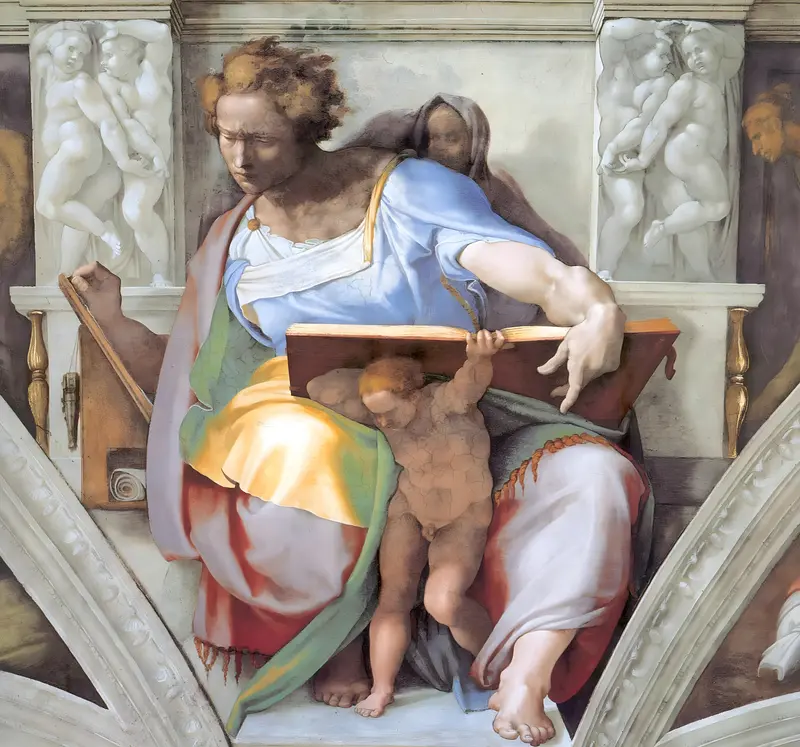
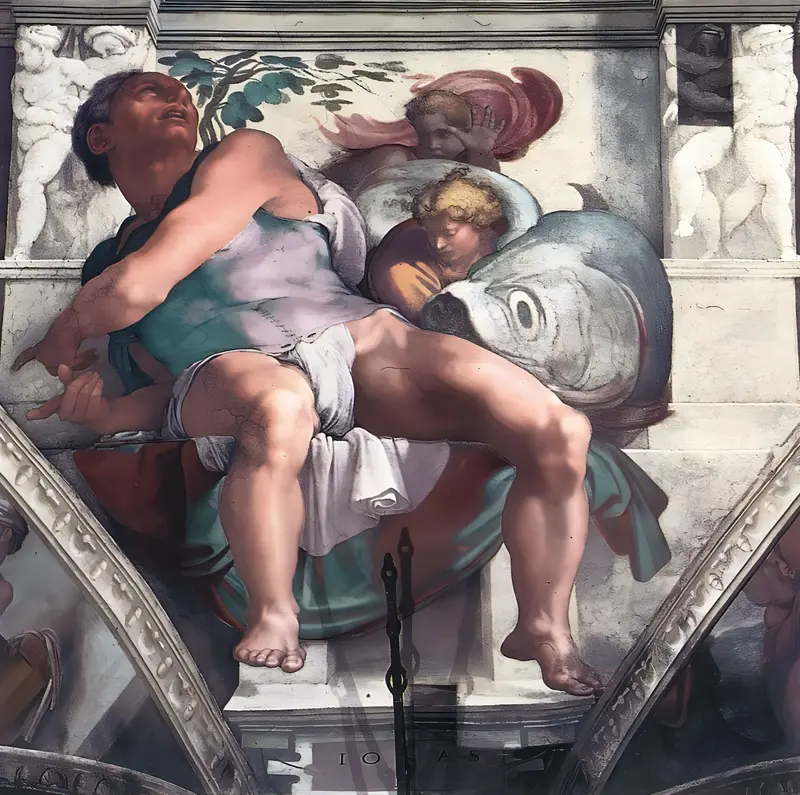
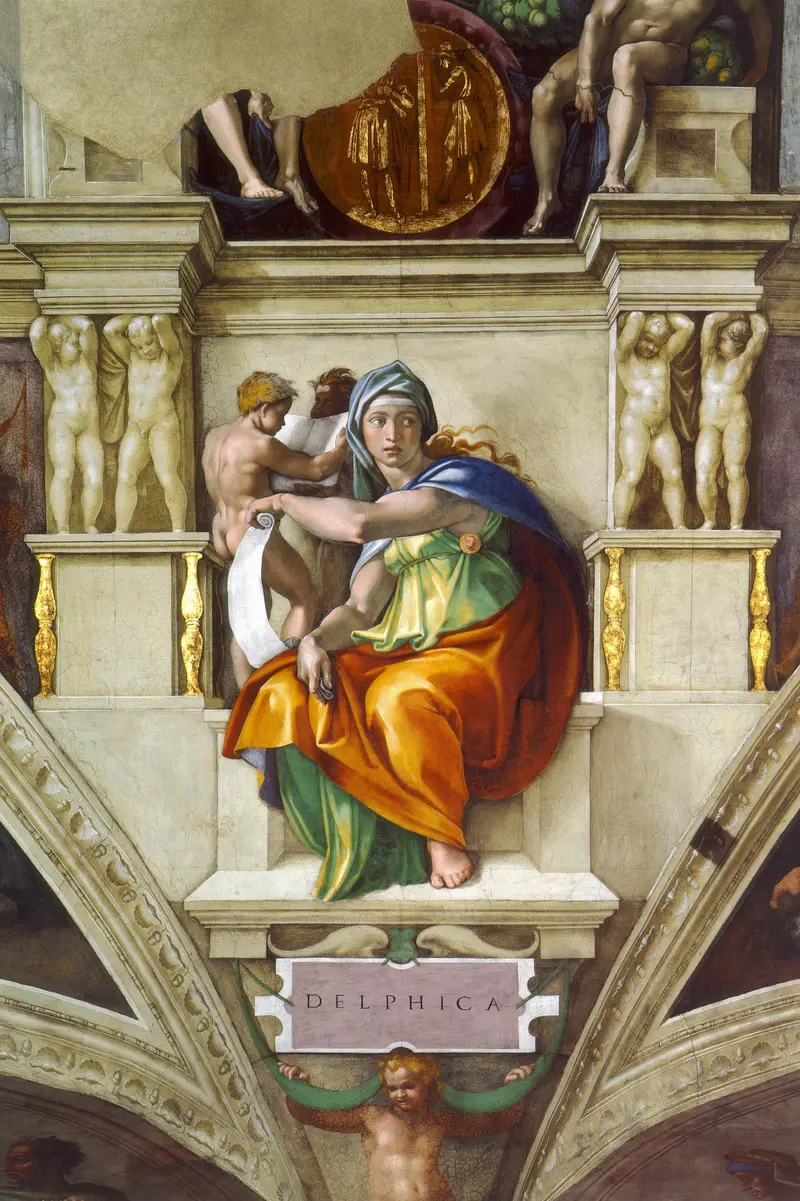
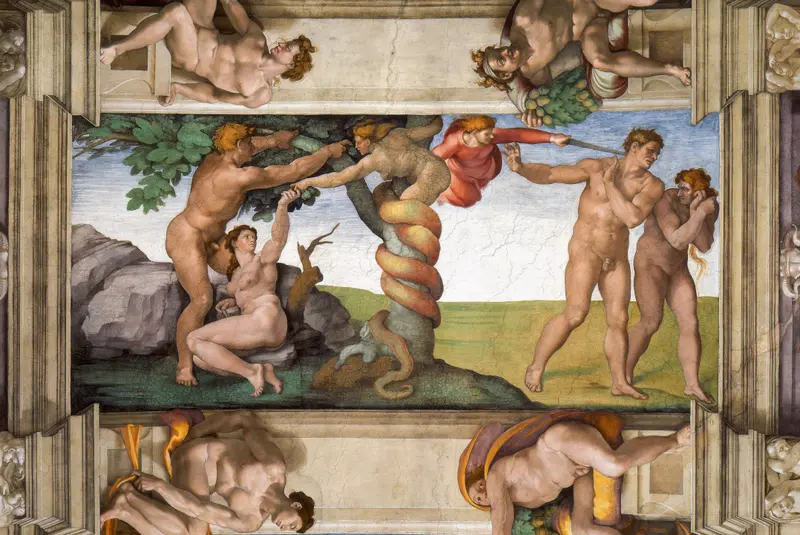
- A corner of the ceiling: The Vatican Museums say the four large spandrels in the corners narrate episodes of the miraculous salvation of the people of Israel, to be read as prefigurations of the Messiah and as junction points between the ceiling stories and those of the walls.
- Companion scenes: Gianluigi Colalucci lists the four corner pendentives as David and Goliath, Judith and Holofernes, the Punishment of Haman and the bronze Serpent.
- Size and place: Fresco, 570 cm high by 970 cm wide according to Wikidata and the Web Gallery of Art, painted in the Sistine Chapel in Vatican City; Wikidata records the Vatican Museums as the collection.
Sources: Vatican Museums: Sistine Chapel, Pendentives · Vatican Museums: Sistine Chapel, Ceiling · Web Gallery of Art: David and Goliath · Giorgio Vasari, Lives of the Artists (1568), Michelangelo, tr. G. de Vere (Project Gutenberg) · Colalucci, Restoration of the frescoes on the vaulted ceiling (Conservation Science in Cultural Heritage) · Wikidata Q3703646 (David and Goliath)
Questions and answers about the painting
What story does Michelangelo's David and Goliath tell?
The fresco shows the duel between the shepherd David and the Philistine champion Goliath from 1 Samuel 17, at what the Web Gallery of Art calls the last moment of the fight: the two figures locked together, lit by a light out of the darkness, with soldiers in the shadows behind. In the biblical account David slings a stone that fells Goliath and then cuts off his head, which is the signal for the Israelites to attack. Giorgio Vasari saw David cutting off the giant's head, to the wonder of the soldiers about the camp.
Source: Web Gallery of Art: David and Goliath · Giorgio Vasari, Lives of the Artists (1568), Michelangelo, tr. G. de Vere (Project Gutenberg)
Where is Michelangelo's fresco of David fighting Goliath in the Vatican?
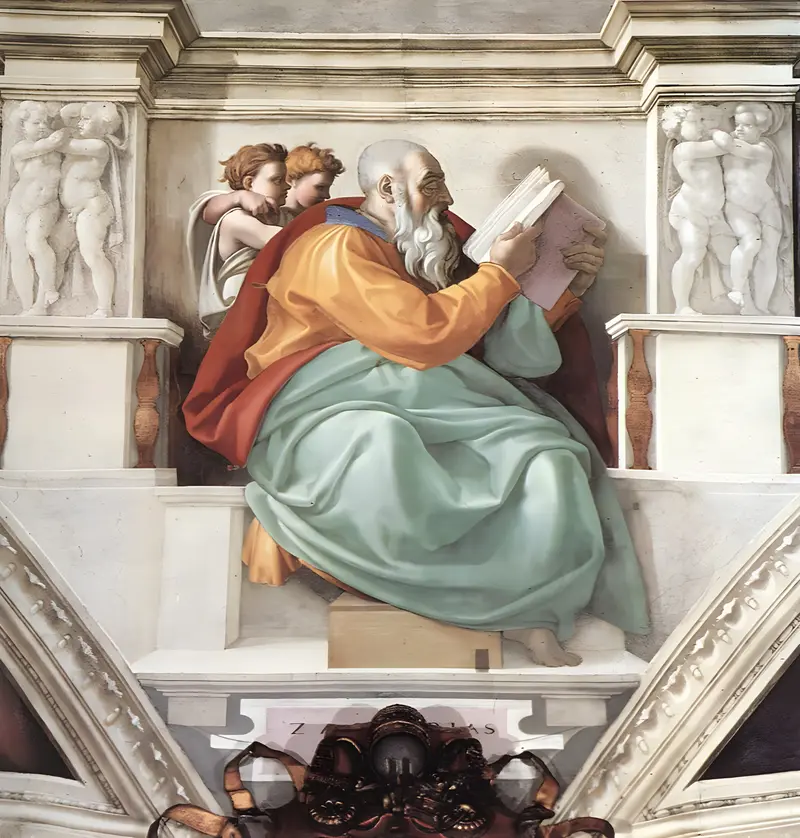
In a corner of the Sistine Chapel ceiling in Vatican City, one of four corner pendentives that also hold Judith and Holofernes, the Punishment of Haman and the bronze Serpent. Painted on the vault, it cannot be lent. The Web Gallery of Art places it at the entrance end, beside the prophet Zechariah, whom the Vatican Museums place on the entrance wall. As of November 2026 the Vatican Museums website publishes opening days, hours and closures for 2026–2027; these change, so check it before a visit.
Source: Vatican Museums: Sistine Chapel, Pendentives · Vatican Museums: Sistine Chapel, Ceiling · Colalucci, Restoration of the frescoes on the vaulted ceiling (Conservation Science in Cultural Heritage) · Giorgio Vasari, Lives of the Artists (1568), Michelangelo, tr. G. de Vere (Project Gutenberg) · Web Gallery of Art: David and Goliath · Vatican Museums: Prophet Zechariah
Why did Michelangelo paint a Bible duel in a corner of the Sistine ceiling?
The Vatican Museums explain that the four large corner spandrels narrate four episodes of the miraculous salvation of Israel, which should be read as prefigurations of the Messiah. They show God's constant presence in his people's life and the renewal of the promise of Redemption, and they act as junction points between the stories of the ceiling and those of the walls. The Web Gallery of Art adds that David's victory was read as a prefiguration of Christ's temptation by the devil.
Source: Vatican Museums: Sistine Chapel, Pendentives · Web Gallery of Art: David and Goliath
How big is Michelangelo's fresco of David's fight with Goliath?
David and Goliath measures 570 cm high by 970 cm wide. Wikidata and the Web Gallery of Art give the same figures, and both record it as a fresco in the Sistine Chapel; these are their values as of November 2026, and the Vatican Museums pages give no measurements for the single pendentive.
Source: Wikidata Q3703646 (David and Goliath) · Web Gallery of Art: David and Goliath
When did Michelangelo paint the shepherd's duel with the giant on the Sistine ceiling?
Wikidata and the Web Gallery of Art both date this fresco to 1509, while the Vatican Museums date only the whole ceiling. They say Michelangelo signed the contract on 8 May 1508, finished the first half of the ceiling, from the entrance wall to the Creation of Eve, in August 1510, and that the work must have been completed by 31 October 1512, since the Pope celebrated Mass in the chapel on 1 November.
Source: Wikidata Q3703646 (David and Goliath) · Web Gallery of Art: David and Goliath · Vatican Museums: Sistine Chapel, Ceiling
Can I download Michelangelo's David fresco and use it commercially?
Yes. Michelangelo died in 1564, so his paintings are free of copyright everywhere. A faithful photograph of a public-domain painting adds no new copyright in the United States or the European Union, so you can download this image and use it in personal or commercial projects. Our guide to public-domain images for commercial use explains how to credit and use them.
Source: Wikidata Q5592 (Michelangelo)