De Dubbele Buurt te Amsterdam — History & Facts
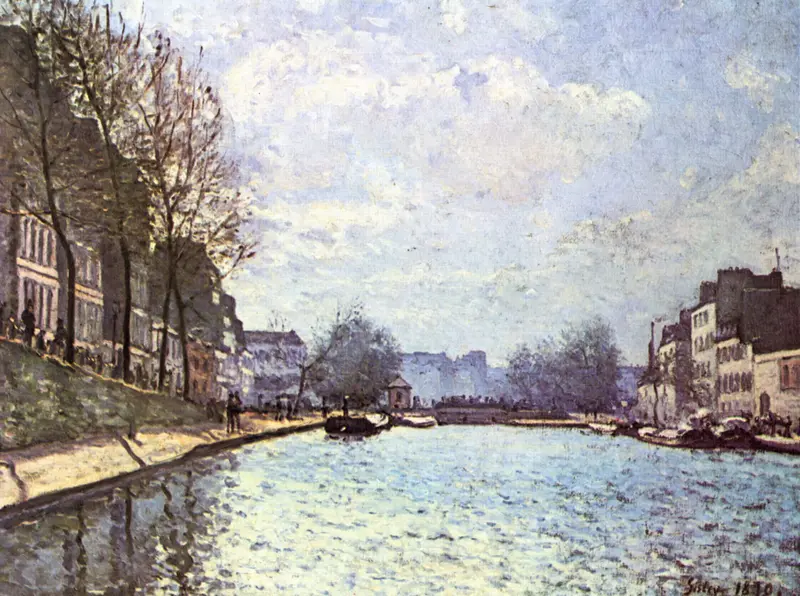
In the quiet corners of our existence, longing often finds its truest expression. Look to the left of the canvas, where intricate outlines of Amsterdam’s architecture emerge, their reflections dancing upon the water's surface. Notice how the artist employs a muted palette, blending soft blues and grays with dashes of warm ochre, creating a sense of nostalgia that envelops the viewer. The delicate brushwork captures the subtle ripples, inviting you to trace the movement and feel the tranquil rhythm of the scene. Beyond the surface lies a poignant contrast between the solid structures and the fluidity of their reflections.
This interplay suggests the transient nature of human experiences, as if the very essence of the neighborhood is suspended in time, yearning for connection and remembrance. The absence of figures amplifies this sentiment, evoking a quiet solitude that lingers in the heart. Wenckebach, a notable figure in the 20th-century art scene, painted this work during a time marked by both personal introspection and the societal shifts of post-war Europe. Living in Amsterdam, he captured the city's essence while navigating the complexities of modernity, allowing viewers to glimpse a world that is both familiar and achingly distant.
More Artworks by Willem Wenckebach

Oude huizen aan het Markenplein te Amsterdam
Willem Wenckebach
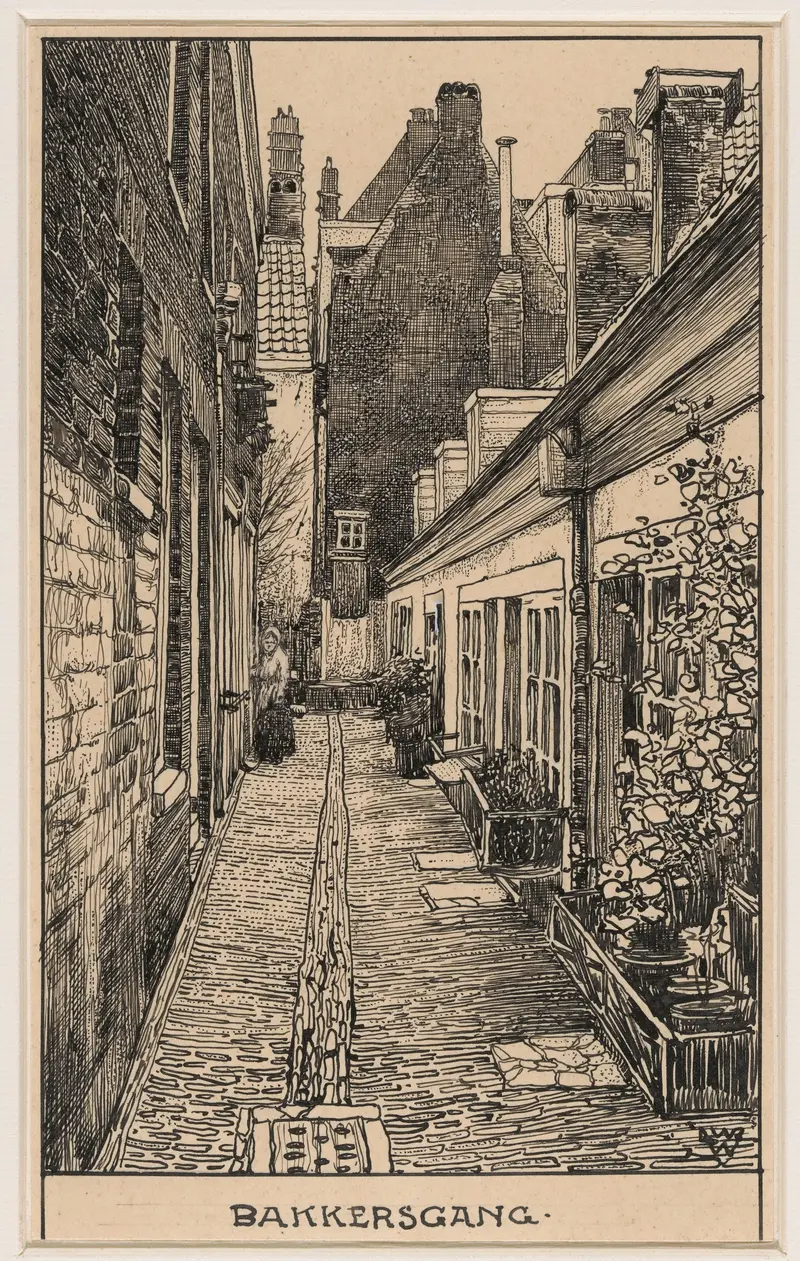
Bakkersgang te Amsterdam
Willem Wenckebach
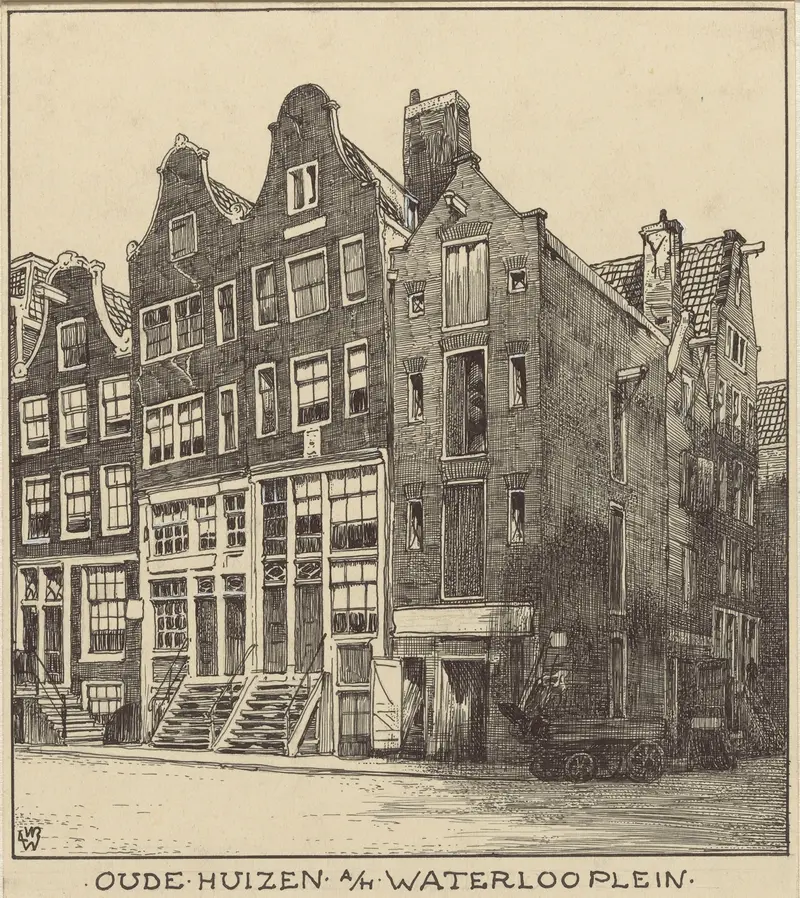
Oude huizen aan het Waterlooplein te Amsterdam
Willem Wenckebach
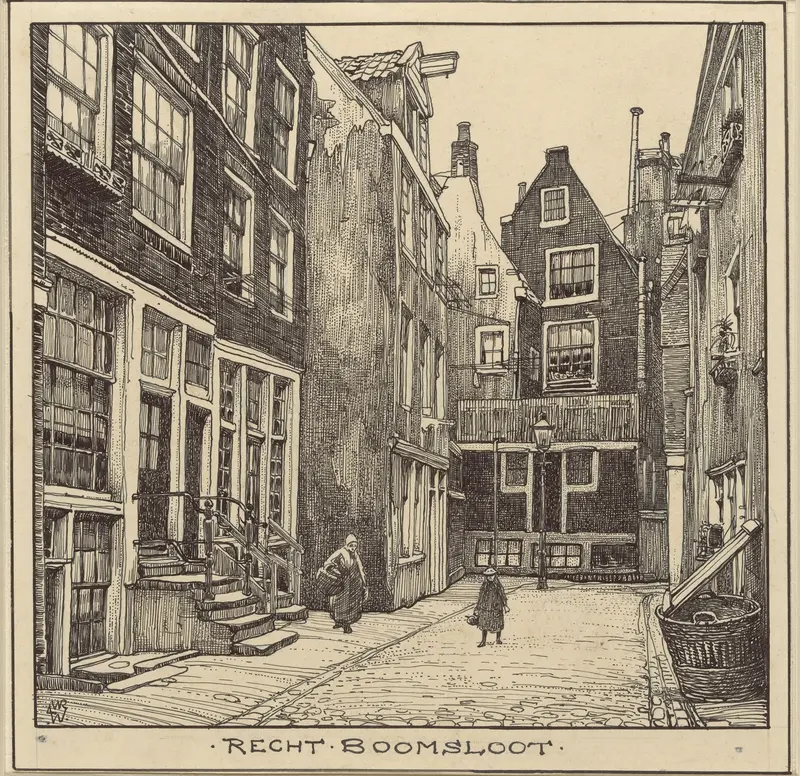
Rechtboomsloot te Amsterdam
Willem Wenckebach
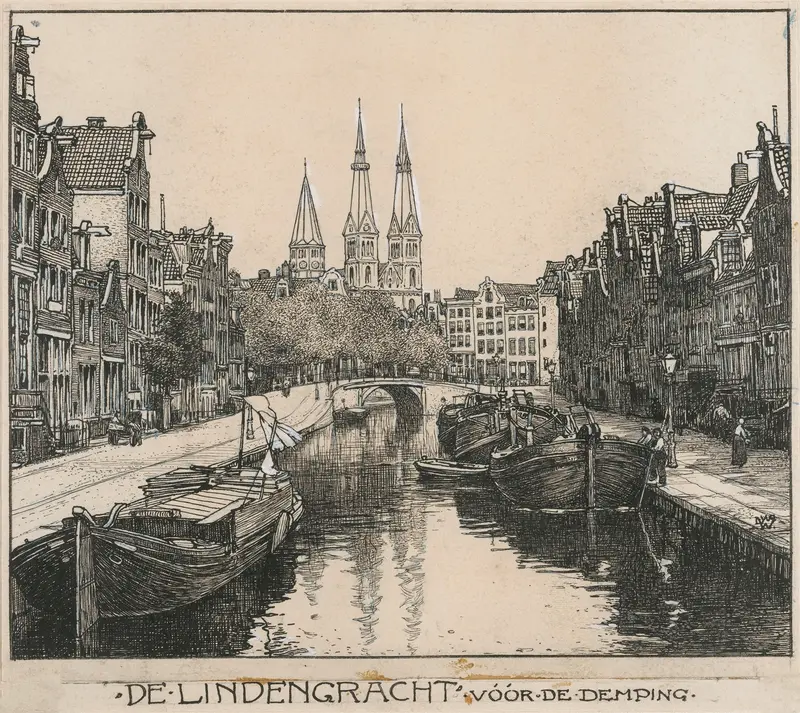
De Lindengracht te Amsterdam, voor de demping
Willem Wenckebach
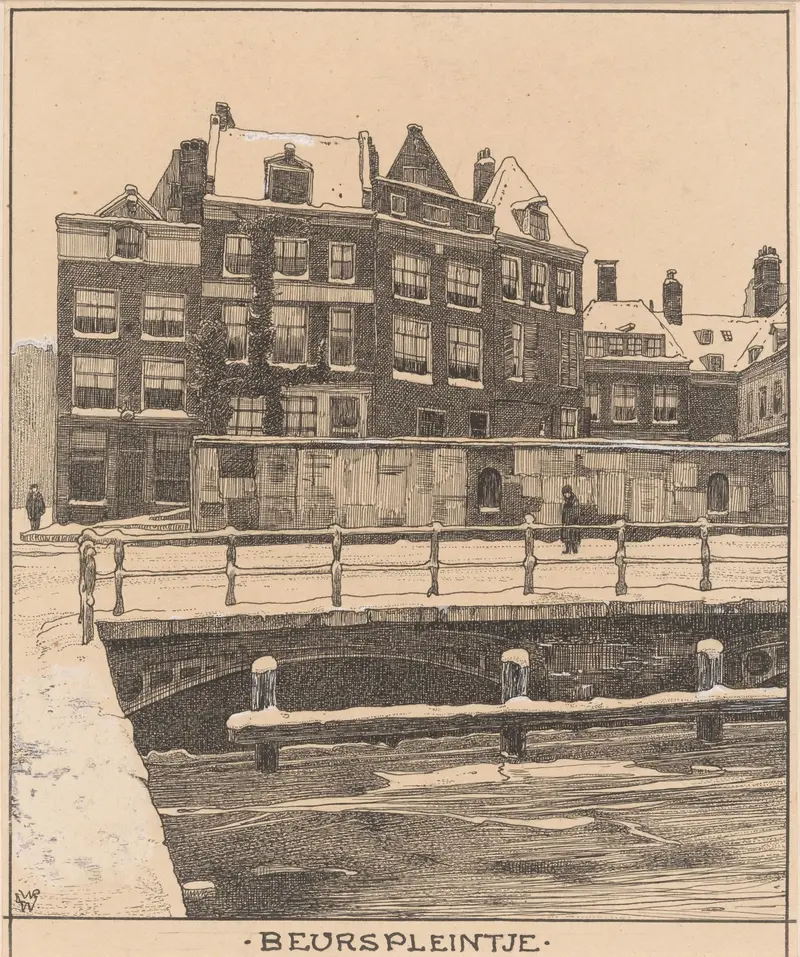
Het Beurspleintje te Amsterdam
Willem Wenckebach
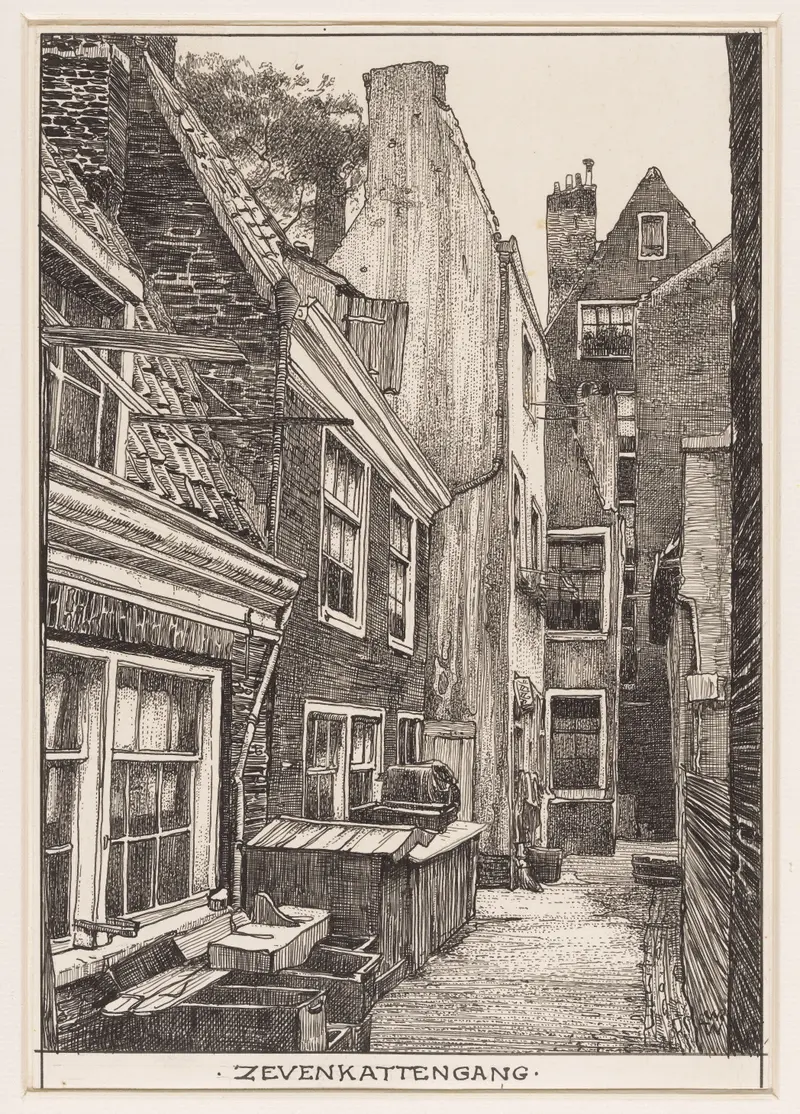
Zevenkattengang bij de Goudsbloemgracht (thans Willemstraat) te Amsterdam
Willem Wenckebach
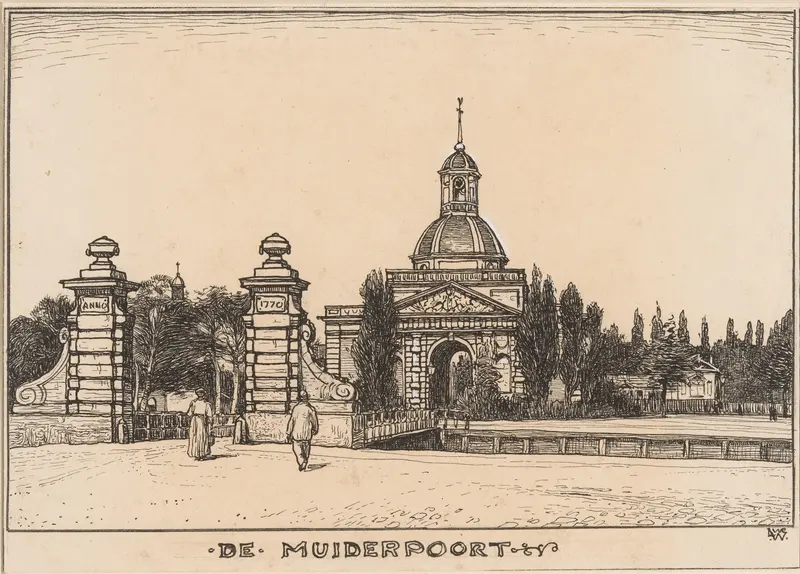
De Muiderpoort te Amsterdam
Willem Wenckebach
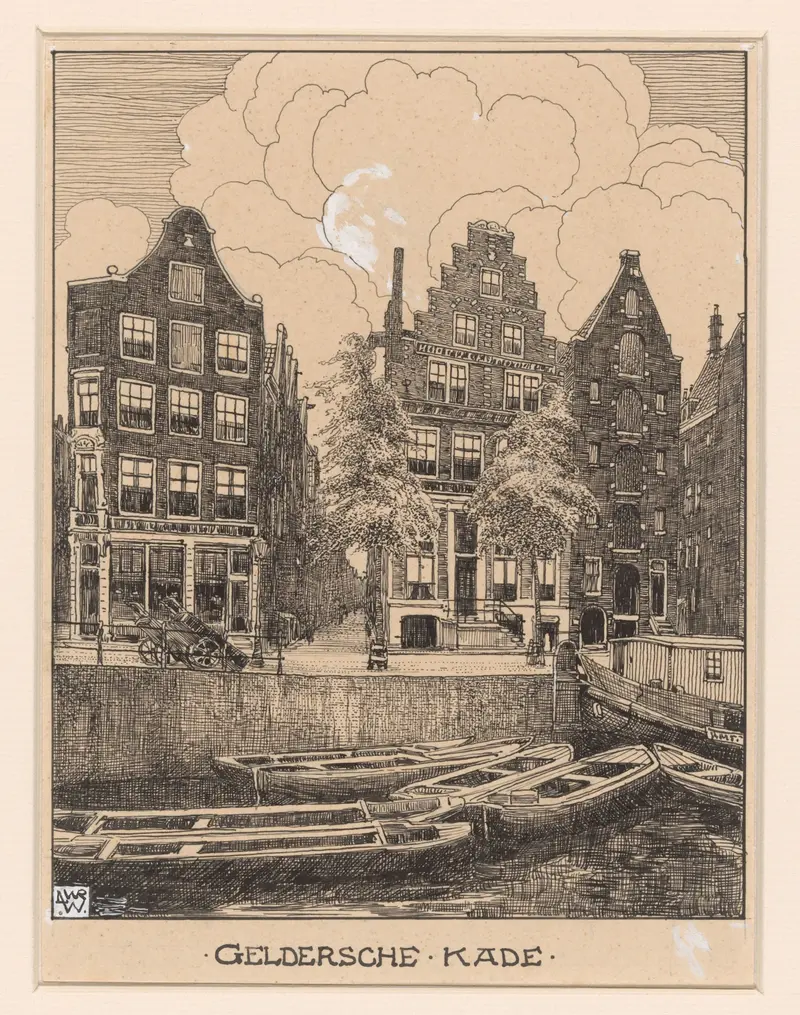
De Gelderse Kade te Amsterdam
Willem Wenckebach
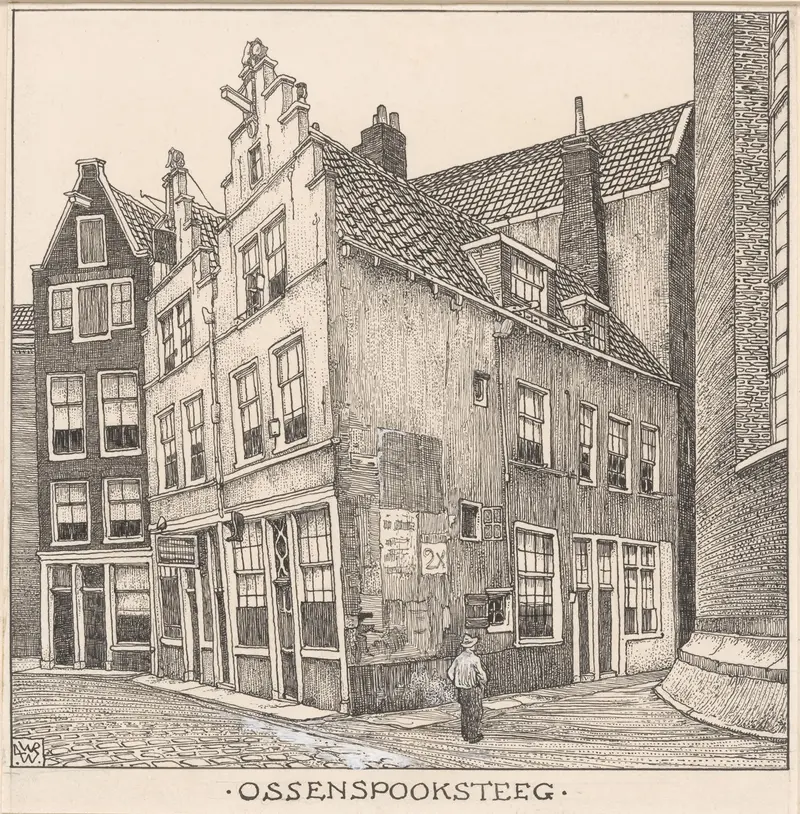
De Ossenspooksteeg te Amsterdam
Willem Wenckebach