
De Joden Breestraat te Amsterdam — History & Facts
In the vast expanse of the canvas, a haunting void resonates, inviting contemplation on absence and presence. Each stroke whispers the stories of lives intertwined, of moments that thrived only to be overshadowed by silence. Look to the left side of the painting, where a narrow street stretches into obscurity, flanked by towering buildings that seem to lean inwards, as if eavesdropping on the whispers of the past. The muted palette of grays and browns creates a somber atmosphere, invoking a sense of nostalgia.
Notice the subtle play of light filtering through the architecture, casting long shadows that seem to darken the memories held within these walls. The absence of figures enhances the feeling of emptiness, compelling the viewer to imagine who once walked this path. In this work, contrasts emerge between the rigidity of the brick facades and the fluidity of the light, capturing a moment suspended between history and oblivion. The street, devoid of life, serves as a metaphor for erasure, representing what has been lost in the folds of time.
The absence of movement amplifies the emotional tension, urging one to ponder the stories buried within the very stones that have witnessed them. Wenckebach painted this piece in the mid-20th century, a time when Europe was grappling with the scars of war and displacement. Living in Amsterdam, he was influenced by the post-war sentiment and the yearning to capture the essence of a city irrevocably changed. This work reflects not only the artist’s personal experience but also the collective memory of a community faced with the void left behind by history.
More Artworks by Willem Wenckebach
Browse all →
Bakkersgang te Amsterdam
Willem Wenckebach

Oude huizen aan het Markenplein te Amsterdam
Willem Wenckebach

Oude huizen aan het Waterlooplein te Amsterdam
Willem Wenckebach
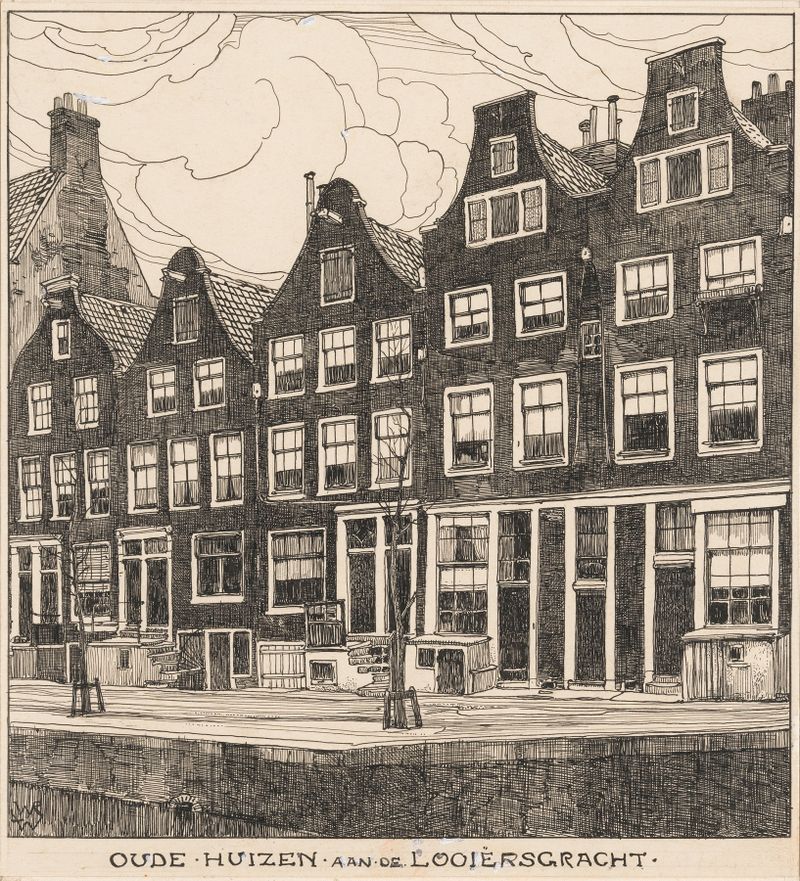
Oude huizen aan de Looiersgracht te Amsterdam
Willem Wenckebach
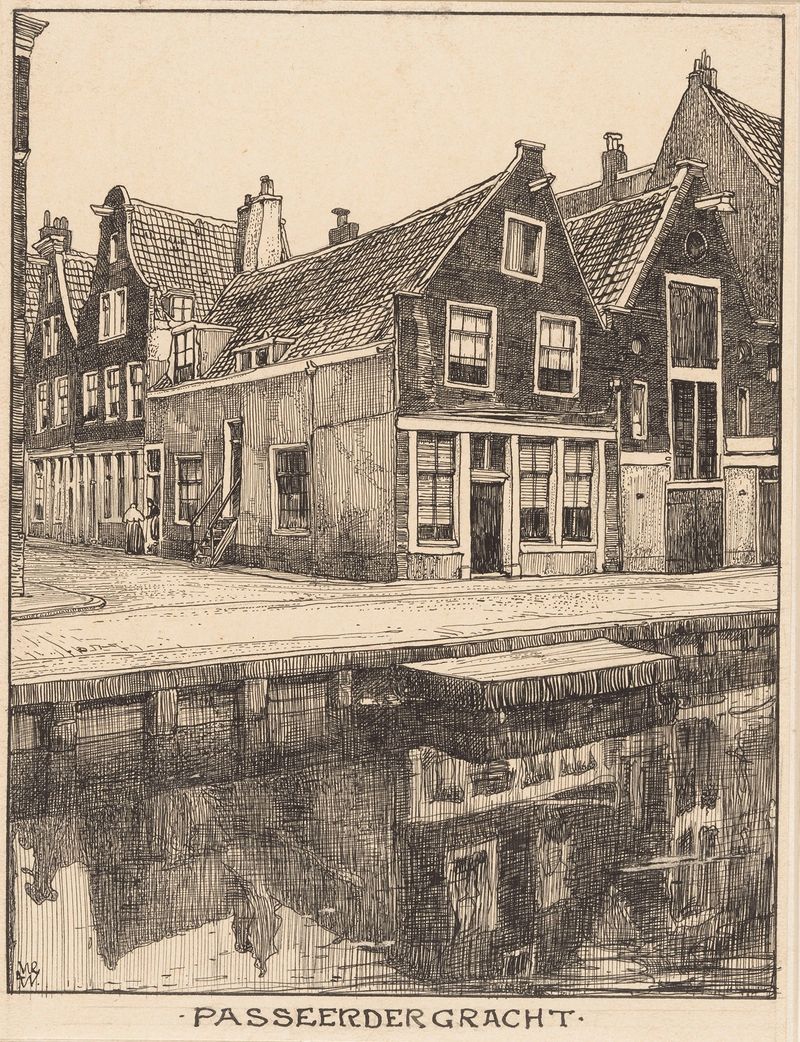
Passeerder Gracht te Amsterdam
Willem Wenckebach
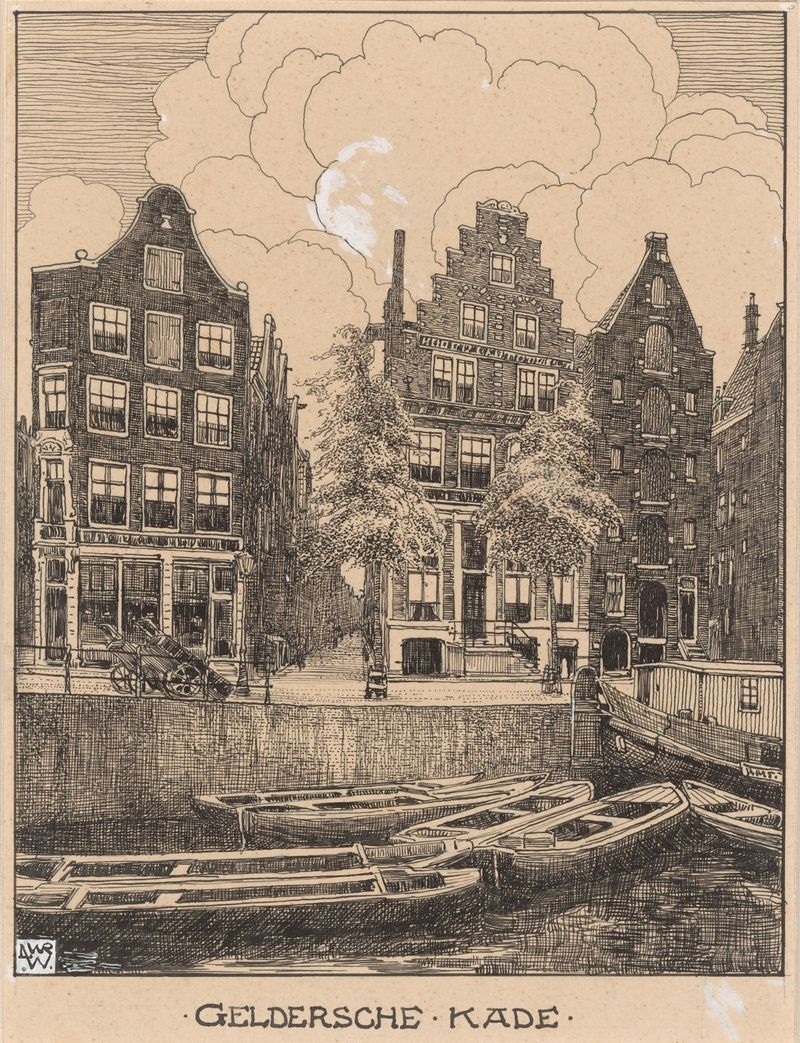
De Gelderse Kade te Amsterdam
Willem Wenckebach
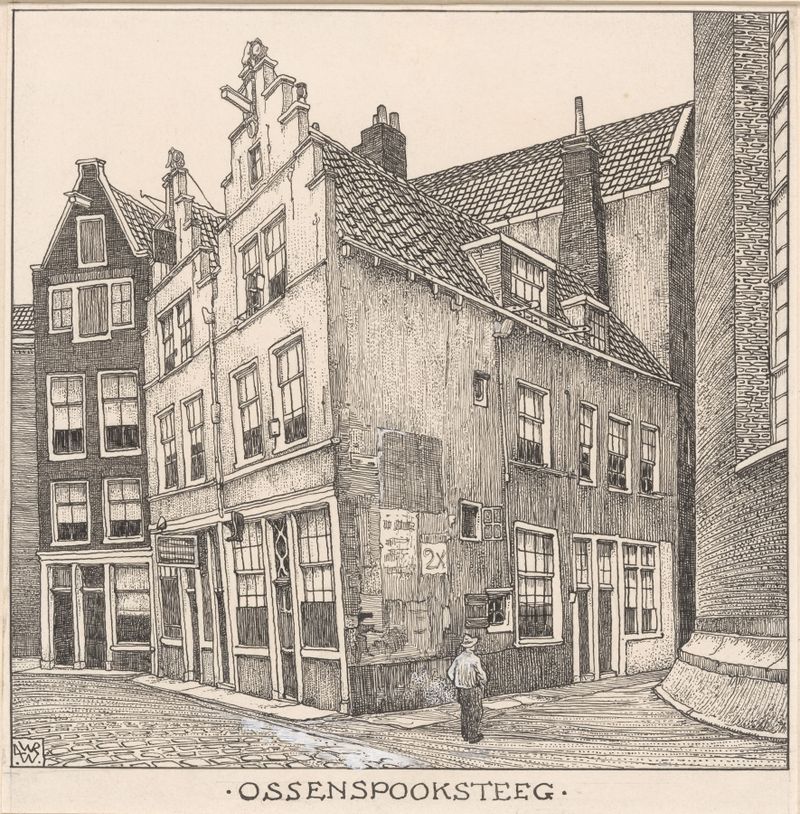
De Ossenspooksteeg te Amsterdam
Willem Wenckebach

Het Beurspleintje te Amsterdam
Willem Wenckebach
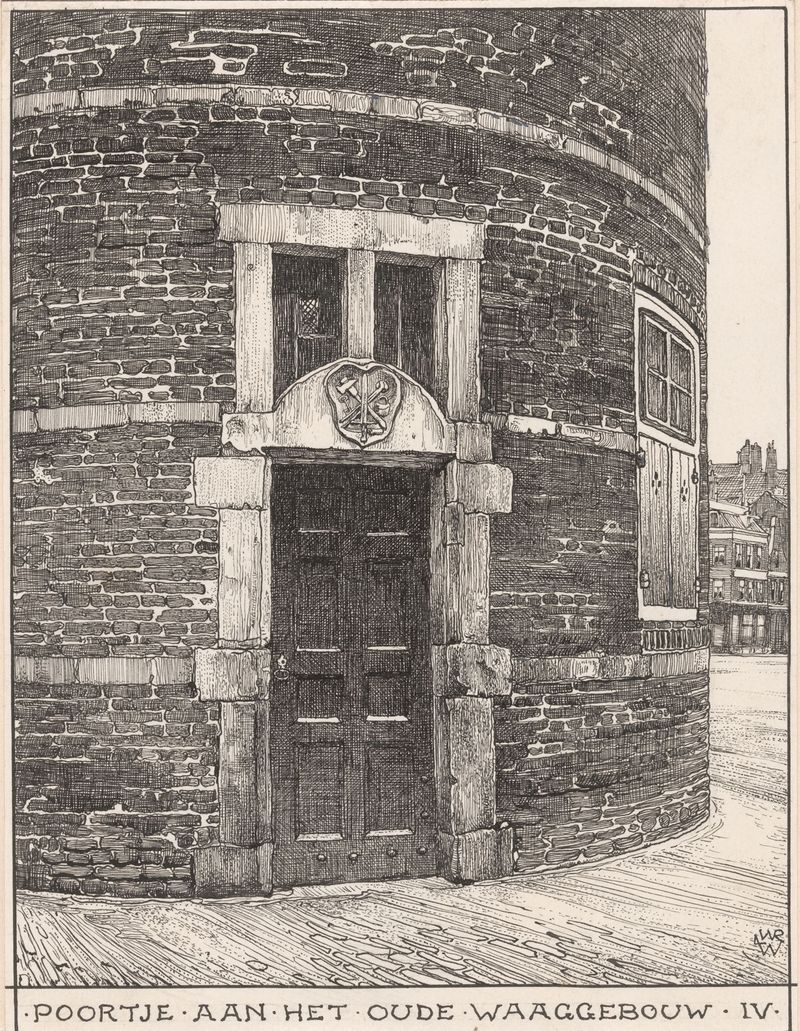
Poortje aan het oude Waaggebouw te Amsterdam
Willem Wenckebach

Torensluis te Amsterdam
Willem Wenckebach
More Architecture Art
Browse all →
The statue of Liberty
Frédéric Auguste Bartholdi

View of Houses in Delft, Known as ‘The Little Street’
Johannes Vermeer

View of Houses in Delft, Known as ‘The Little Street’
Johannes Vermeer

The Cathedral in Rouen. The portal, Grey Weather
Claude Monet

The yellow house
Vincent van Gogh

The Church in Auvers-sur-Oise, View from the Chevet
Vincent van Gogh