De rechtvaardigheid — History & Facts
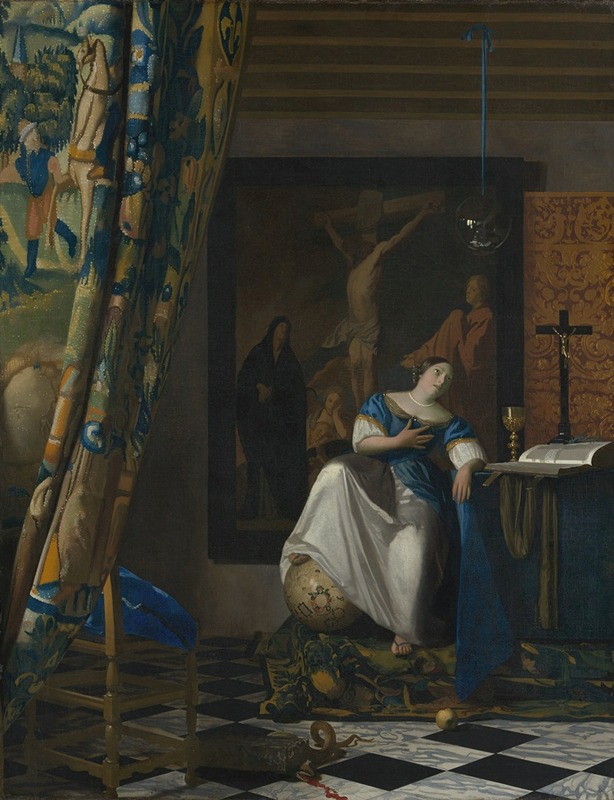
What stories linger in the silence of a forgotten painting, yearning for the touch of an eager eye? Look closely at the center of De rechtvaardigheid, where the figure of Justice stands resolutely, her scales perfectly balanced. Notice how the rich, deep hues of red and gold drape around her, signifying the weight of her judgment. The background fades into a muted palette, which pushes the viewer's focus deeper into her piercing gaze, an embodiment of moral clarity amidst chaos.
The intricate details on her robe reflect the artist's meticulous craftsmanship, emphasizing a sense of gravitas that transcends time. Beneath the surface, the painting reveals contrasting themes of light and shadow, justice and corruption. The scales, though seemingly even, carry an unspoken tension — the fragility of fairness in a world potentially marred by bias. The subtle interplay between color and form invites contemplation on the legacy of justice itself, raising questions about what endures in history and how it is perceived through the ages.
Each brushstroke seems to whisper the weight of responsibility, urging the viewer to reckon with their own understanding of equity and morality. Created between 1520 and 1560, this work emerges from a period marked by significant shifts in philosophical thought across Europe. The artist, whose identity remains a mystery, contributed to the broader Renaissance dialogue on justice and ethics during a time when societal norms were evolving rapidly. The painting reflects the tension of the Reformation, capturing the zeitgeist’s struggle for moral clarity amid a landscape rife with debate and uncertainty.
More Artworks by Unknown Artist
Browse all →
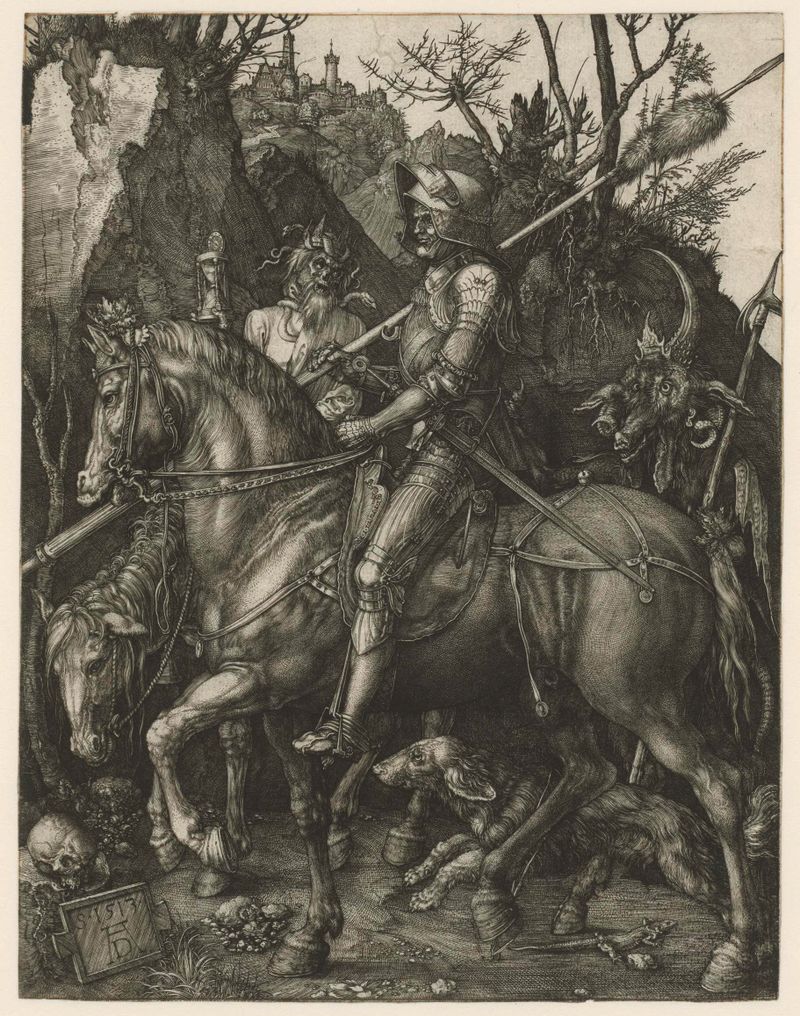
Ridder, Dood en Duivel
Unknown Artist

Shiva Nataraja
Unknown Artist

Portrait of Elizabeth I, Queen of England
Unknown Artist

Dolls’ house of Petronella Oortman
Unknown Artist

Shiva Nataraja
Unknown Artist

The Tale of Genji
Unknown Artist

The Tale of Genji
Unknown Artist

Cong
Unknown Artist

The bodhisattva Maitreya
Unknown Artist

Teabowl with a 'hare's fur' glaze
Unknown Artist