De rijke man en de Dood — History & Facts
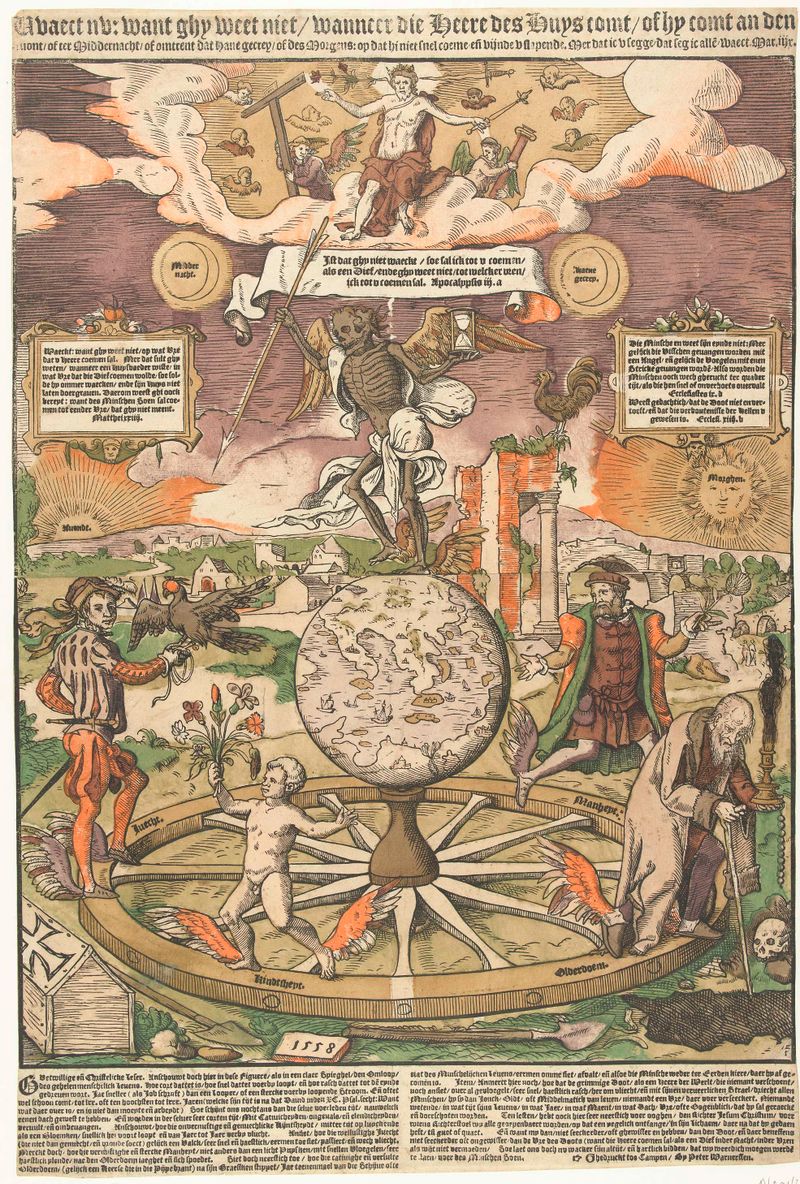
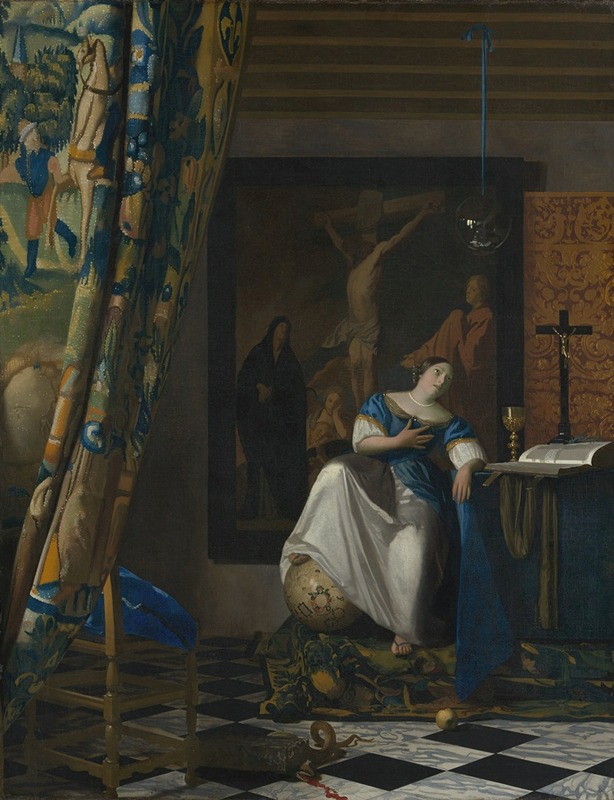
In De rijke man en de Dood, the serene yet poignant dialogue between life and mortality unfolds, inviting us to reflect on the transience of existence. Look to the left at the wealthy man, adorned in opulent garments that shimmer with the painter's deft use of rich colors. His fur-lined cloak cascades down, embracing his figure, yet the vacant gaze that lingers beyond the canvas hints at an impending reckoning. Focus on the spectral figure of Death, shrouded in ethereal garments, standing composedly beside him.
This juxtaposition of lavish wealth against the inevitability of demise creates a stark contrast, underscoring the fragile nature of worldly possessions. Beneath the surface, the tension between ambition and acceptance weaves a narrative of longing and fear. The ornate environment, filled with symbols of prosperity, becomes a bittersweet backdrop to the man’s fate, illustrating the isolation that wealth can impart. Each detail—the delicate interplay of light and shadow, the meticulously rendered expressions—whispers of so many unspoken truths about the human condition and the universal finality we all face. In 1553, the artist painted De rijke man en de Dood amid a world grappling with changing social hierarchies and the growing influence of humanism.
This period marked a profound transformation in the arts, as the connection between life, death, and the material world became a central theme. The artist, known only as Monogrammist AI, likely navigated a complex landscape of emerging ideas about mortality, spirituality, and the role of wealth in a fleeting life.