Dedinské chalupy. — History & Facts
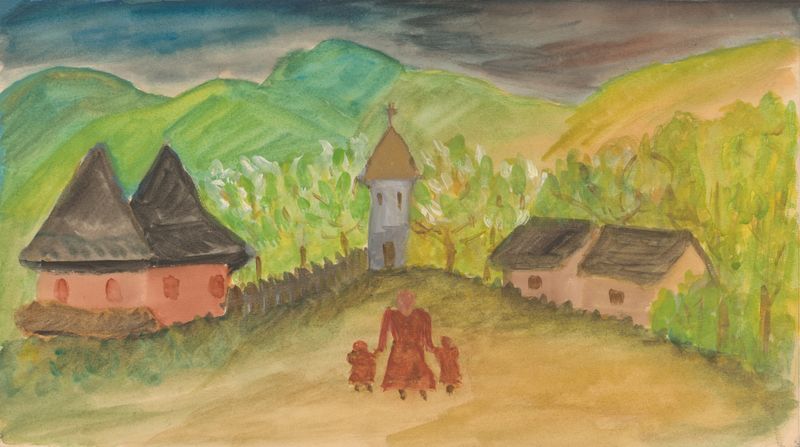
In a world where silence often speaks louder than words, the essence of loneliness lingers palpably in the landscape. Focus on the sprawling canvas, where rustic cottages stand guard against the vastness of a muted sky. The earthy tones of ochre and deep browns dominate, drawing the eye first to the textured roofs that seem to cradle untold stories. Notice the gentle play of light, which caresses the edges of the buildings, creating a stark contrast with the shadowy recesses that evoke a sense of isolation.
The sparse foreground, with its understated vegetation, invites the viewer to ponder the solitude that envelops these structures, each a world unto itself. Delve deeper into the emotional landscape Novák has crafted. The cottages, while quaint, exude a poignant loneliness, suggesting a history intertwined with the lives of those who once inhabited them. The empty pathways lead nowhere, evoking the quiet yearning for connection that remains unfulfilled.
As you absorb the scene, consider how the artist captures not just the physicality of the buildings, but also the melancholic spirit of a place that speaks to absence and memory. During the years from 1940 to 1944, Novák painted this work amidst the backdrop of World War II, a time marked by upheaval and displacement. Living in Slovakia, he experienced profound cultural and social changes that influenced his perspective. This period, characterized by uncertainty and the shadow of conflict, deeply informed his art, pushing him to explore themes of solitude and belonging in his surroundings, fostering a visual language that resonates with the human experience of loneliness.