Matka s deťmi vo vidieckej krajine — History & Facts
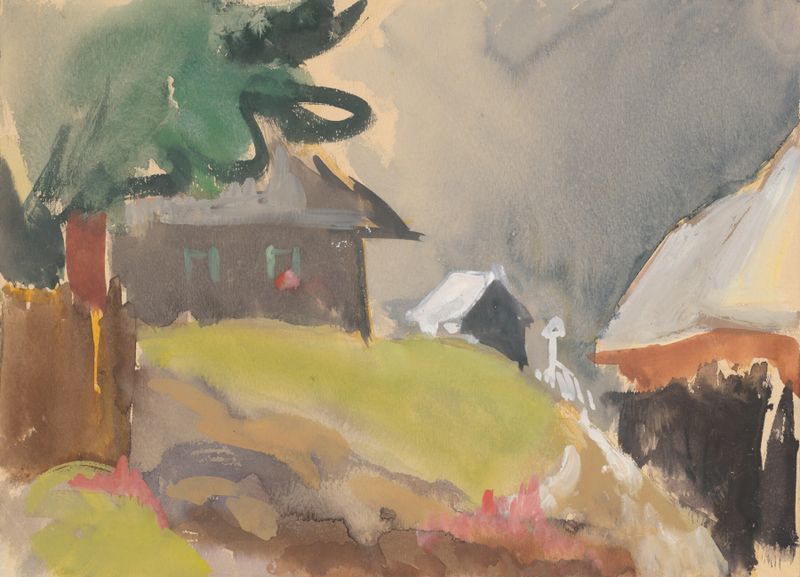
The quiet, resolute gaze of a mother cradles her children, suggesting a profound bond that defies the tumult of the outside world. Set against a backdrop of rural life, this poignant portrayal speaks to the essence of destiny intertwined with familial love. Look to the left at the soft, earthy palette of greens and browns that envelops the mother and her children. Their figures, rendered in gentle brushstrokes, appear almost as if they are emerging from the landscape itself, merging human existence with nature.
Notice how the light subtly captures the expressions on their faces, highlighting a mix of hope and vulnerability, thus inviting an intimate connection between the viewer and the subjects. Delve deeper into the small details—the intricate patterns woven into the children’s clothing represent traditions and histories, echoing the weight of heritage. The mother's posture, slightly inclined towards her children, signifies protection and nurture, while the slight tension in her expression hints at the challenges they face. This delicate interplay between strength and fragility underscores their shared journey, suggesting that in the face of uncertainty, there lies an unbreakable bond of love. During the years when this work was created, Novák was influenced by the socio-political upheaval in Czechoslovakia, grappling with the rise of nationalism and the quest for identity in art.
His focus on rural themes during this period served as both a reflection of and an escape from the chaos surrounding him, emphasizing the importance of family and community as a sanctuary against the storms of destiny.