Deep Twilight, Pyrenees — History & Facts
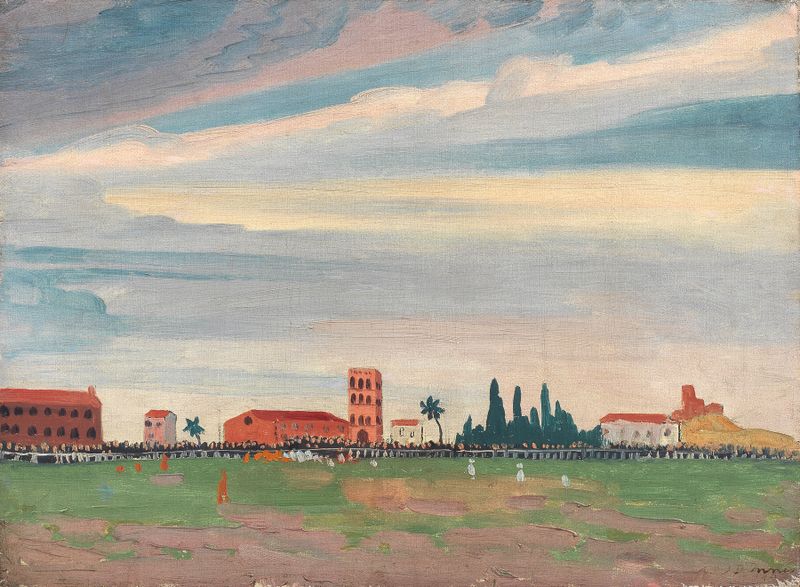
Did the painter know this moment would outlive them? In the stillness of twilight, reflections play in hues of deep indigo and soft amber, capturing the ephemeral dance of light as day yields to night. Focus on the sweeping horizon where the Pyrenees rise majestically against a backdrop of swirling clouds. Notice how the artist’s brushstrokes blend the vibrant colors seamlessly, evoking a sense of movement in the sky while grounding the landscape in rich, earthy tones below. The contrast between the warm glow on the peaks and the cool shadows in the valleys invites the viewer to lose themselves in the depths of both color and emotion. Within this sublime scene lies a tension between permanence and fleeting beauty.
The mountains, steadfast and eternal, symbolize resilience, while the sunset reflects the transient nature of life itself. Each stroke of paint reverberates with the weight of a moment, suggesting a yearning to capture not just a landscape, but the very essence of time slipping away. This interplay engages the viewer, making them contemplate their own moments of stillness amid chaos. James Dickson Innes created this work during a period of great exploration in the early 20th century.
While he traveled through the landscapes of Wales and the Pyrenees, he was refining his unique style, one that bridged impressionism with a deep connection to the natural world. At this time, the art world was buzzing with evolving ideas about color and light, and Innes was at the forefront of this movement, infusing the landscapes with both emotion and innovation.