Landscape with a Grazing Horse — History & Facts
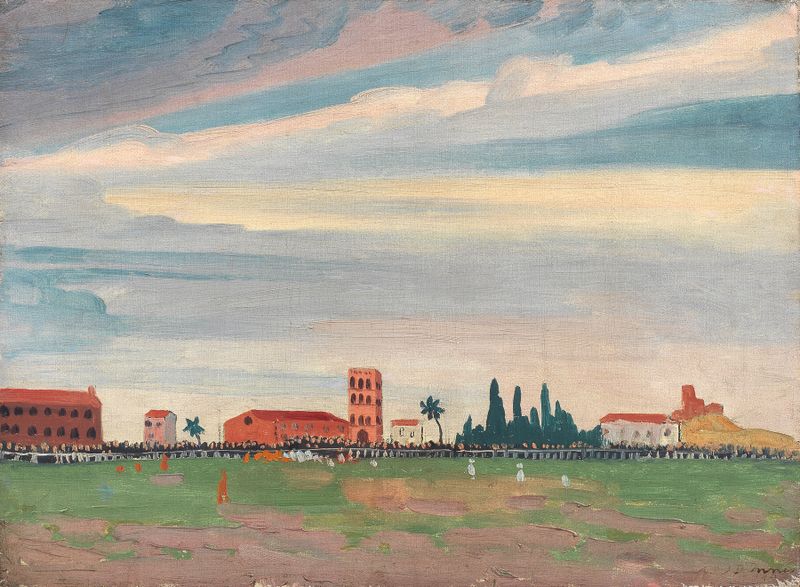
In the midst of chaos, the tranquility of a grazing horse becomes a sanctuary, a reminder of nature's enduring calm amid the tumultuous tides of life. Look to the left at the horse, its form delicately outlined against a vibrant background of swirling colors. The brushstrokes pulse with energy, a chaotic dance of greens and blues that evokes the windswept landscape. Notice how the light falls upon the horse's mane, illuminating it with a golden hue that stands in stark contrast to the tumult surrounding it.
The composition draws your eye toward the center, where the creature occupies a space of serenity, embodying a moment of stillness in a world alive with movement. This juxtaposition reveals profound emotional tensions: the serenity of the horse against a backdrop that suggests the chaos of nature. The blending colors hint at a stormy sky, revealing that even in beauty, there exists an underlying turbulence. The horse’s calm demeanor serves as a poignant counterpoint to the swirling chaos, prompting reflections on the fragility of peace in a world characterized by upheaval. James Dickson Innes painted this piece during the early 20th century, a time marked by post-impressionist experimentation and personal turmoil.
Living in Wales, he was grappling with his own modernist influences while contributing to a growing movement that sought to capture the essence of the British landscape. In this work, we see not only his artistic evolution but also a deep awareness of nature's duality—a sanctuary amid chaos.