Hilltop Vista — History & Facts
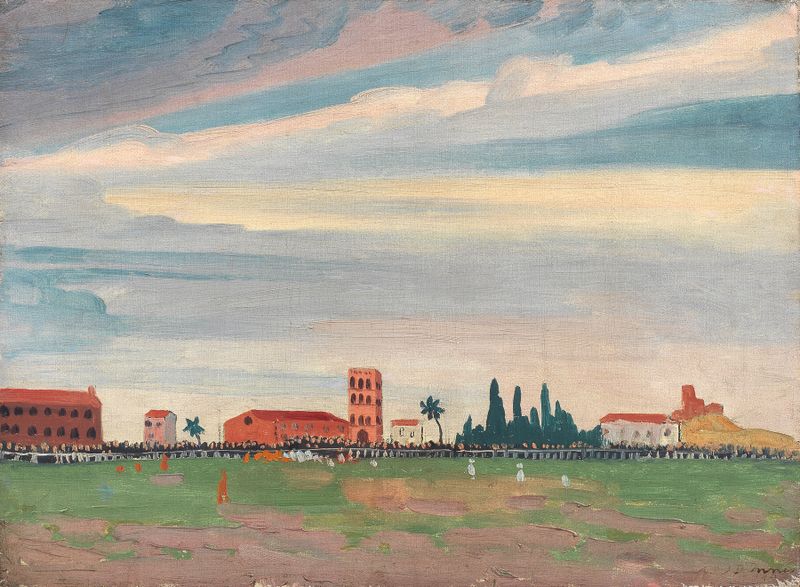
In Hilltop Vista, this notion of illusion unfurls like a dreamscape, inviting viewers to reconcile with fleeting moments preserved on canvas. The landscape evokes a sense of deep nostalgia, a reminder of how the world changes yet remains oddly familiar. Look closely at the horizon where soft hues of lavender and gold blend seamlessly, drawing your gaze toward the distant hills. Notice how the brushwork captures the gentle undulations of the earth, each stroke imbued with both tenderness and strength.
The sky, awash with ethereal light, emerges as a character in its own right, casting shadows that dance across the landscape and breathe life into the stillness. As you delve deeper, pay attention to the subtle contrasts between the vibrant foreground and the muted background. The luminous colors in the grasses and wildflowers seem to pulsate with vitality, symbolizing the present moment, while the hazy hills whisper tales of the past, creating a tension between what is real and what is remembered. This interplay suggests a longing for connection, a yearning that transcends the physical boundaries of time and space. During the early 20th century, James Dickson Innes painted this work while living in Wales, a period marked by both personal and artistic exploration.
As a member of the Camden Town Group, he sought to capture the essence of the British landscape, drawing inspiration from the Impressionists and fusing their techniques with his unique vision. It was a time of vibrant creativity, as artists redefined their relationship with nature and the act of painting itself.